










Pancakes are one of those foods that seem simple until something quietly goes wrong at the pan.
This recipe strips things back to what actually works, giving you soft, golden pancakes without the usual guesswork.
Read on and you might finally retire the trial and error approach for good.
All information is provided for general interest only. Results may vary depending on ingredients, equipment, and technique.
The Simple Batter That Gets It Right Every Time
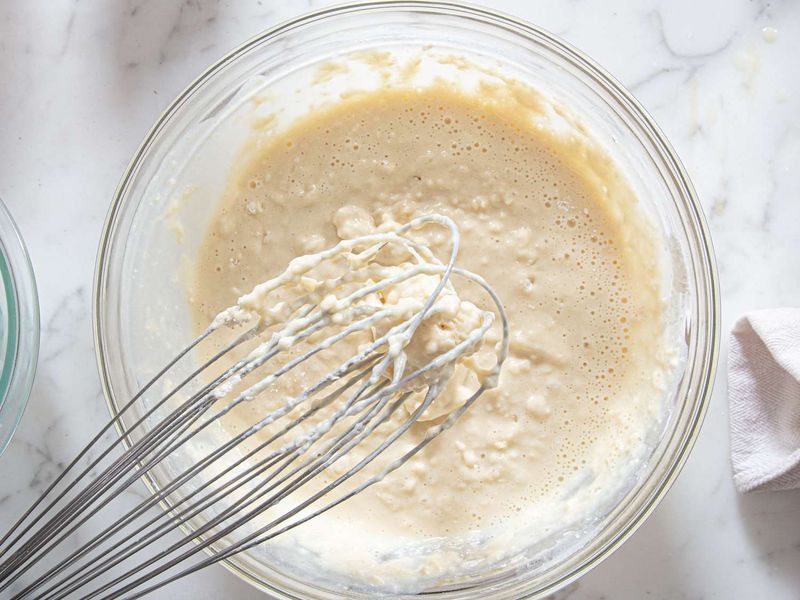
This batter relies on plain flour, whole milk, and free range eggs in sensible proportions that are easy to remember.
Measuring carefully from the start keeps the texture smooth and predictable, even if you are making pancakes half awake.
Whisking steadily rather than aggressively helps everything come together without dragging in too much air.
Giving the mixture a short rest lets the flour relax and absorb the liquid properly.
That quiet pause often leads to pancakes that cook more evenly and feel lighter on the fork.
Why The Pan Matters More Than You Think
The right frying pan can quietly make or break your pancake plans before you even start pouring.
A good non stick pan keeps the batter from catching and makes flipping far less stressful.
Medium heat gives the pancake time to cook through without scorching the surface.
When the pan is too hot, colour comes too fast and texture suffers.
Getting this balance right early saves frustration later.
The Butter Trick That Stops Burning
A small knob of unsalted butter adds flavour while helping the pancake brown evenly.
Lightly wiping the pan with kitchen paper spreads the butter without leaving greasy patches.
This stops the butter from burning and turning bitter halfway through the batch.
Topping up gently between pancakes keeps each one tasting fresh.
It is a simple habit that makes the whole batch more consistent.
Knowing When To Flip Without Panic
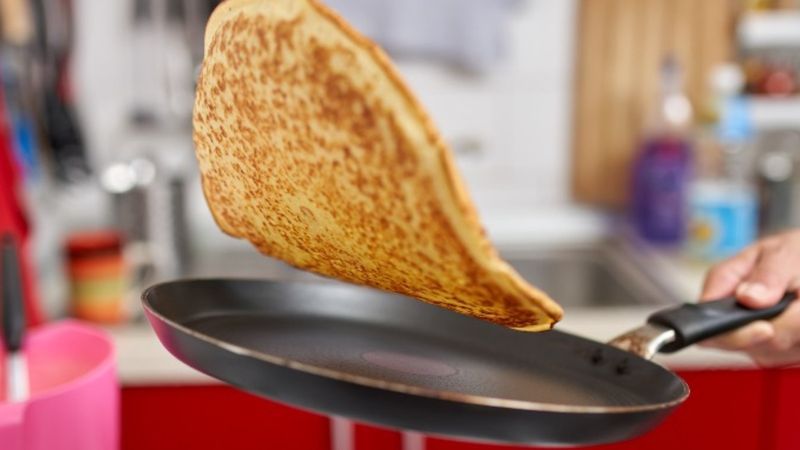
Tiny bubbles rising to the surface are your first sign that things are going well.
The edges will start to look set rather than glossy or wet.
Sliding a spatula underneath should feel smooth, not like a tug of war.
A calm flip usually works better than an overconfident one.
Even imperfect flips rarely ruin a pancake, so there is no need to overthink it.
Getting That Soft Middle And Light Texture
Pouring the batter gently helps keep the texture soft and tender.
Tilting the pan slightly allows the batter to spread naturally without thinning the middle.
Steady heat gives the inside time to cook without turning rubbery.
Pressing the pancake only pushes out air and moisture.
Soft pancakes come from patience rather than force.
Classic Toppings That Never Let You Down
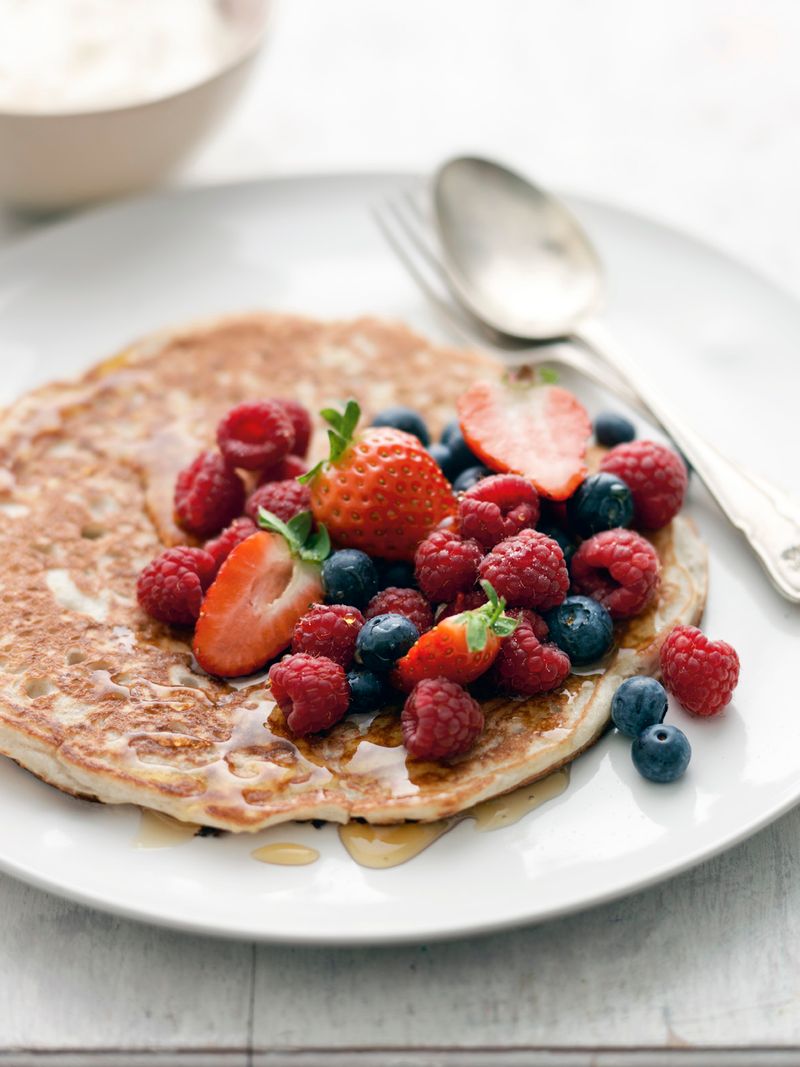
Caster sugar and fresh lemon juice remain popular because they balance sweetness and sharpness perfectly.
Golden syrup adds warmth and richness without overpowering the pancake itself.
Fresh berries bring contrast and a bit of brightness to the plate.
Using toppings lightly keeps the pancake as the main event.
Simple choices often taste the most satisfying.
Common Pancake Mistakes You Can Easily Avoid
Overmixing the batter develops the flour too much and leads to heavy pancakes.
Eyeballing ingredients can throw the balance off more than expected.
Turning the heat up to speed things along usually causes uneven cooking.
Skipping the first test pancake removes your chance to make small adjustments.
Fixing these habits turns a decent recipe into one you can trust every time.