











• Skip to primary navigation
  • Skip to main content
  • Skip to primary sidebar
The Daily Dish
  • About Me
  • Recipes
  • Wellbeing🧡
  • Contact
  • Subscribe
  • Gluten-Free
  • Navigation Menu: Social Icons

    Connect With Me

    • Facebook
    • Instagram
    • Pinterest
menu icon
go to homepage
  • About Me
  • Recipes
  • Wellbeing🧡
  • Contact
  • Subscribe
  • Gluten-Free
  • Let's Connect

    • Facebook
    • Instagram
    • Pinterest
  • subscribe
    search icon
    Homepage link
    • About Me
    • Recipes
    • Wellbeing🧡
    • Contact
    • Subscribe
    • Gluten-Free
  • Let's Connect

    • Facebook
    • Instagram
    • Pinterest
  • ×
    • 15 Places In Texas To Enjoy Breakfast With A Million-Dollar View
    • 12 Cincinnati Area, Ohio Hole-In-The-Wall Restaurants Tourists Always Walk Past
    • 11 Anna Maria Island Restaurants In Florida You Can't Miss
    • 12 Maryland Restaurants That Stay Packed Without Ever Advertising
    • 14 Florida Buffets So Good You Won't Mind The Wait
    • 13 Under-The-Radar Detroit, Michigan Restaurants Worth Seeking Out
    • 12 Tennessee Restaurants So Remote The Journey Becomes Part Of The Experience
    • 11 Atlanta, Georgia Hole-In-The-Wall Restaurants Locals Love
    • 11 Top-Rated Restaurants In New Jersey That Are Always Worth The Trip
    • 10 Small Local Restaurants In Marietta, Georgia Worth A Visit
    • 11 Top-Rated Restaurants In Maryland That Are Always Worth The Drive
    • 12 Winston-Salem, North Carolina Hole-In-The-Wall Restaurants Only Locals Know About
    Home » Recommendations

    Simple Steps To Make Fresh Pasta From Scratch

    Published:Oct 16, 2025· Modified: Oct 16, 2025 by Ben Thompson

    • Share
    • Email

    There’s something almost magical about making pasta by hand - the soft dough, the gentle rolling, and that first silky bite fresh from the pot. It’s simpler than it looks, and the reward is worth every bit of flour on your counter. Once you try homemade pasta, you might never go back to the boxed kind again.

    This article is for general informational purposes only. Ingredients and results can vary based on technique and equipment. Always ensure food is cooked safely and to appropriate temperatures.

    1. Gather Your Ingredients
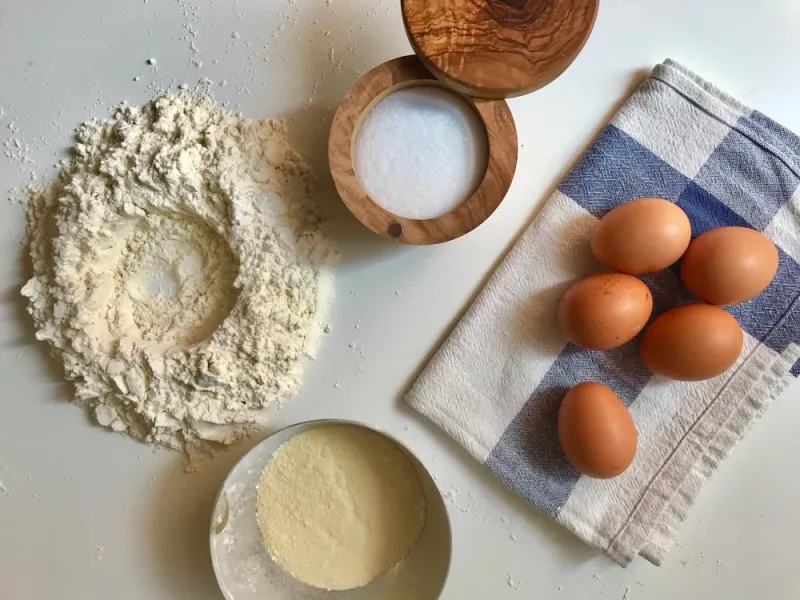
    Gather Your Ingredients
    Image Credit: © sam panzer

    Before you begin, collect everything you need. Fresh pasta requires just three basics: all-purpose flour, eggs, and a pinch of salt.

    Most recipes call for about 100 grams of flour per egg. Having your ingredients ready makes the process smoother and more enjoyable, setting you up for success right from the start.

    2. Measure Flour And Create A Well
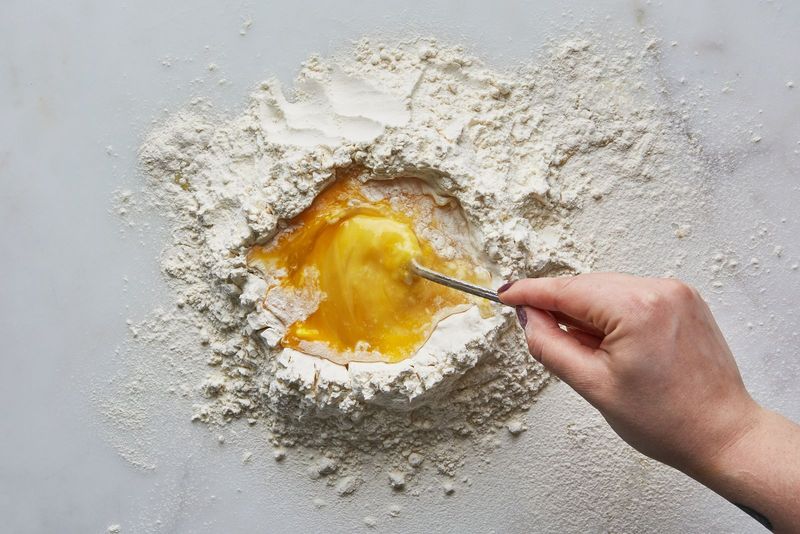
    Measure Flour And Create A Well
    Image Credit: © Epicurious

    Pile your flour onto a clean work surface and shape it into a small mountain. Using your fingers, press down in the middle to form a deep crater.

    This well will hold the eggs and prevent them from running everywhere. Make sure the walls are thick enough to contain the liquid when you add it.

    3. Add Eggs To The Centre
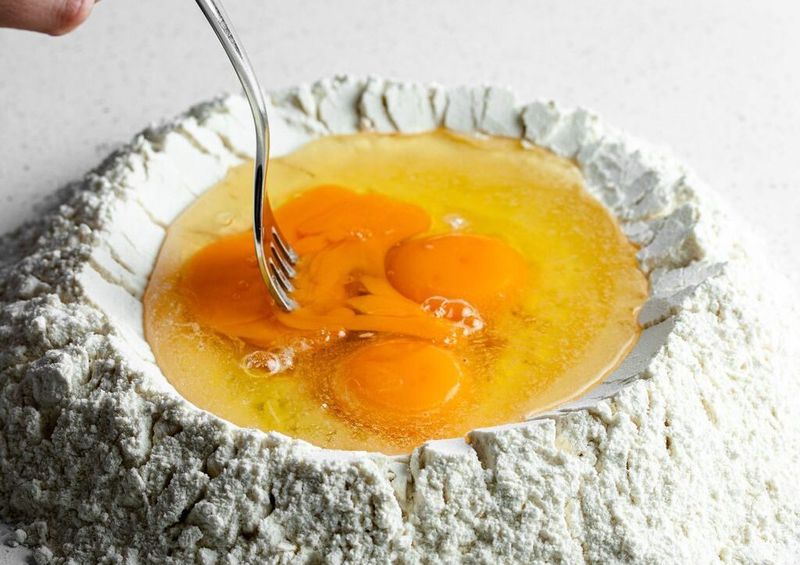
    Add Eggs To The Centre
    Image Credit: © q.b. Cucina

    Crack your eggs directly into the well you created. Add a small pinch of salt at this stage for flavour.

    Try not to break the flour walls as you add the eggs. Keep everything contained within the centre so you can control the mixing process better in the next step.

    4. Mix Slowly Until Dough Forms
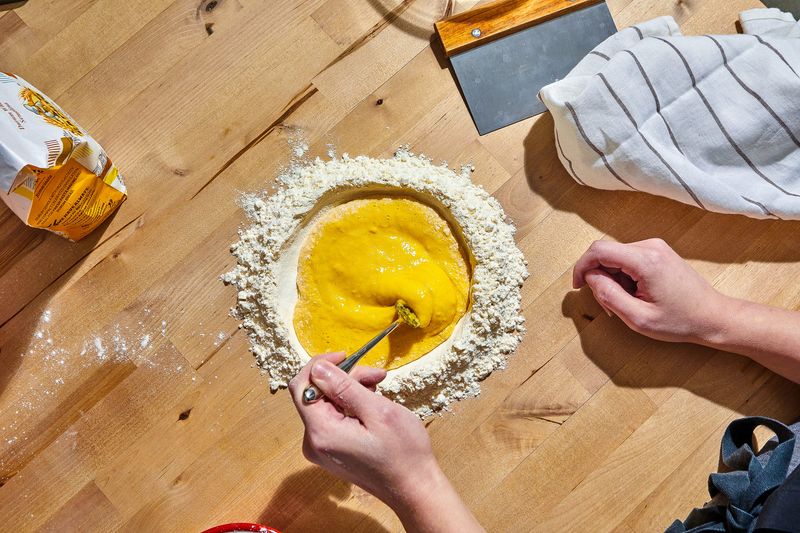
    Mix Slowly Until Dough Forms
    Image Credit: © pasta social club - Substack

    Using a fork, gently beat the eggs whilst gradually pulling in flour from the inner walls. Work slowly and carefully to avoid breaking the outer edges.

    As you continue mixing, the dough will start coming together. Once it becomes too thick for the fork, switch to using your hands to bring everything together properly.

    5. Knead Until Smooth And Elastic
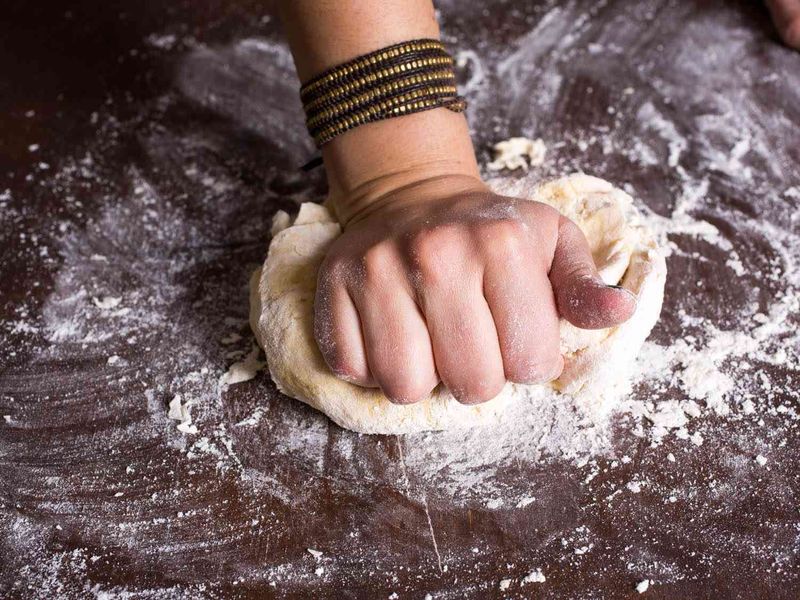
    Knead Until Smooth And Elastic
    Image Credit: © Serious Eats

    Push the dough away from you with the heel of your hand, then fold it back over itself. Rotate it slightly and repeat this motion.

    Knead for about 10 minutes until the dough feels smooth, stretchy, and springs back when poked. This develops the gluten that gives pasta its perfect texture.

    6. Let The Dough Rest
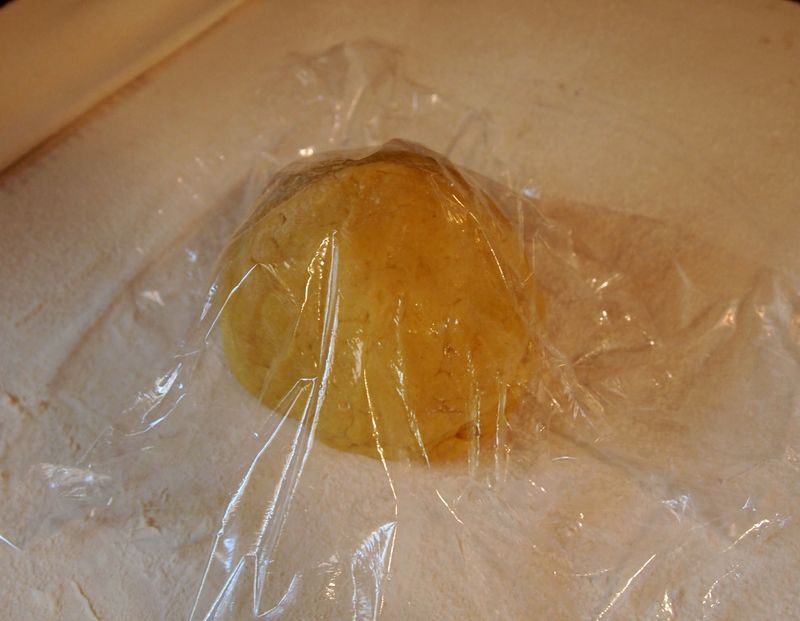
    Let The Dough Rest
    Image Credit: © Comfortably Domestic

    Wrap your dough tightly in cling film to prevent it from drying out. Leave it to rest at room temperature for at least 30 minutes.

    This resting period allows the gluten to relax, making the dough much easier to roll out later. Skipping this step will result in dough that fights back when you try to shape it.

    7. Divide And Flatten The Dough
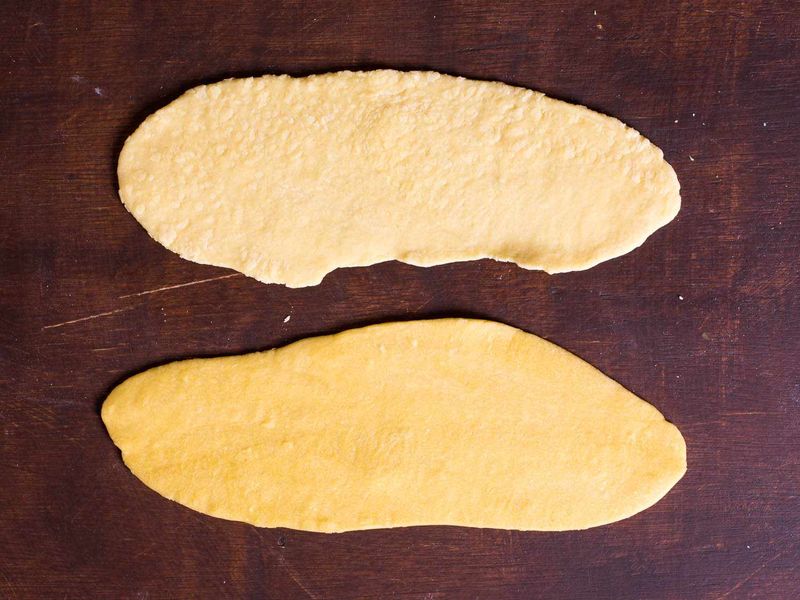
    Divide And Flatten The Dough
    Image Credit: © Serious Eats

    Cut your rested dough into four equal pieces. Keep the portions you're not working with covered to stop them drying out.

    Take one piece and flatten it with your palm into a rough rectangle or oval shape. This makes it easier to feed through a pasta machine or roll by hand in the following step.

    8. Roll Out Using A Pasta Machine Or Rolling Pin
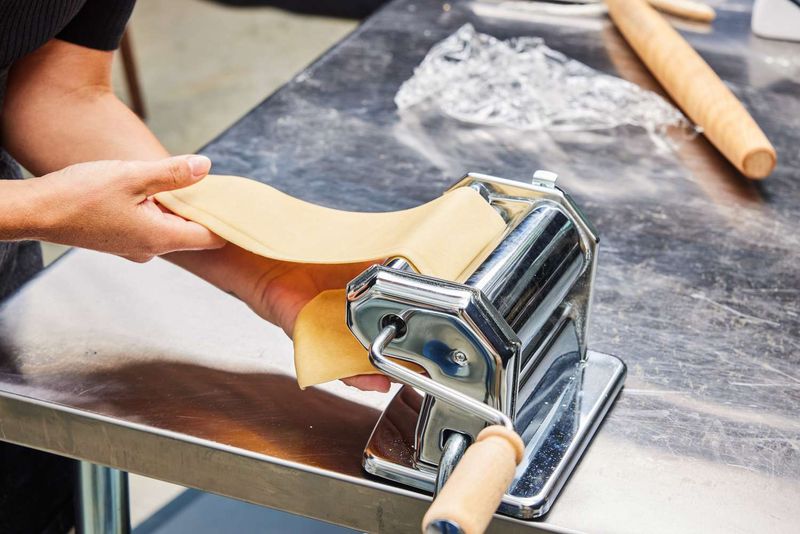
    Roll Out Using A Pasta Machine Or Rolling Pin
    Image Credit: © Serious Eats

    Feed your flattened dough through a pasta machine on the widest setting, then fold and repeat. Gradually decrease the thickness settings until you reach your desired thinness.

    If using a rolling pin, work from the centre outwards, rotating the dough frequently. Aim for a thickness of about 1-2 millimetres for most pasta types.

    9. Cut Into Desired Shapes
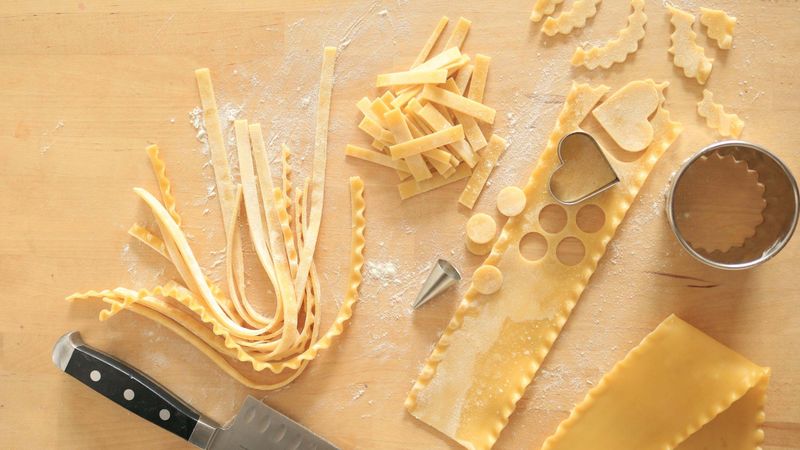
    Cut Into Desired Shapes
    Image Credit: © Lifehacker

    Once rolled thin, choose your preferred shape. Use a pasta machine attachment for fettuccine or tagliatelle, or cut by hand for wider ribbons.

    For filled pasta like ravioli, use cutters or a knife. Dust the cut pieces with flour to prevent sticking, then arrange them in loose nests until you're ready to cook.

    10. Cook Briefly In Boiling Salted Water
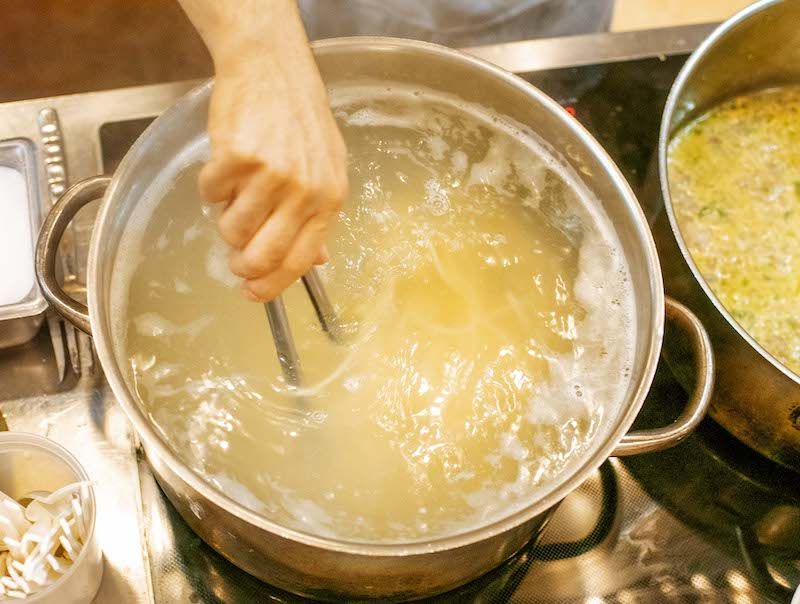
    Cook Briefly In Boiling Salted Water
    Image Credit: © Eataly

    Bring a large pot of water to a rolling boil and add plenty of salt. Drop in your fresh pasta and stir gently to prevent clumping.

    Fresh pasta usually cooks in 1–4 minutes, depending on thickness. Taste a strand to check if it's done, then drain and serve immediately with your favourite sauce.


    More Recommendations

    • 16 Surprisingly Useful Things To Cook When You Have Too Much Cheese And Not Enough Ideas
    • 21 Copycat Recipes That Might Make You Skip The Takeaway Altogether
    • 17 Cheap Meals That Taste Far Better Than Their Tiny Price Tag Suggests
    • 21 Everyday Foods Prepared Completely Differently Across Five Continents

    Primary Sidebar

    Keri Bevan

    Welcome, I'm Keri

    I'm the food photographer and recipe developer and writer behind Daily Dish.

    More About Me
    SUBSCRIBE

    Popular Posts

    • 13 Under-The-Radar Florida Beachfront Restaurants Locals Keep To Themselves
    • 12 Small-Town New York Diners With Huge Pancakes And Classic Comfort Food Locals Call The Best
    • 11 Breathtaking Waterfront Restaurants You'll Only Find In New Jersey
    • 12 Michigan Factory Tours Worth Taking For A Surprisingly Cool Day Trip

    Cozy Soups

    • Fava bean soup in a ceramic bowl.
      Fava Bean Soup
    • Vegan potato soup in a bowl with chives and croutons.
      Creamy Vegan Potato Soup
    • Bok choy soup with garlic and ginger.
      Bok Choy Soup With Garlic & Ginger
    • gluten free and dairy free tomato soup
      Creamy Gluten Free And Dairy Free Tomato Soup
    Company logs of people I have worked with.

    Footer

    ↑ back to top

    Recipes

    • Breakfast
    • Lunch
    • Dinner
    • Sauces and Dips
    • Gluten Free

    Newsletter

    • Sign Up! for emails and updates

    Contact

    • Contact
    • Privacy Policy
    • Daily Dish Web Stories

    As an Amazon Associate I earn from qualifying purchases.

    Copyright © 2024 Daily Dish

