













Street food is one of the best ways to experience a new culture, and sometimes the most unusual-looking snacks turn out to be the most unforgettable. From fried insects to stinky tofu, adventurous eaters around the world have discovered that weird and wonderful often go hand in hand.
Whether you're a seasoned traveler or just someone who loves bold flavors, these 20 strange street foods might just change the way you think about eating. Get ready to be surprised, grossed out, and seriously hungry all at once.
1. Fried Tarantulas - Cambodia
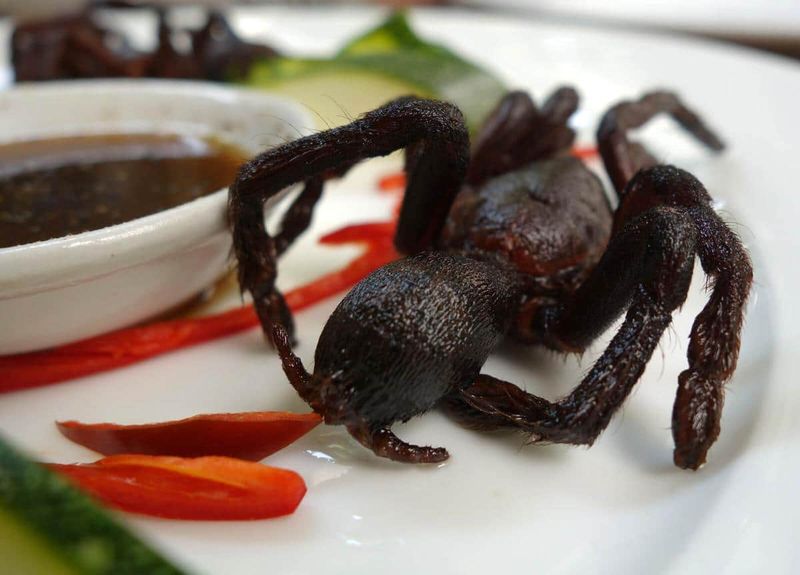
Crunch into something most people would run from. In Skuon, Cambodia, fried tarantulas are a popular snack sold by street vendors, and locals say they taste a bit like soft-shell crab.
The spiders are seasoned with salt, sugar, and garlic before being deep-fried to a golden crisp.
The legs go crunchy while the body stays soft inside. Brave travelers who try them often admit they are surprisingly tasty.
If you can get past the eight legs, this might be your boldest foodie moment ever.
2. Stinky Tofu - Taiwan
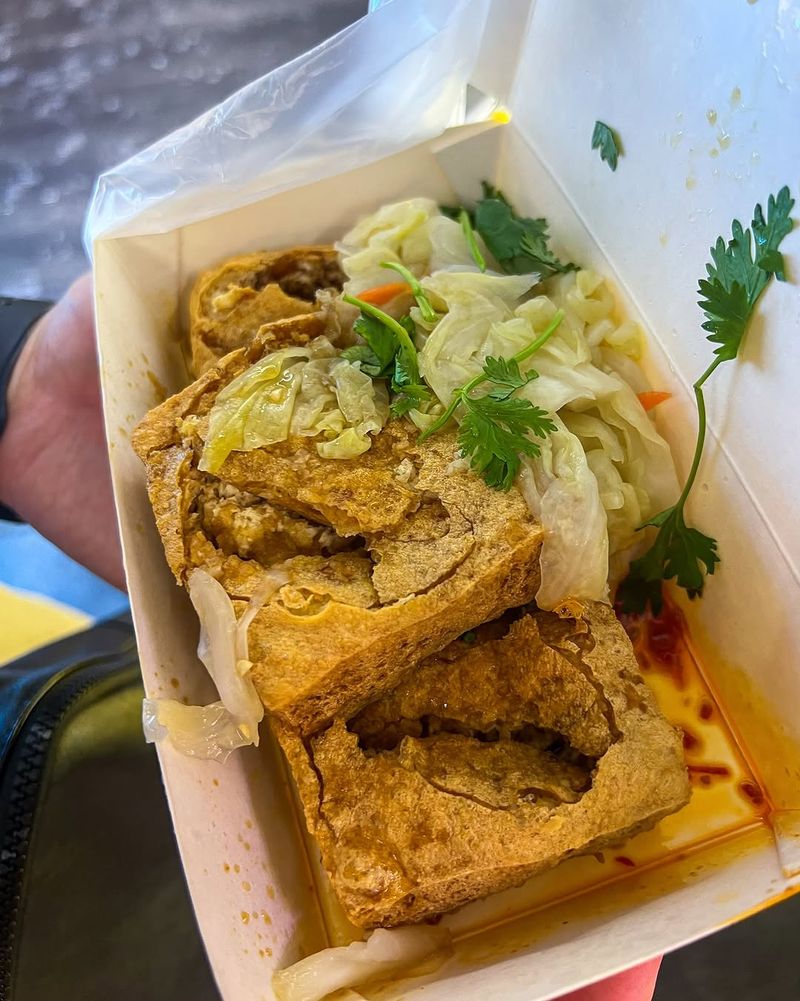
The smell hits you from half a block away, and that is exactly how street food lovers find it. Stinky tofu is fermented bean curd that smells shockingly strong but tastes incredibly rich and savory.
It is a staple at Taiwan's famous night markets, where it is fried, steamed, or served in broth.
First-timers are often shocked that something so pungent can taste so good. Think of it like stinky cheese, but crispier.
Once you try it, you just might become a fan for life.
3. Escamoles - Mexico
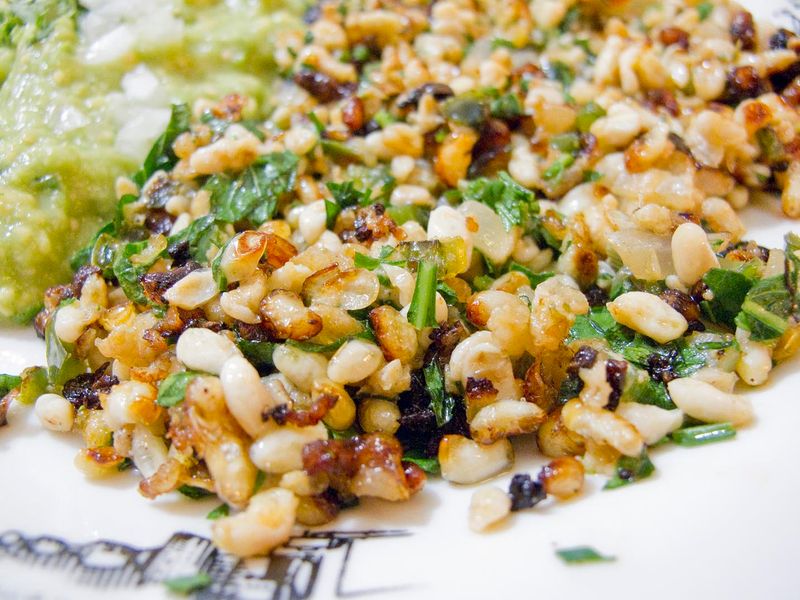
Known as "insect caviar," escamoles are the larvae of giant black ants harvested from agave plant roots in Mexico. They have a buttery, slightly nutty flavor that surprises almost everyone who tries them.
Street vendors typically serve them in tacos or on toast with guacamole and lime.
This dish dates back to Aztec times, making it one of the oldest street foods on this list. The texture is soft and creamy, almost like cottage cheese.
It is an ancient treat worth tasting at least once.
4. Balut - Philippines
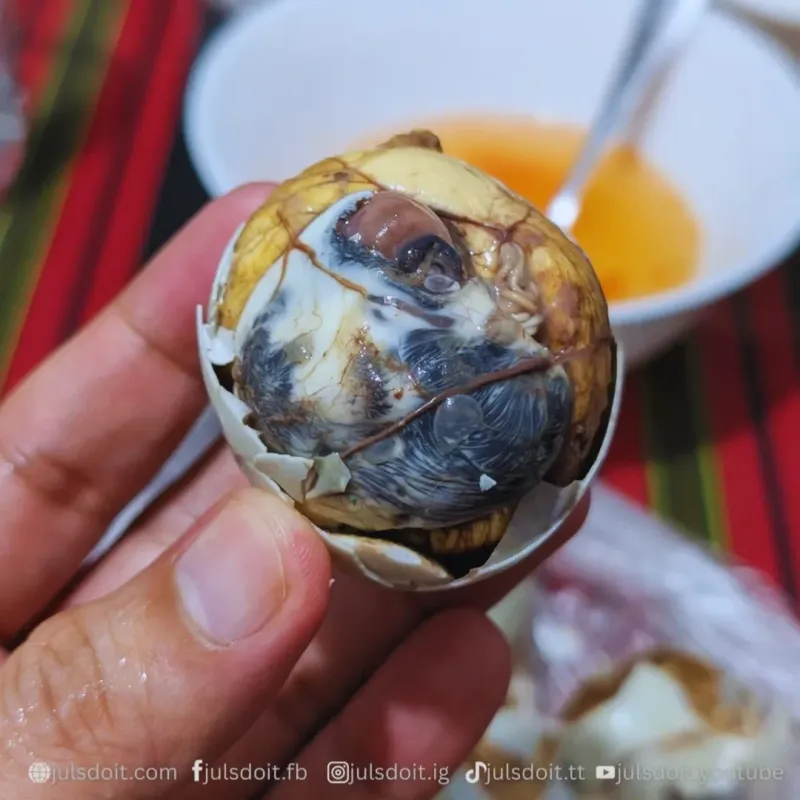
Balut is not for the faint of heart, but millions of Filipinos eat it every single day. It is a fertilized duck egg with a partially developed embryo inside, boiled and eaten straight from the shell.
Street sellers carry them in baskets, keeping them warm and ready for late-night snackers.
You crack it open, sip the broth, then eat the yolk and the tiny duck inside. It is surprisingly rich, savory, and filling.
Many say it tastes like a very flavorful hard-boiled egg with a twist.
5. Scorpion Skewers - China
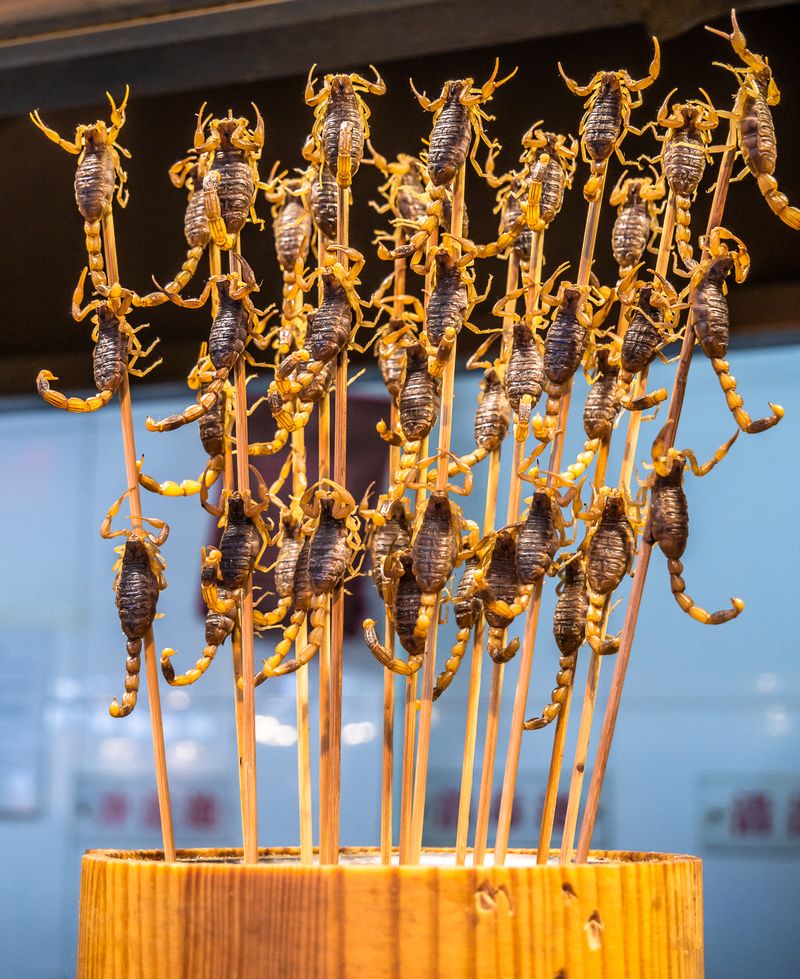
Walking down Wangfujing Street in Beijing feels like entering a food adventure zone. Scorpion skewers are one of the most eye-catching snacks you will find, with live scorpions threaded onto sticks and deep-fried right in front of you.
They are crunchy, salty, and surprisingly mild in flavor.
The venom is deactivated by heat, so there is nothing to fear except the stare of the scorpion. Vendors say tourists are usually more scared than locals.
Once fried, they taste a little like chips with a hint of seafood.
6. Cuy - Peru
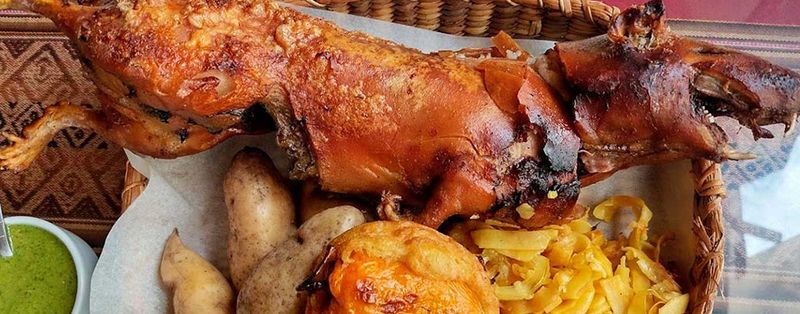
In Peru, guinea pigs are not pets. They are a prized source of protein that has been eaten for over 5,000 years in the Andes region.
Called cuy, the animal is typically roasted whole over an open flame and served with potatoes and Andean spices.
The meat is lean, slightly gamey, and similar in taste to rabbit. Seeing the whole animal on the plate can be a shock, but locals consider it a celebration food.
Trying cuy in Cusco is one of the most authentic culinary experiences you can have in South America.
7. Mopane Worms - South Africa
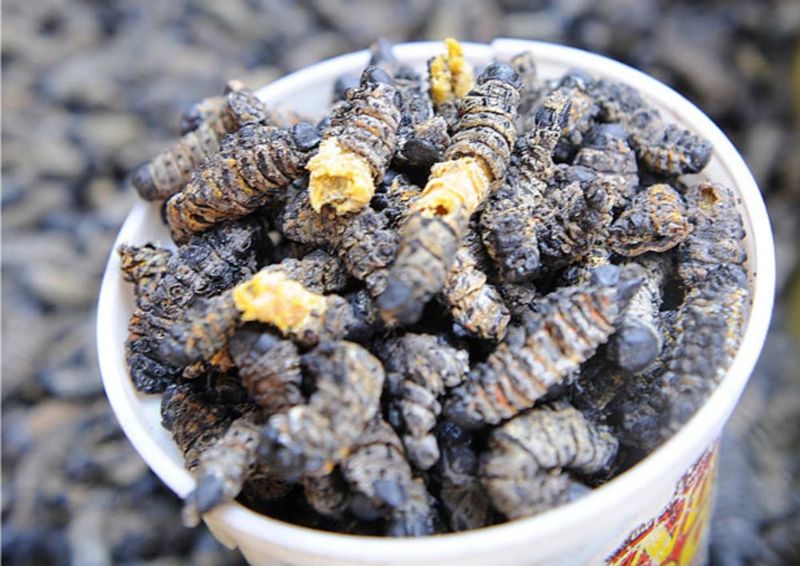
Mopane worms are not actually worms. They are the caterpillars of the Emperor moth, harvested from mopane trees across southern Africa.
Once dried or fried, they become a crunchy, protein-packed snack with a smoky, earthy flavor that locals absolutely love.
They are sold at markets and roadside stalls throughout South Africa, Zimbabwe, and Botswana. Some vendors cook them in spicy tomato sauce, making them even harder to resist.
High in protein and iron, mopane worms are also one of the most nutritious snacks on this list.
8. Takoyaki - Japan
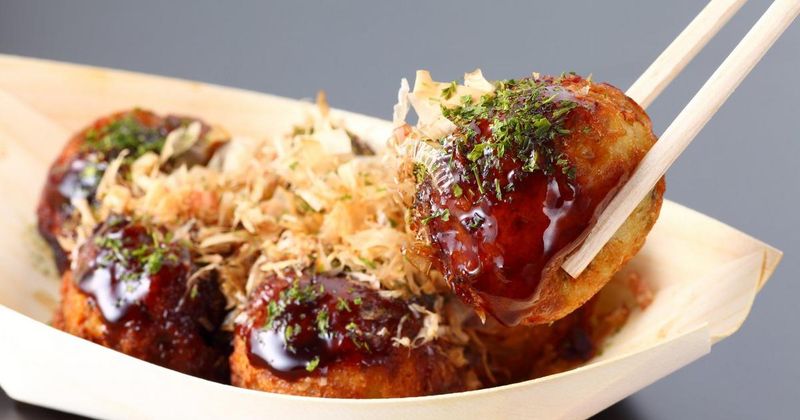
Round, golden, and irresistibly saucy, takoyaki are one of Japan's most beloved street snacks. Made from a wheat-flour batter filled with diced octopus, they are cooked in a special round mold and flipped with skewers to create perfect little balls.
Originating in Osaka in the 1930s, they have been a street food icon ever since.
Topped with savory sauce, mayo, and dancing bonito flakes, each bite is a burst of umami. Hot and gooey inside, crispy outside.
Takoyaki proves that octopus deserves way more love.
9. Wasp Crackers - Japan
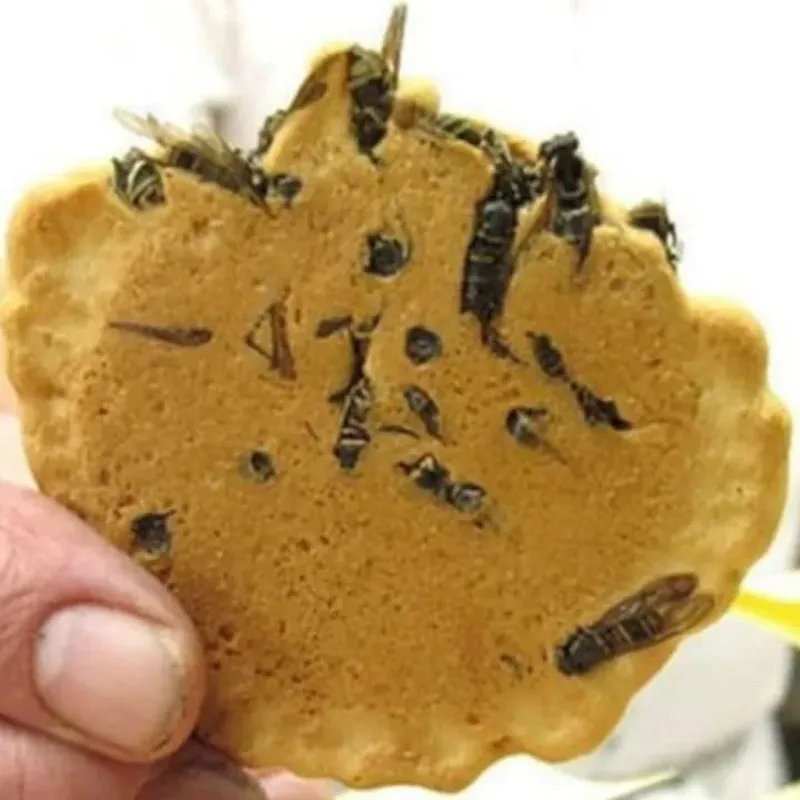
Japan makes this list twice because the country truly knows how to make unusual food irresistible. Wasp crackers are rice crackers baked with digger wasps inside, and they are a regional specialty in Nagano.
The wasps are boiled, dried, and mixed into the batter before baking.
Each cracker has a subtly bitter, earthy flavor from the wasps, which adds an unexpected depth. They are crunchy, lightly sweet, and genuinely snackable.
Locals have been enjoying them for generations, and adventurous food tourists are now catching on fast.
10. Hákarl - Iceland
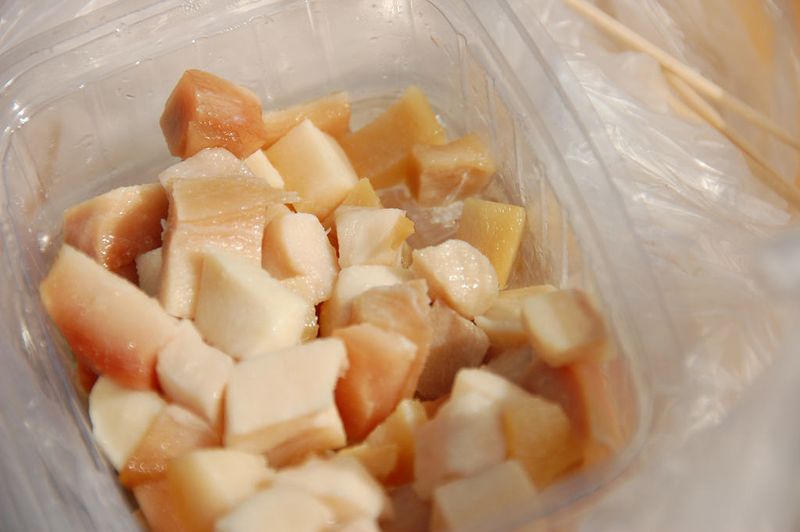
Iceland's most notorious street food is not for beginners. Hákarl is fermented Greenlandic shark that has been buried underground for months and then hung to dry for several more.
The result is a chewy, pungent cube of meat with an ammonia-heavy smell that makes stinky tofu seem mild.
Celebrity chef Anthony Bourdain once called it the single worst thing he had ever eaten. Yet Icelanders eat it proudly as a cultural tradition.
Wash it down with a shot of local schnapps and you have officially earned your adventurous eater badge.
11. Chapulines - Mexico
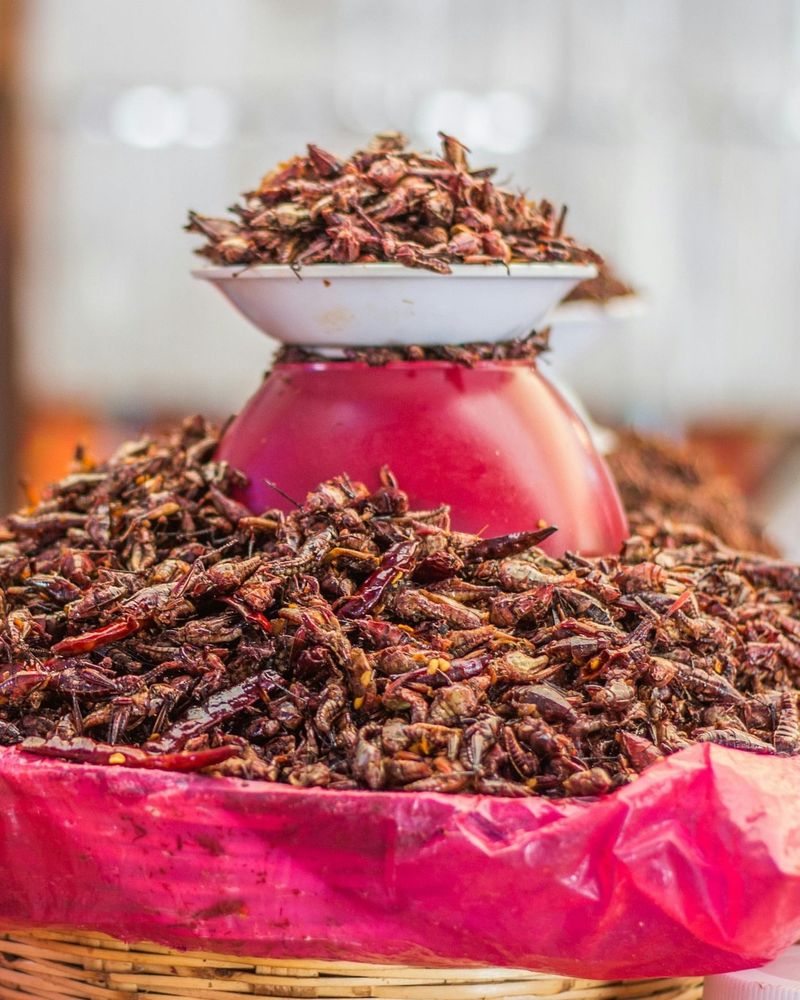
Oaxaca's markets buzz with the sight and smell of chapulines, toasted grasshoppers that have been a staple snack in Mexico since pre-Hispanic times. Seasoned with chili, lime, and garlic, they are crunchy, tangy, and wildly addictive.
Street vendors sell them by the bag or as a topping for tacos and guacamole.
Gram for gram, grasshoppers have more protein than beef, making them a nutritious choice too. The texture is like a light, airy chip with a punch of flavor.
Once you start snacking, it is almost impossible to stop.
12. Tteokbokki with Intestines - South Korea
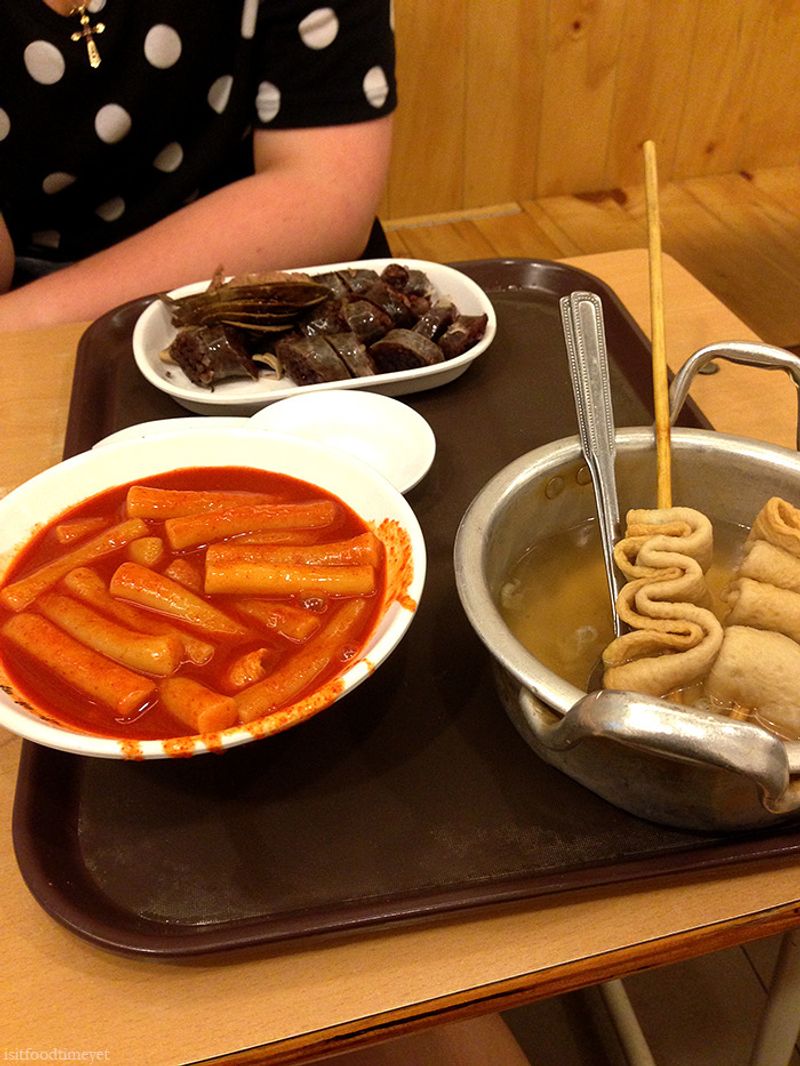
Tteokbokki, chewy rice cakes in spicy red sauce, is already one of Korea's most iconic street foods. But adding sundae, or pig intestines stuffed with glass noodles and vegetables, takes it to a whole new level.
The combination is a staple at pojangmacha stalls across Seoul.
The intestines are surprisingly mild and chewy, absorbing the bold, spicy-sweet sauce beautifully. Together they create a deeply satisfying, hearty snack.
Korean street food fans will tell you that skipping this combo means you have not truly experienced Seoul's food scene.
13. Durian - Southeast Asia
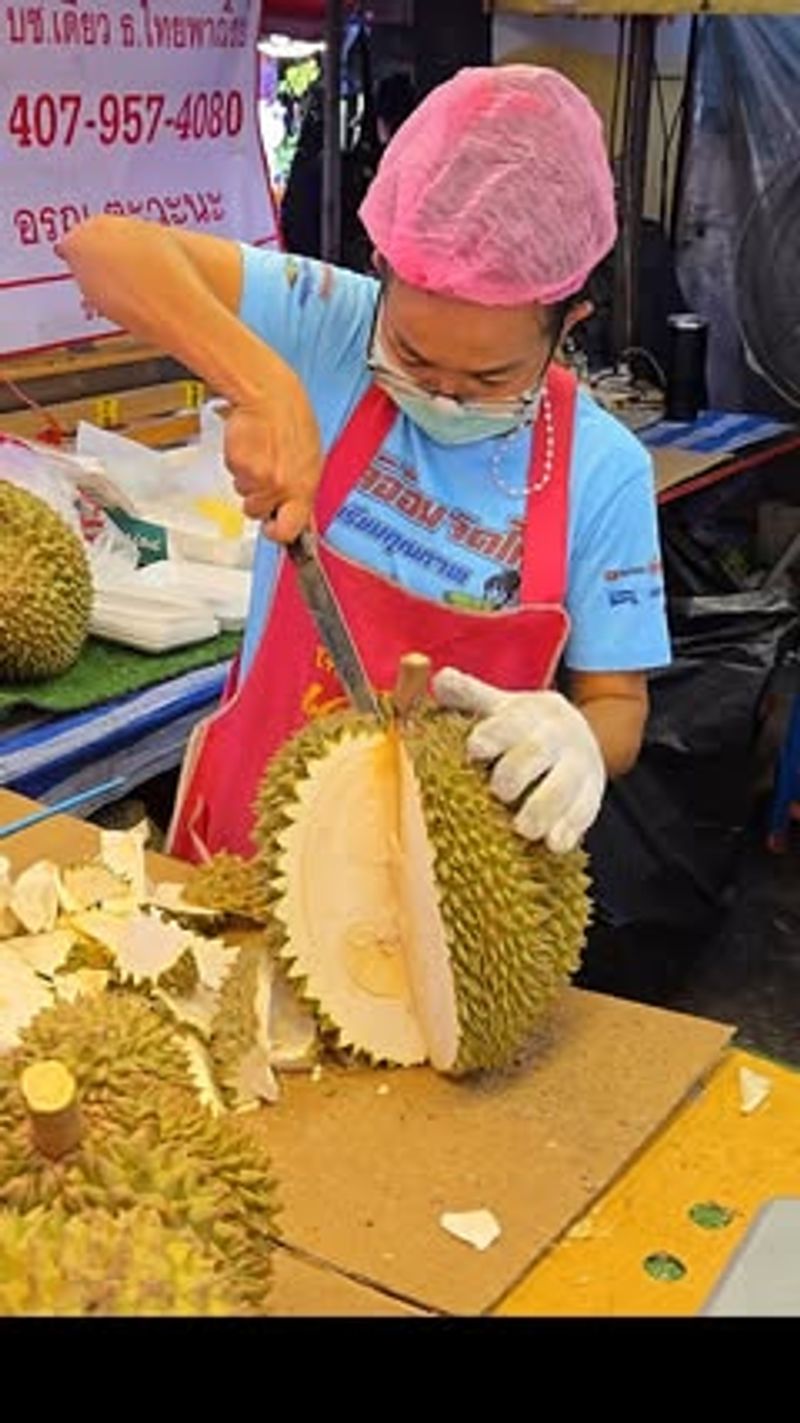
Banned from hotels and public transport across much of Southeast Asia, durian is the world's most controversial fruit. Its spiky shell hides a creamy, custard-like interior that fans describe as rich, sweet, and complex.
Critics say it smells like gym socks mixed with onions left in the sun.
Street vendors in Thailand, Malaysia, and Indonesia sell it freshly cut and ready to eat. The taste does not match the smell at all, which is the great durian paradox.
First-time tasters are almost always shocked by how good it actually is.
14. Sannakji - South Korea
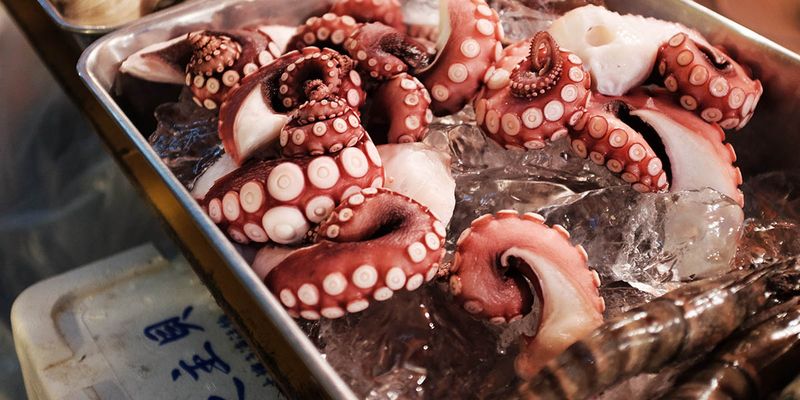
Sannakji is one of the most thrilling and slightly terrifying eating experiences you can have. Small octopuses are cut into pieces and served immediately, meaning the tentacles are still wriggling on the plate when they arrive.
Seasoned with sesame oil and seeds, the flavor is clean and oceanic.
You have to chew carefully because the suction cups can stick to your throat. It sounds scary, but the fresh, springy texture is unlike anything else.
Near Seoul's Noryangjin fish market, this is considered a perfectly normal afternoon snack.
15. Khao Lam - Thailand
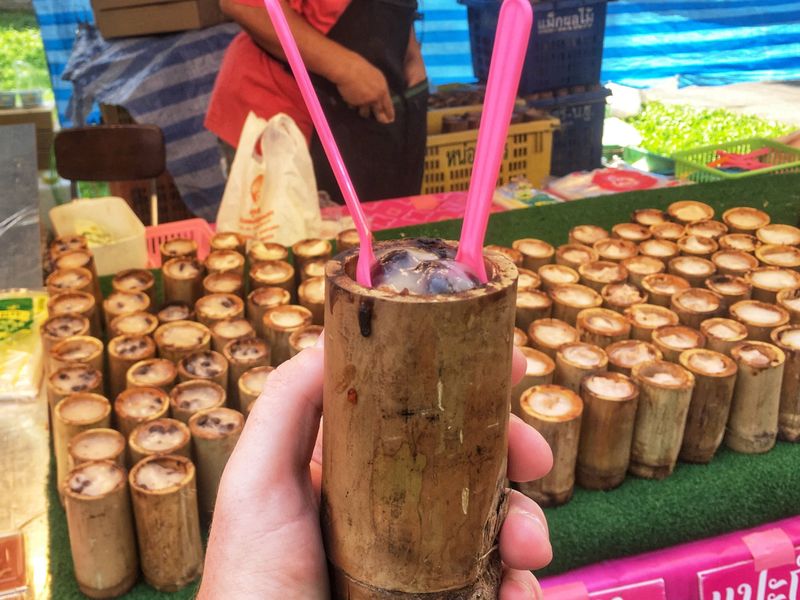
Sticky rice cooked inside a bamboo tube sounds simple, but khao lam is anything but ordinary. The glutinous rice is mixed with coconut milk and black beans, stuffed into fresh bamboo, and roasted slowly over charcoal until perfectly cooked.
When you peel away the bamboo, a fragrant, slightly smoky rice log is revealed.
It is sweet, creamy, and carries the subtle scent of the bamboo itself. Common at festivals and roadside stalls in northern Thailand, khao lam is a comforting, beautiful snack that feels like edible art.
Do not leave Chiang Mai without trying one.
16. Fried Brain Sandwich - USA
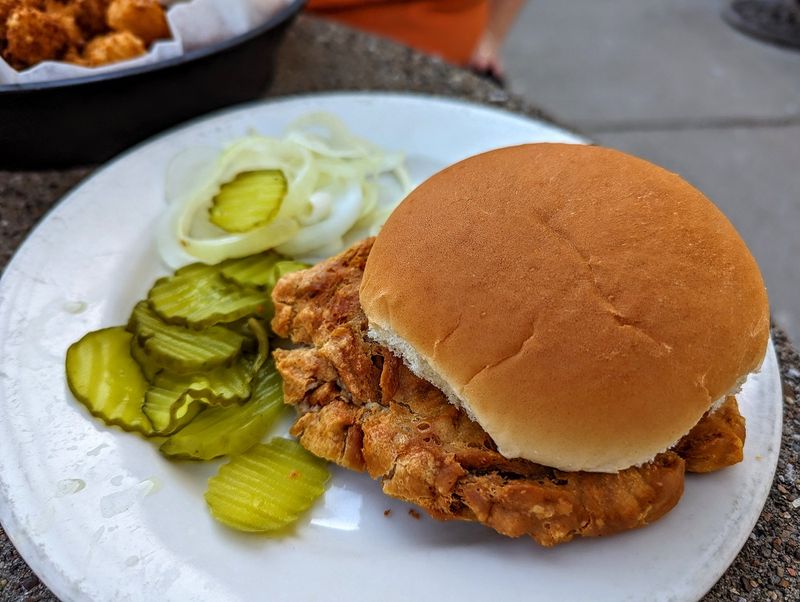
The American Midwest has its own version of weird-but-delicious street food, and the fried brain sandwich from Evansville, Indiana, is proof. Sliced calf or pig brain is battered and deep-fried, then served on a soft bun with mustard and onions.
It was once a working-class staple and is still beloved in certain diners and festivals today.
The texture is creamy and soft, almost like a very rich pate. The crispy coating balances the softness inside perfectly.
It is one of those dishes that sounds horrifying until the first bite changes everything.
17. Odeng - South Korea
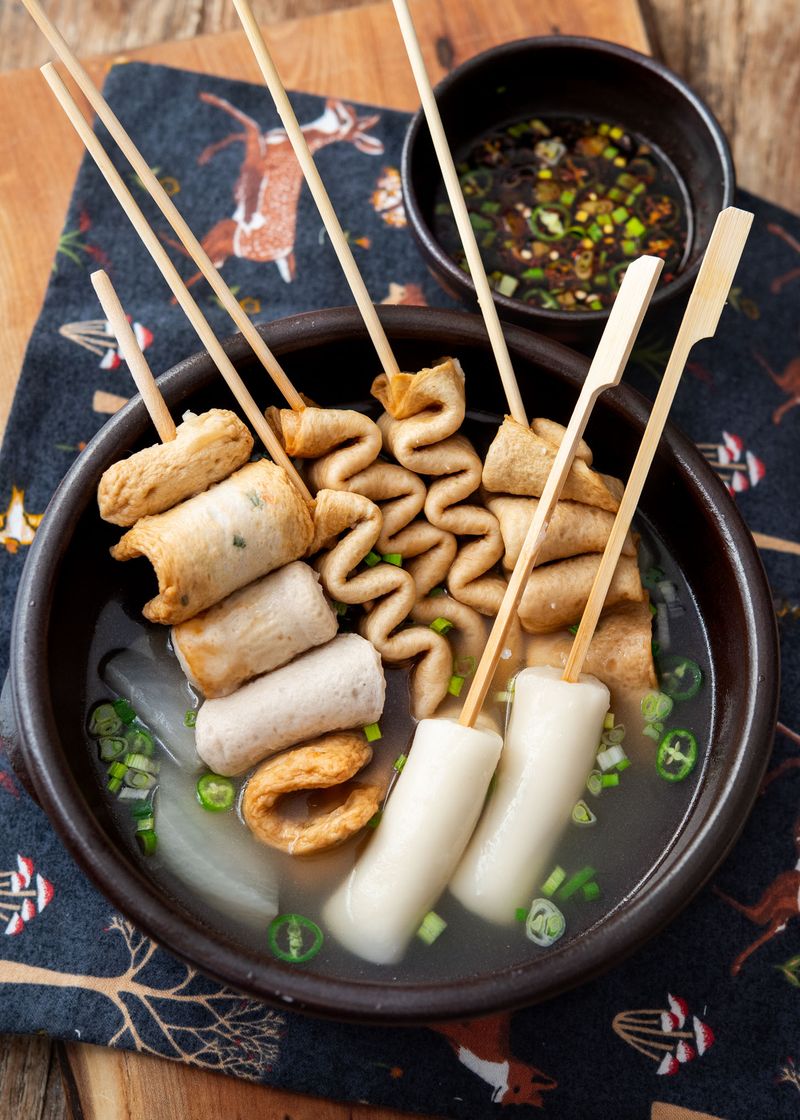
On a cold winter day in Busan, nothing warms you up quite like a skewer of odeng dipped in hot, savory broth. These fish cake skewers are made from pureed fish mixed with flour, formed into flat sheets, and threaded onto sticks.
They simmer in a light dashi-style broth that you can sip for free while you eat.
Odeng stalls are everywhere in South Korea, from subway stations to busy market streets. The flavor is mild, slightly sweet, and deeply comforting.
It is humble street food at its absolute best.
18. Crocodile Meat Skewer - Australia
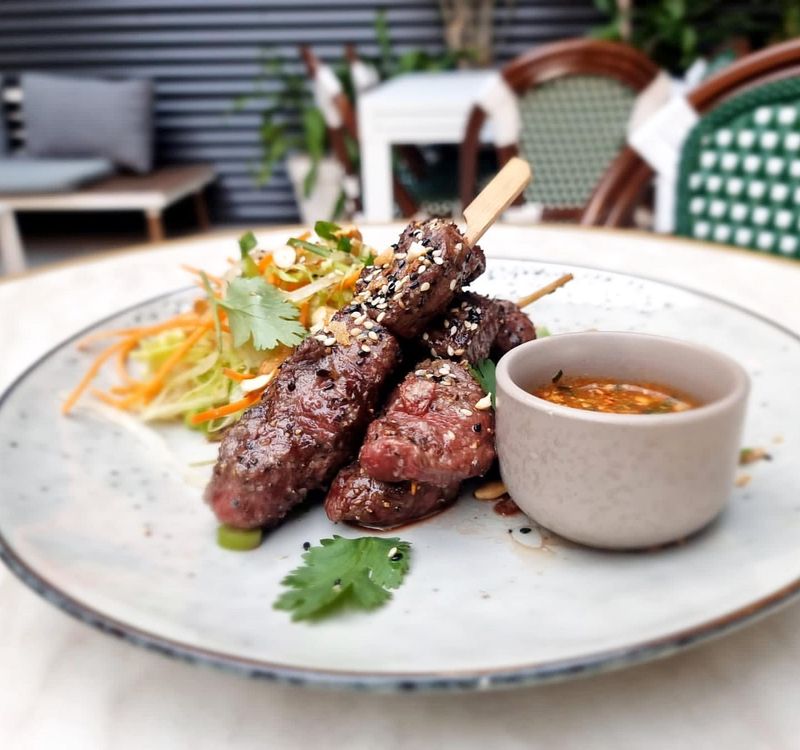
Australia's Northern Territory is where you can find crocodile on a stick, and it is far more delicious than it sounds. Crocodile meat is lean, white, and mild in flavor, often compared to a cross between chicken and fish.
Marinated in citrus and herbs, then grilled on skewers, it makes for a surprisingly elegant street snack.
Darwin's outdoor food markets and festivals are the best places to try it. The meat is tender, low in fat, and cooks quickly over high heat.
Eating a predator on a stick is a bragging right worth having.
19. Muktuk - Greenland and Canada
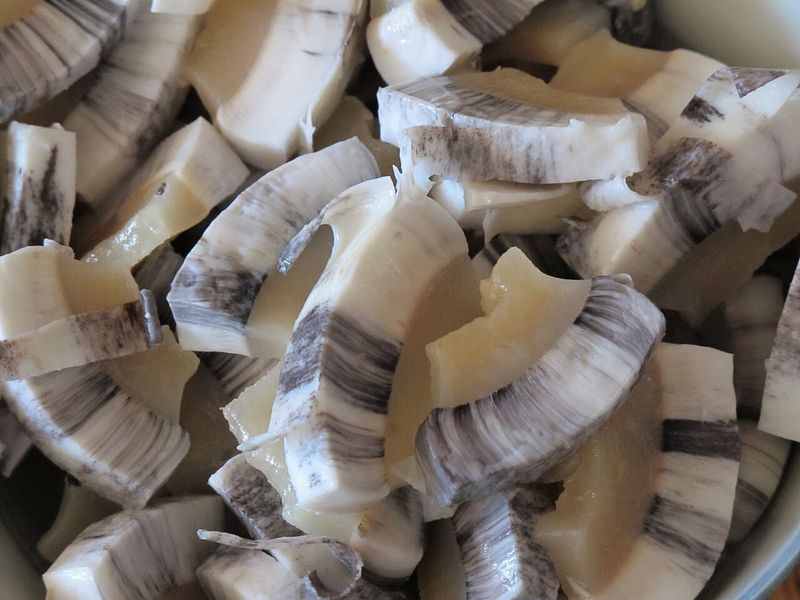
Muktuk is one of the oldest traditional foods in the Arctic world, eaten by Inuit communities in Greenland and Canada for thousands of years. It consists of frozen raw beluga or narwhal skin with a layer of blubber attached, often eaten plain or dipped in soy sauce.
The texture is chewy and slightly rubbery, with a mild, oceanic flavor.
Rich in vitamins C and D, it was historically essential for survival in extreme climates. You will not find it at a typical market, but it is offered at Inuit cultural gatherings.
It is raw, real, and remarkably meaningful.
20. Kopi Luwak Coffee - Indonesia
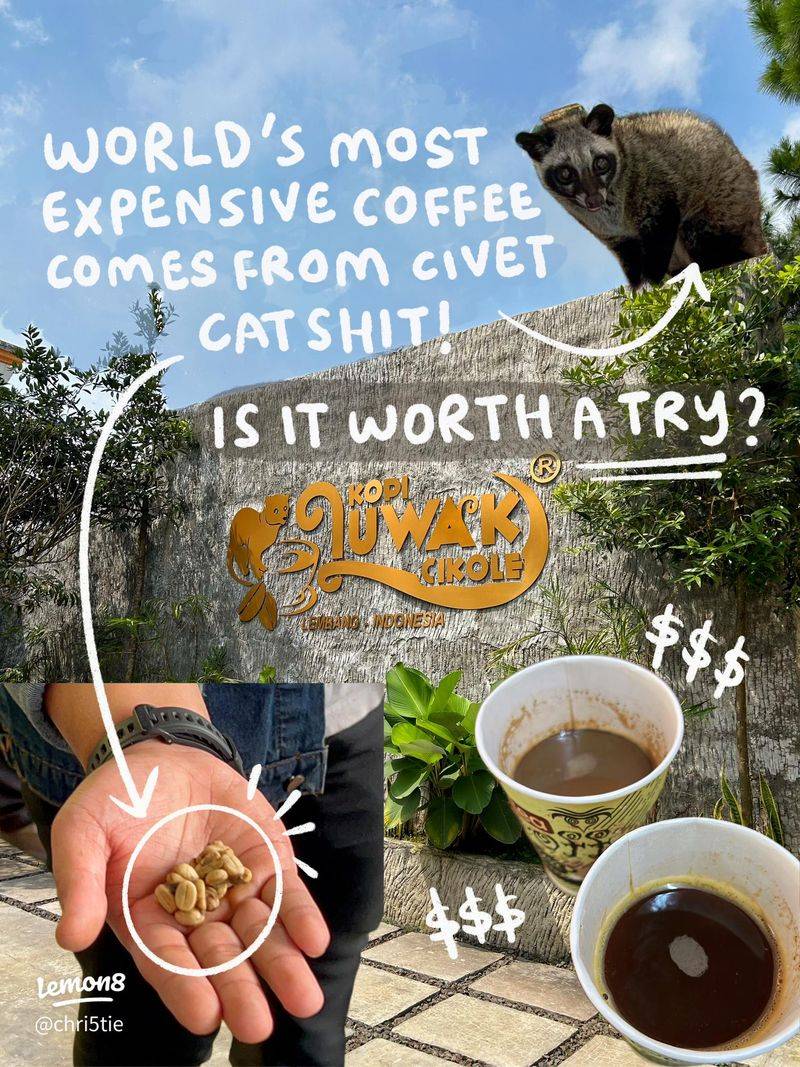
Kopi luwak is the world's most expensive coffee, and it comes with one of the strangest origin stories in food history. Asian palm civets eat ripe coffee cherries, and the beans pass through their digestive system before being collected, cleaned, and roasted.
The fermentation process inside the civet's gut creates an unusually smooth, low-bitterness brew.
Street stalls in Bali and Sumatra sell small cups for just a few dollars, far cheaper than abroad. The flavor is rich, earthy, and surprisingly clean.
Yes, it is coffee made from animal droppings, and yes, it is absolutely worth trying.




Comments
No Comments