










Long before fast food chains took over, street vendors were already solving a very real problem: hungry workers who had no time to sit down for a meal. From bustling markets in Asia to crowded plazas in Latin America, street food was born out of necessity.
These quick, portable, and delicious bites became the fuel that kept cities running. Get ready to explore 17 incredible street foods that have stood the test of time.
1. Tacos (Mexico)
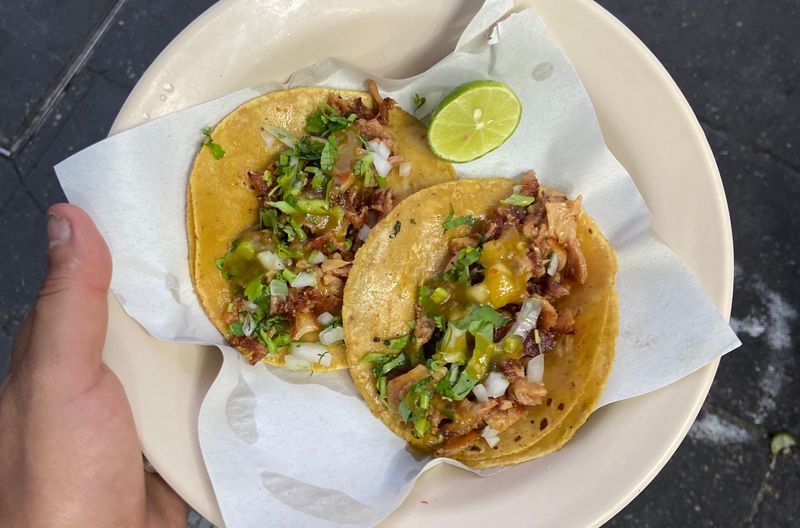
Few foods in history have been as perfectly engineered for life on the go as the Mexican taco. Corn tortillas fold neatly around fillings like carne asada, chorizo, or roasted vegetables, making them easy to eat while standing.
Workers in Mexican markets and construction sites have relied on tacos for centuries. They are cheap, filling, and ready in seconds.
Vendors set up on nearly every street corner, making them impossible to miss.
2. Banh Mi (Vietnam)
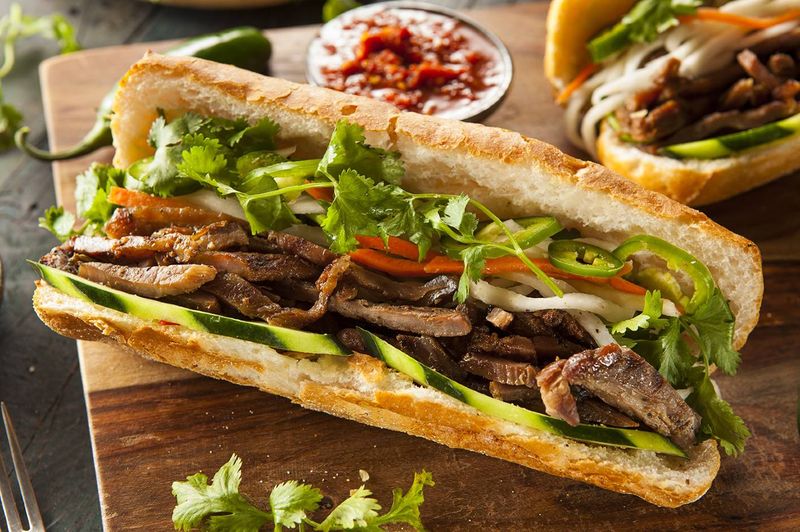
Born from the French colonial influence in Vietnam, the banh mi is a crispy baguette stuffed with a surprising mix of flavors. Pickled daikon, fresh herbs, savory pork, and a swipe of pate come together in one tidy package.
Office workers and factory employees across Vietnam grab one on the way to work every single morning. It costs very little, fills you up fast, and requires zero utensils.
That combination made it legendary.
3. Pani Puri (India)
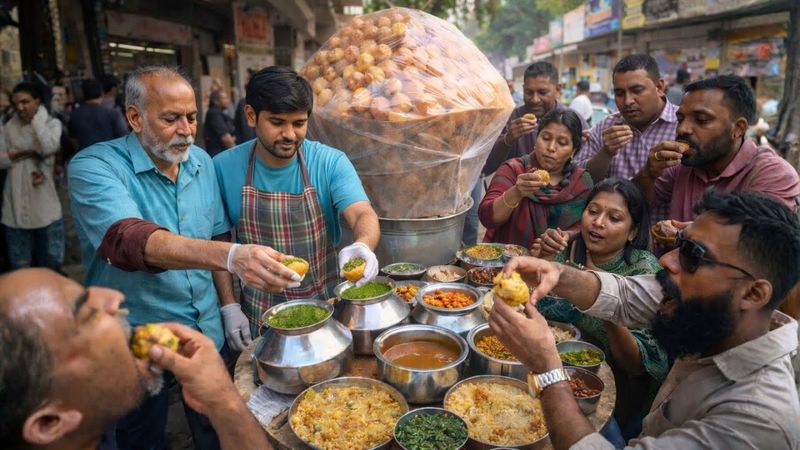
Pani puri is the kind of snack that stops you in your tracks. A hollow, crispy puri shell is filled with spiced potatoes or chickpeas, then dunked in tangy tamarind or mint water just before eating.
The whole thing disappears in one bite, which is exactly why workers love it. There is no mess, no waiting, and no sitting required.
Vendors across India sell hundreds of these per hour to people who barely slow down.
4. Arepas (Colombia and Venezuela)
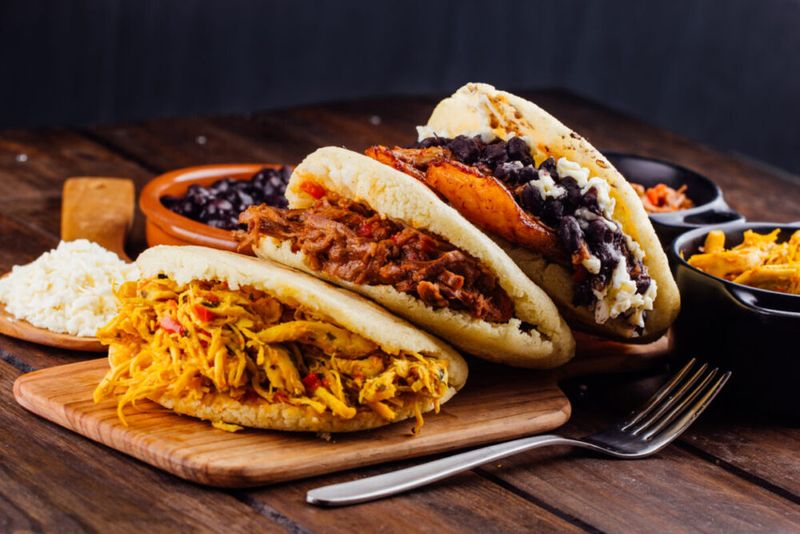
Made from ground maize dough and grilled to golden perfection, arepas have been feeding workers in Colombia and Venezuela for generations. They are sturdy enough to hold fillings like cheese, egg, or shredded chicken without falling apart.
Early morning laborers and market sellers grab arepas before sunrise. The thick corn cakes are easy to hold with one hand, require no plate, and provide steady energy throughout a long workday.
Simple food, serious staying power.
5. Takoyaki (Japan)
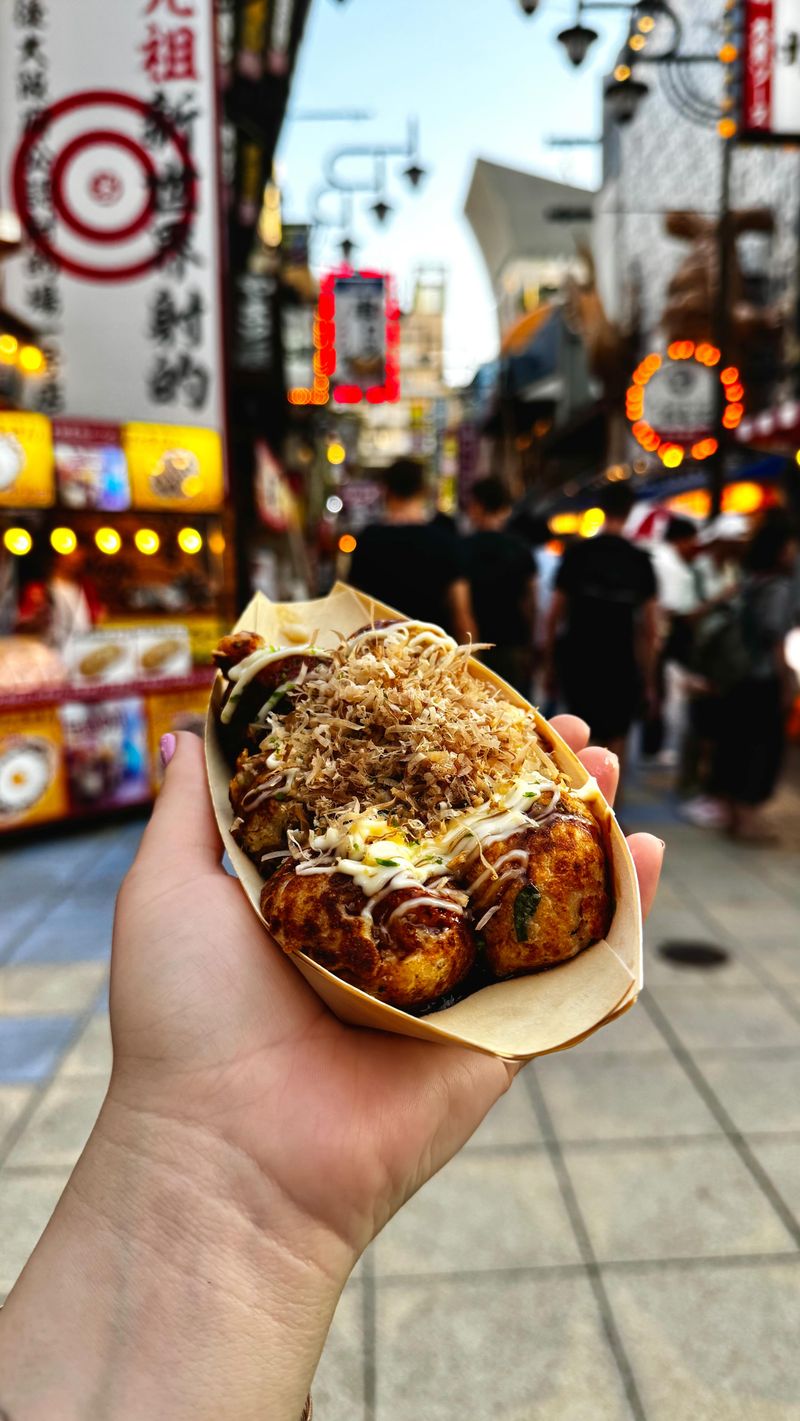
Walk through any busy street in Osaka and the smell of takoyaki will pull you right in. These round, golden balls of batter are cooked in special molds and filled with tender pieces of octopus.
Topped with savory sauce, mayo, and dancing bonito flakes, they come in a small tray perfect for eating while walking. Japanese factory workers and shoppers have snacked on takoyaki since the 1930s, making it one of the most iconic grab-and-go foods ever invented.
6. Empanadas (Argentina)
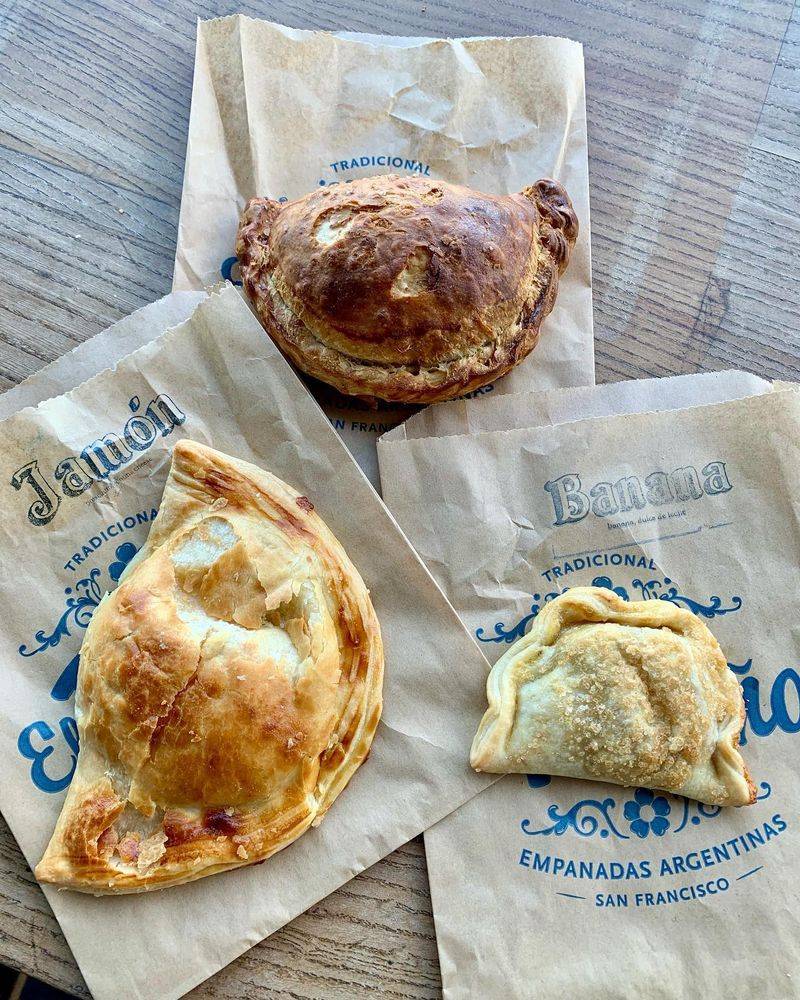
Empanadas are the original hand pie, and Argentina has perfected the art. A flaky, baked or fried dough shell wraps around fillings like beef, hard-boiled egg, olives, or corn, creating a self-contained meal.
Workers across Argentina have eaten empanadas on the go for centuries. Each region has its own style, with slight variations in dough thickness and filling spice.
They travel well, stay warm for a while, and need absolutely nothing else to be a satisfying lunch.
7. Currywurst (Germany)
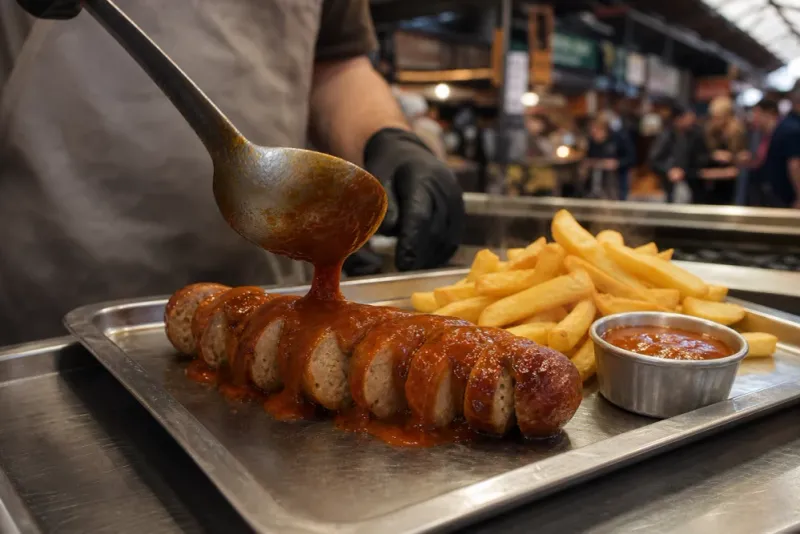
Invented in post-war Berlin in 1949 by a resourceful woman named Herta Heuwer, currywurst became the fuel of the German working class almost overnight. A grilled pork sausage is sliced, smothered in tomato-curry sauce, and served on a small tray with a wooden fork.
Factory workers and construction crews across Germany relied on this quick snack during lunch breaks. Today, Berlin alone sells an estimated 70 million currywursts every year.
History in every bite.
8. Jianbing (China)
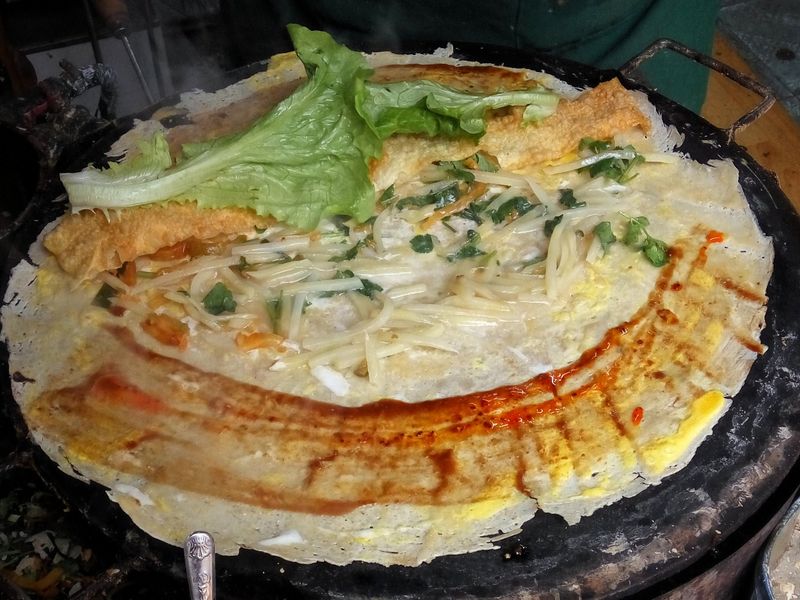
Jianbing is China's answer to the breakfast rush, and it has been solving morning hunger since the Han Dynasty. A thin crepe is cooked on a hot griddle, spread with egg, hoisin sauce, and spicy chili paste, then wrapped around a crunchy fried cracker.
The whole thing is folded into a neat package and handed over in seconds. Commuters in Beijing and Shanghai eat jianbing while walking to work, riding bikes, or boarding the subway.
Pure morning magic.
9. Falafel (Middle East)
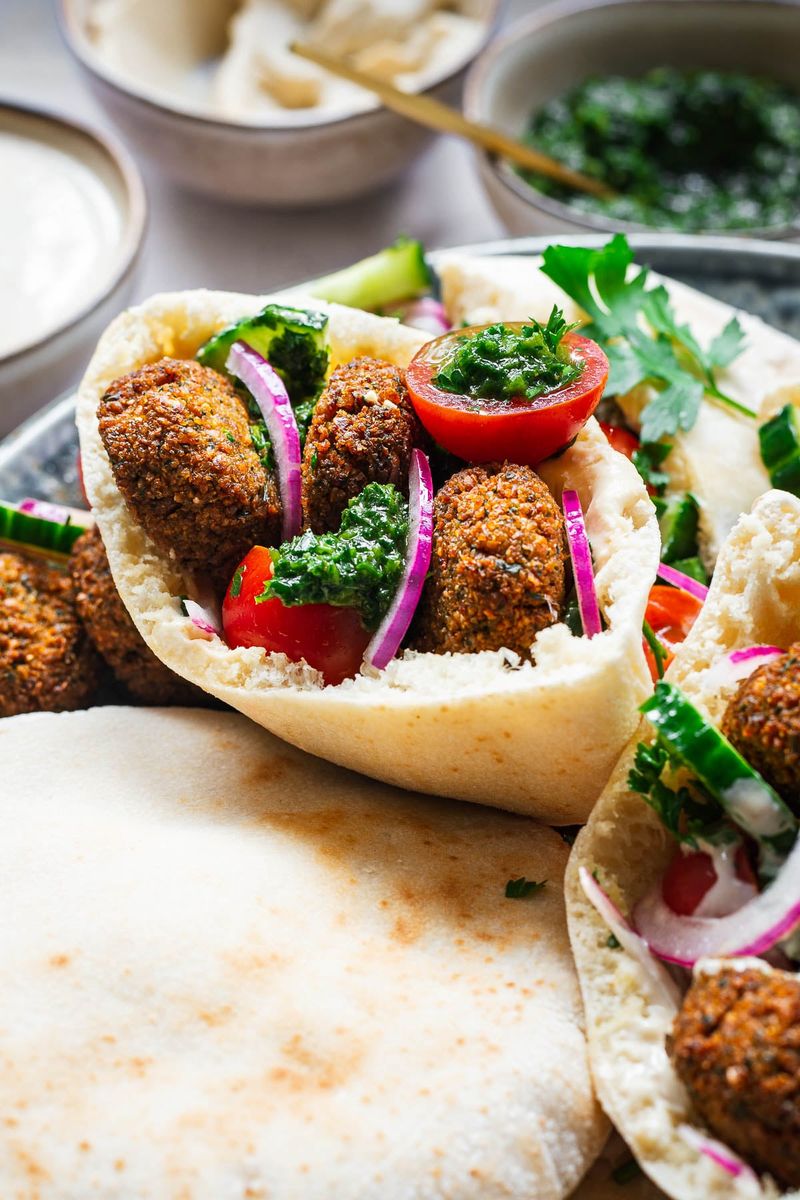
Crispy on the outside and fluffy on the inside, falafel has been a street food staple across the Middle East for thousands of years. Chickpeas or fava beans are ground with herbs and spices, shaped into balls, and fried until golden.
Tucked into warm pita with tomatoes, cucumber, and tahini, falafel makes a filling meal that fits in one hand. Workers in Cairo, Beirut, and Jerusalem have eaten falafel wraps on the job for generations without missing a beat.
10. Bunny Chow (South Africa)
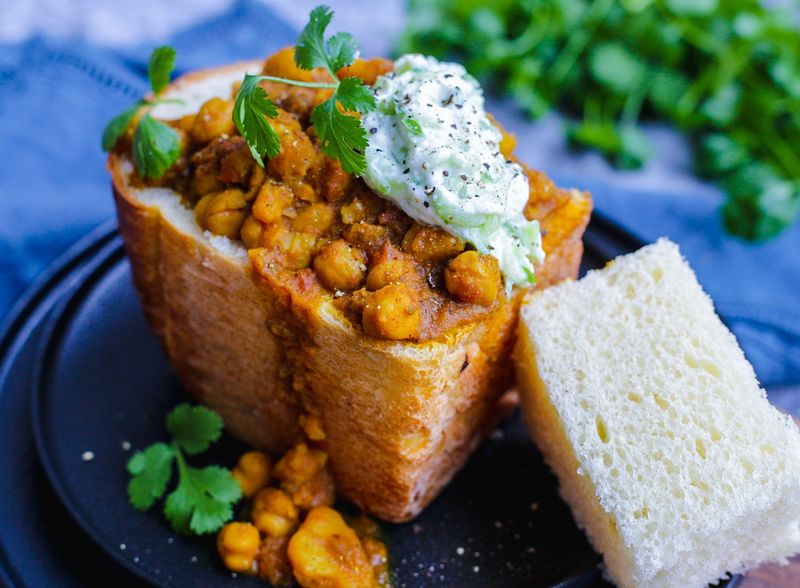
Bunny chow sounds playful, but it has a serious history. Invented by Indian workers in Durban during the apartheid era, it was created partly because Black and Indian workers were not allowed to sit in restaurants.
A half loaf of white bread is hollowed out and packed with rich, spiced curry. The bread lid sits on top, soaking up all the sauce.
No plate, no fork, no chair needed. It was portable survival food that became a beloved national icon.
11. Choripan (Argentina and Chile)
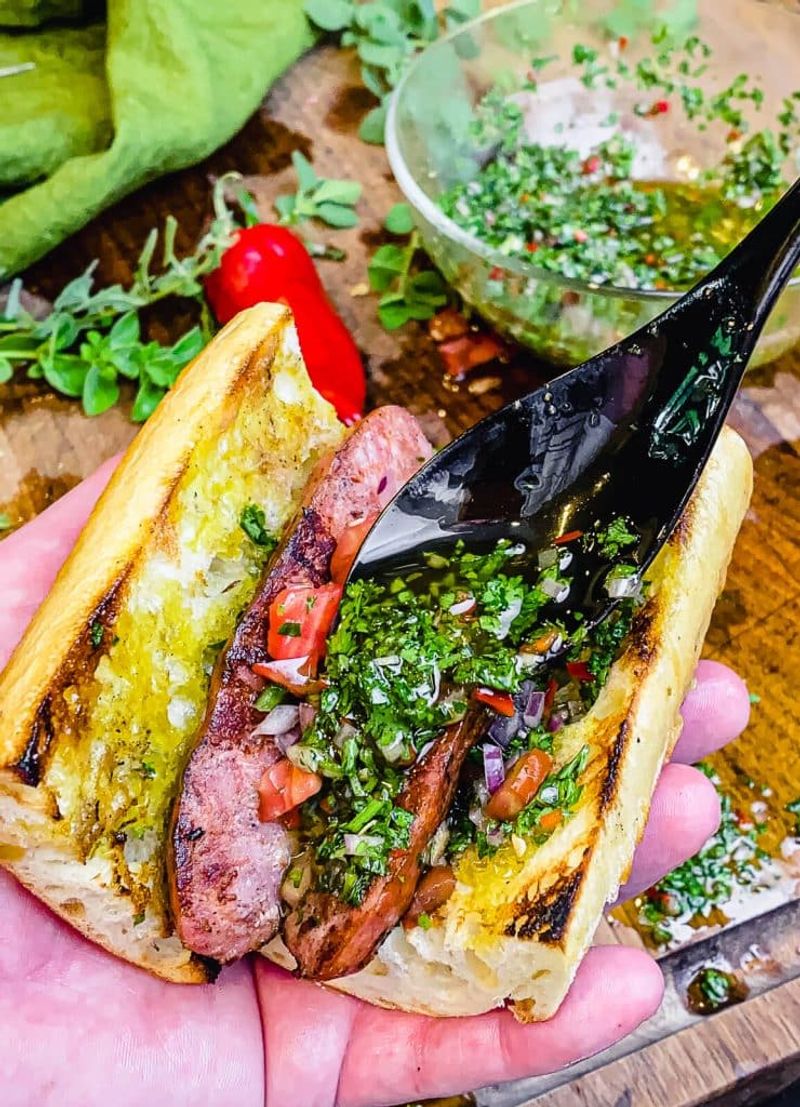
Choripan is exactly what it sounds like: chorizo plus pan, meaning sausage plus bread. A grilled pork sausage is split open and tucked into a crusty roll, then loaded with chimichurri, a fresh herb sauce made with parsley, garlic, and vinegar.
Soccer fans, construction workers, and market vendors across Argentina and Chile have eaten choripan for well over a century. It is bold, messy in the best way, and absolutely satisfying.
No table required, just a good appetite.
12. Pad Thai (Thailand)
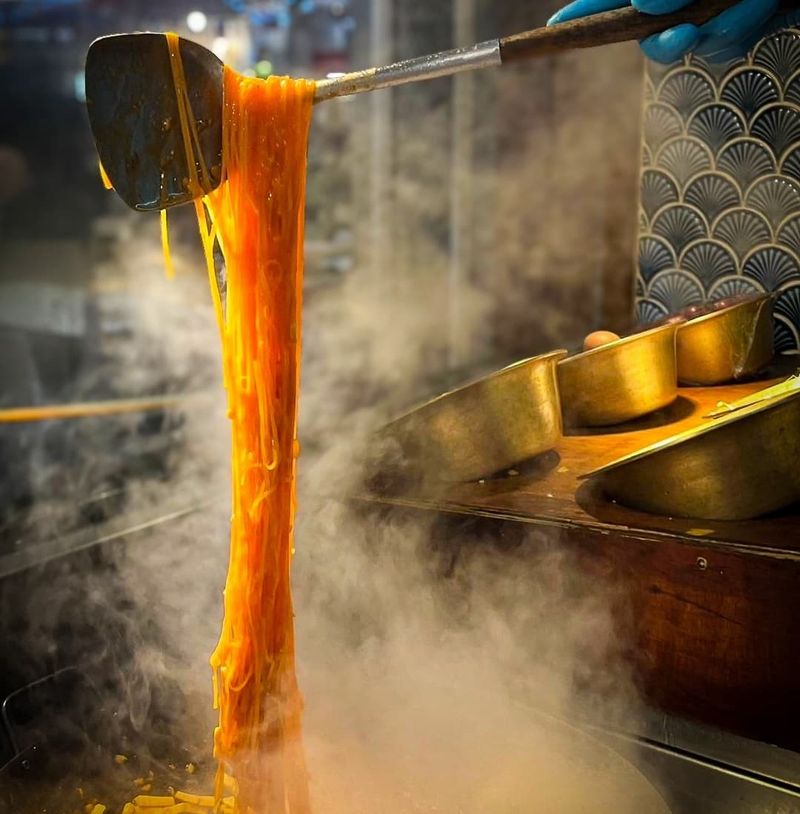
Pad Thai was actually promoted by the Thai government in the 1930s as a way to create a national dish and feed workers cheaply. Rice noodles are stir-fried in a blazing wok with egg, tofu or shrimp, bean sprouts, and tamarind sauce.
Street vendors serve it in a folded banana leaf or a small bag, making it easy to carry and eat on the move. Bangkok's sidewalks are lined with pad thai carts from morning to midnight, always busy.
13. Pierogi (Poland)
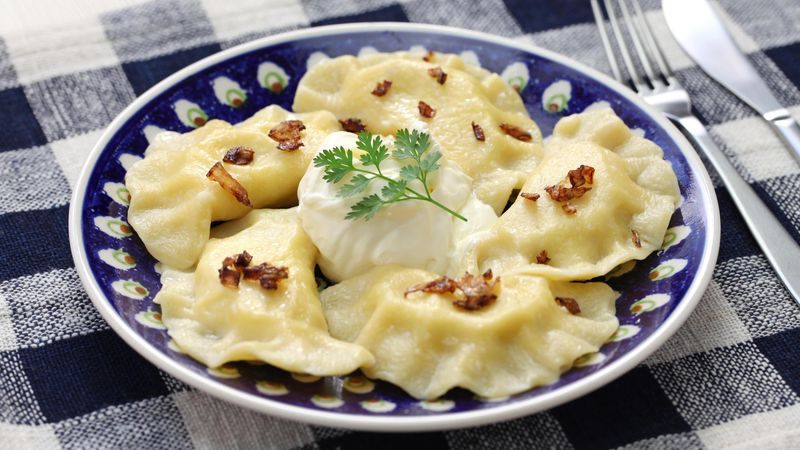
Pierogi are Poland's beloved stuffed dumplings, and they have been warming workers up for centuries. Dough pockets are filled with potato and cheese, sauerkraut and mushroom, or savory meat, then boiled and sometimes pan-fried until golden.
At Polish markets and festivals, vendors serve them in small trays with a dollop of sour cream. They are hearty, warm, and satisfying without requiring a sit-down meal.
Polish miners and factory workers have long counted on pierogi to power through tough shifts.
14. Corn on the Cob - Elote (Mexico)
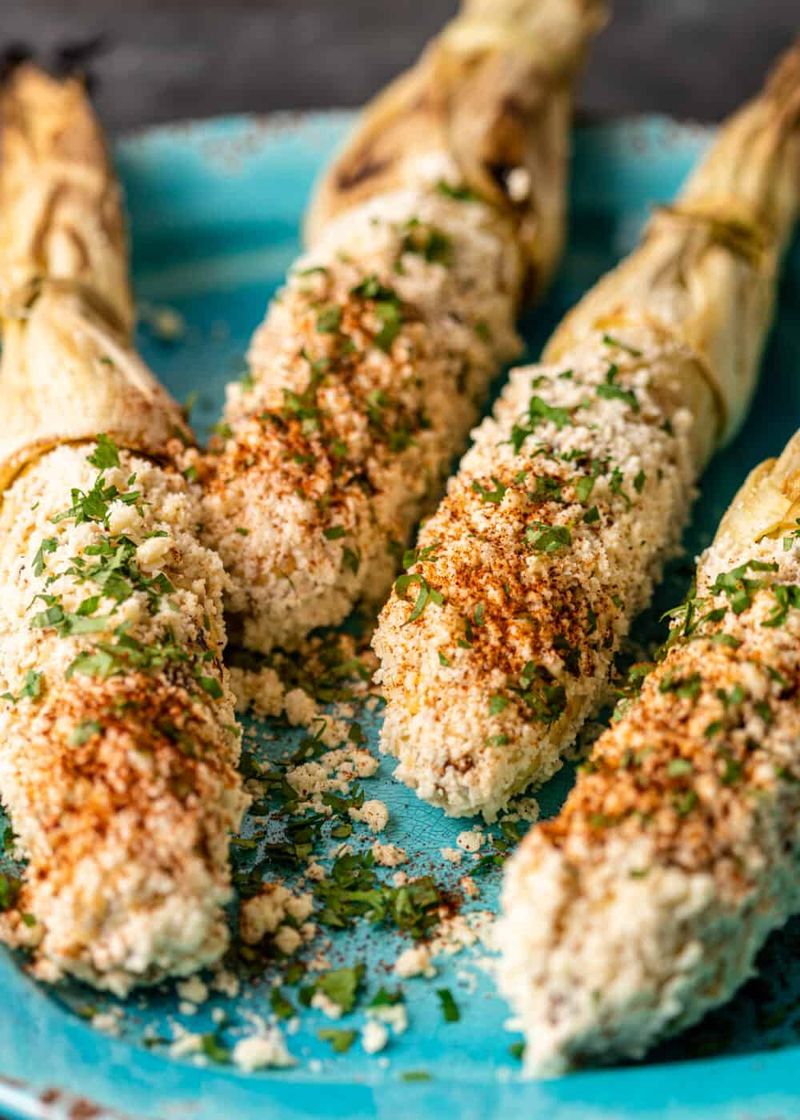
Elote takes the humble corn cob and turns it into something spectacular. Grilled over charcoal until slightly charred, the cob is slathered with mayonnaise, rolled in crumbled cotija cheese, and dusted with chili powder and a squeeze of lime.
Mexican workers have eaten elote standing up at roadside carts for generations. It is cheap, filling, and wildly flavorful.
The wooden stick handle makes it perfect for eating while walking, waiting for a bus, or taking a five-minute work break.
15. Sosatie (South Africa)

Sosaties are South African skewers with roots going back to Cape Malay cooking traditions brought by enslaved people from Southeast Asia in the 1600s. Chunks of marinated lamb or beef are threaded onto skewers with dried apricots and onion, then grilled over coals.
The sweet and savory combination is addictive. Workers at Cape Town markets and outdoor events have grabbed sosaties off the grill for centuries.
Easy to hold, easy to eat, and packed with bold flavor from the marinade.
16. Roti Canai (Malaysia)
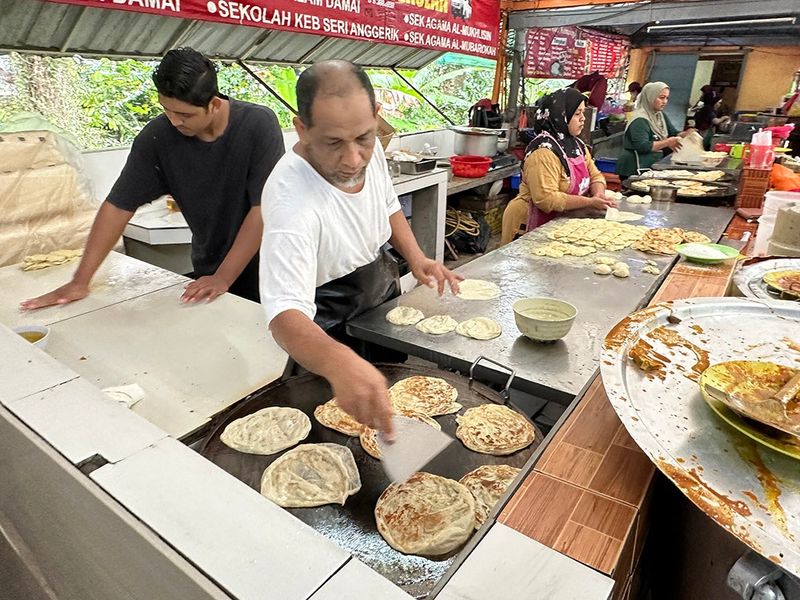
Watching a roti canai vendor work is almost like watching a performance. The dough is stretched, spun, and slapped onto a hot griddle with impressive speed, producing a flaky, layered flatbread that is crispy on the edges and soft in the middle.
Served with a small cup of dhal or curry sauce for dipping, roti canai is a morning staple for workers across Malaysia. It is inexpensive, fast to make, and filling enough to carry you through a long shift at the docks or the market.
17. Sabich (Israel)
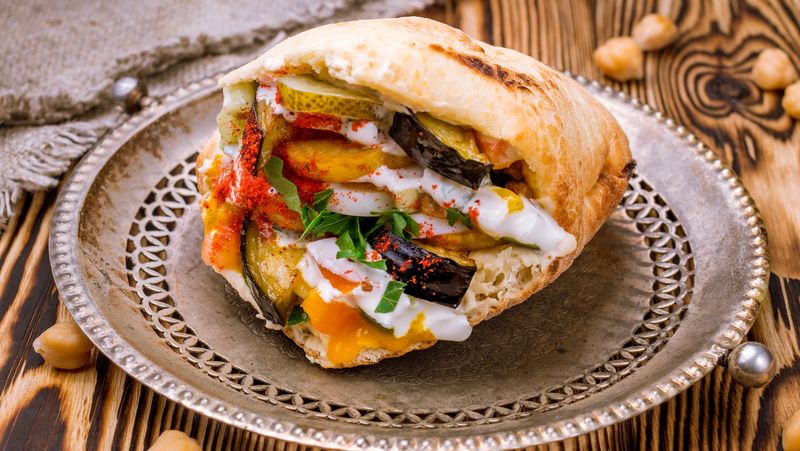
Sabich has one of the most interesting origin stories in street food history. Iraqi Jewish immigrants brought this combination to Israel in the 1940s and 1950s.
Originally eaten at home on Shabbat mornings, it quickly moved to street carts as workers discovered how portable it was.
Fried eggplant, hard-boiled egg, hummus, tahini, and tangy amba mango sauce are stuffed into a warm pita. It is messy, bold, and deeply satisfying.
Tel Aviv workers have grabbed sabich on the run ever since.




Comments
No Comments