













Freezing meat is a brilliant way to save money and reduce food waste, but doing it incorrectly can lead to disappointing results.
Many families pop meat in the freezer without giving it a second thought, not realising they might be compromising quality, taste, and even safety.
Understanding proper freezing techniques can make a massive difference in how your meals turn out.
1. Mushy Texture Troubles
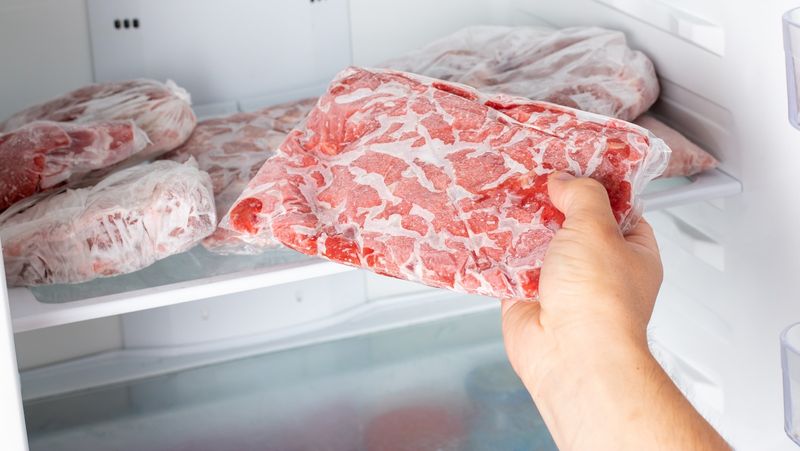
Large ice crystals form when meat freezes too slowly, piercing cell walls like tiny daggers. According to food scientist Dr. Harold McGee, these crystals rupture the muscle fibres that give meat its structure.
Once thawed, you'll notice an unpleasantly soft, mushy texture that no amount of cooking can fix. The meat might release excessive liquid during cooking, resulting in a disappointing meal that lacks the satisfying bite of properly frozen meat.
2. Freezer Burn Woes
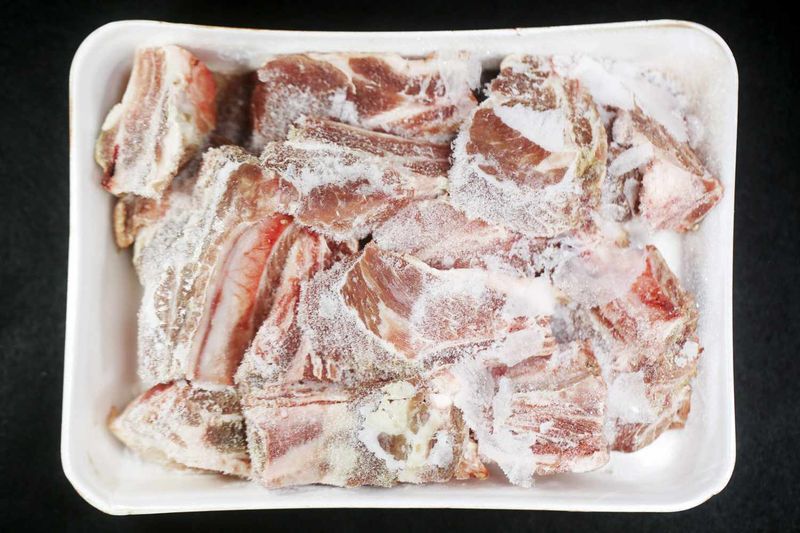
Ever noticed those white, leathery patches on forgotten meat? That's freezer burn—dehydration caused by air exposure. The University of Bristol's Food Science Department explains that moisture evaporates from improperly wrapped meat, leaving behind dry, discoloured areas.
These affected portions develop a strange cardboard-like taste that can ruin your entire dish. While not dangerous to eat, the compromised sections are best trimmed away to salvage what's left of your precious protein.
3. Flavour Fade-Out
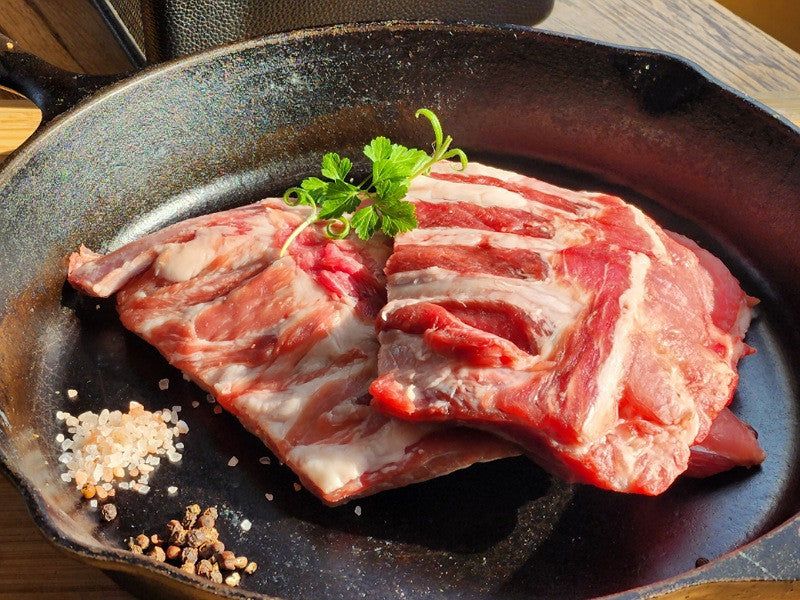
Volatile compounds responsible for meat's delicious flavour escape when packaging isn't airtight. Research from Cambridge Food Science Institute shows these compounds are particularly vulnerable during improper freezing.
The result? A bland shadow of what your meat should taste like. Even with aggressive seasoning, you'll notice something missing from the final dish.
Properly sealed meat retains these flavour molecules, ensuring your future meals remain as tasty as freshly purchased cuts.
4. Bacterial Breeding Ground
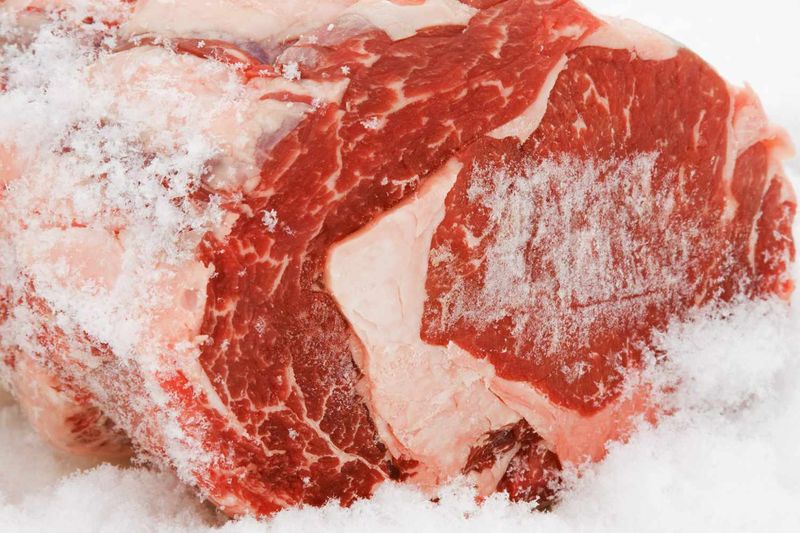
Contrary to popular belief, freezing doesn't kill bacteria—it merely pauses their activity. The Food Standards Agency warns that meat left to freeze slowly at temperatures above -18°C allows bacteria to multiply before freezing completes.
These microorganisms spring back to life during thawing. The dangerous 'temperature danger zone' between 5°C and 60°C becomes particularly risky when thawing improperly frozen meat.
Food safety expert Dr. Elisabeth Jones emphasises this can lead to serious foodborne illness.
5. Vitamin Vanishing Act
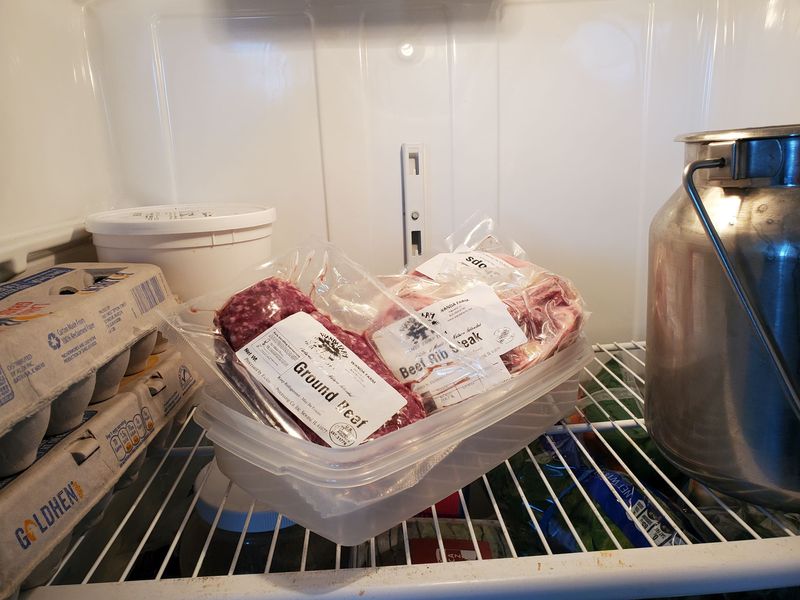
Heat-sensitive vitamins like B12 and thiamine degrade when meat cycles through temperature fluctuations. Nutritionist Dr. Sarah Williams from King's College London found that improperly frozen meat can lose up to 30% more nutrients than correctly frozen cuts.
These fluctuations occur in frost-free freezers or when meat is stored near the door. The repeated microscopic thawing and refreezing breaks down delicate vitamin structures.
Your body misses out on these essential nutrients that would otherwise be preserved.
6. Ice Block Disaster
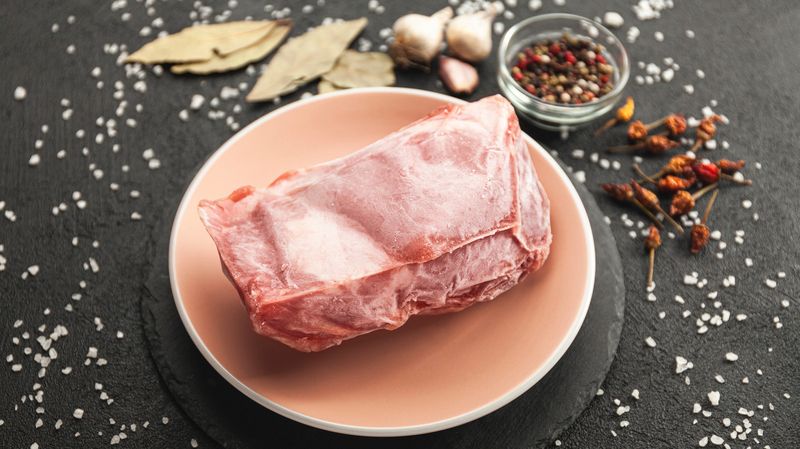
Freezing a massive joint of meat or thick steaks stacked together creates an ice block nightmare. The outer portions freeze while the centre remains warm for hours.
This temperature gradient causes uneven texture throughout. When cooking time arrives, you'll face partially thawed sections alongside still-frozen chunks.
Meat science researcher Professor James Thompson demonstrated that the centre of a large frozen block can take up to 40% longer to thaw, making meal timing unpredictable and often disappointing.
7. Moisture Escape Route
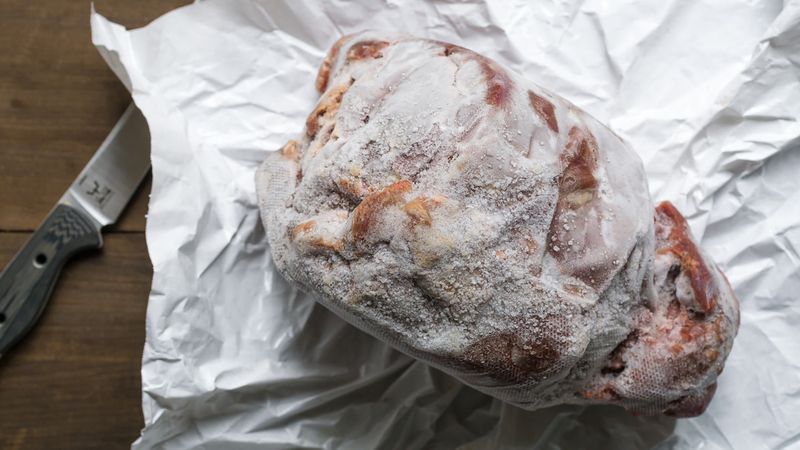
Meat contains up to 75% water—a precious resource that determines juiciness. Using flimsy wrapping creates microscopic pathways for this moisture to escape during freezing.
The Sheffield Institute of Food Technology found that improperly wrapped meat can lose 15% more moisture than properly sealed cuts. This moisture doesn't return during thawing.
Your Sunday roast becomes disappointingly dry, requiring extra sauces or gravy to compensate for what should have remained naturally within the meat.
8. Flavour Invasion
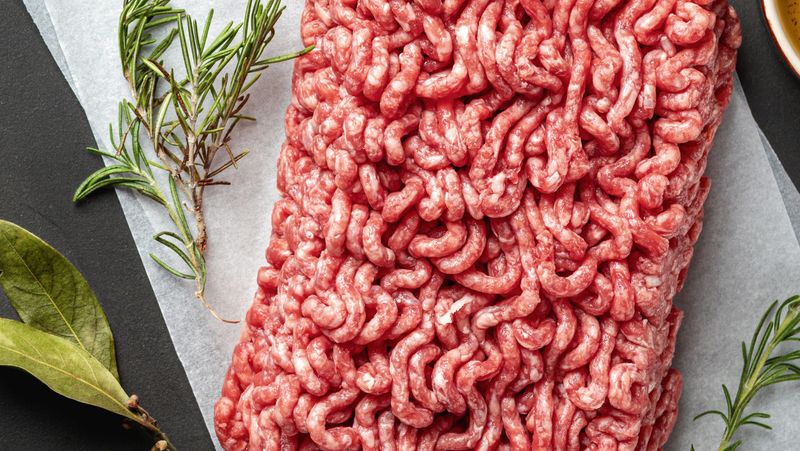
Your freezer contains a carnival of aromas—from fish fingers to frozen curries. Without proper sealing, meat becomes a sponge for these competing flavours.
Food chemist Dr. Richard Miller explains that fat molecules in meat readily absorb odour compounds from surrounding foods. The longer meat sits improperly wrapped, the more foreign flavours it collects.
Imagine biting into what should be a neutral-tasting chicken breast only to detect hints of last month's fish pie—an unpleasant surprise for dinner guests!
9. Thawing Danger Zone
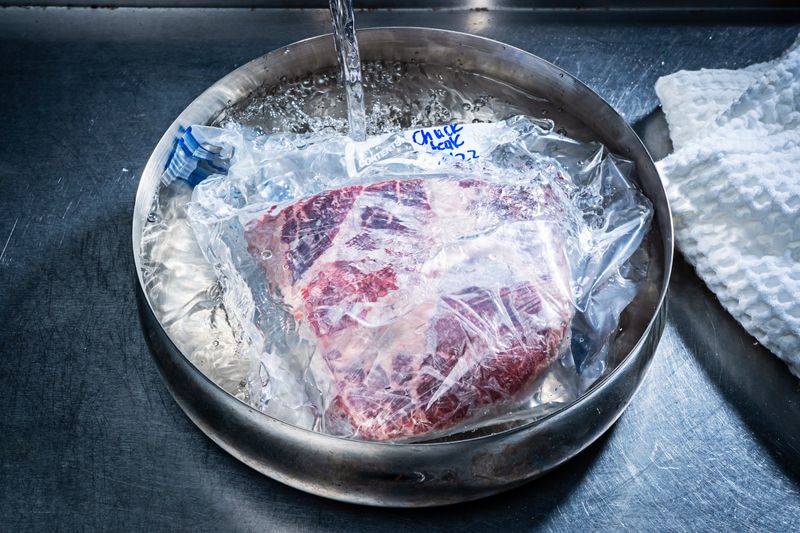
Improperly frozen meat often leads to dangerous thawing practices. When you're in a hurry with a solid block of frozen chicken, the temptation to speed-thaw at room temperature becomes strong.
Microbiologist Professor Helen Wright from Edinburgh University warns this creates perfect conditions for bacteria to multiply. The outer layers enter the danger zone while the centre remains frozen.
This practice has been linked to thousands of food poisoning cases annually, according to the British Food Safety Authority.
10. Colour Catastrophe
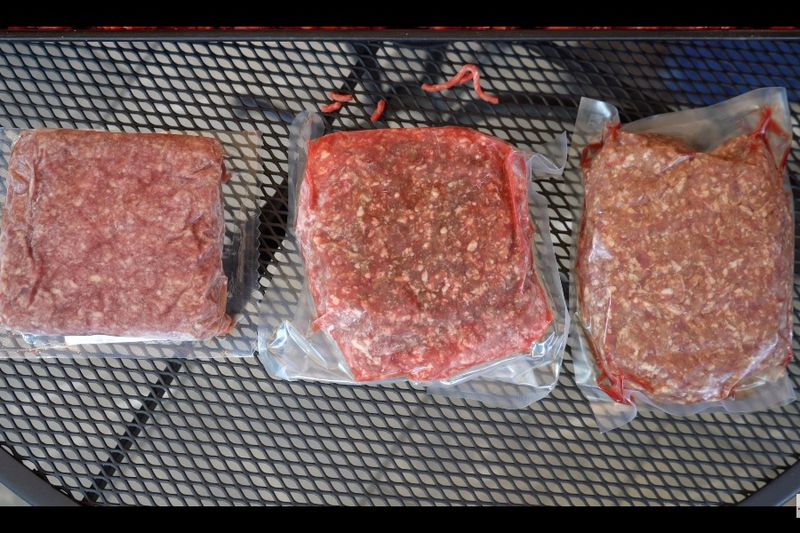
Oxygen exposure during improper freezing triggers chemical changes in myoglobin—the protein responsible for meat's appealing red colour. This reaction transforms vibrant red beef into an unappetising greyish-brown.
Research by Oxford Food Science Laboratory confirms this discolouration affects consumer perception dramatically. Participants rated identically cooked steaks significantly lower when presented with off-coloured meat.
While perfectly safe to eat, the psychological impact of this visual change often leads to unnecessary food waste.



