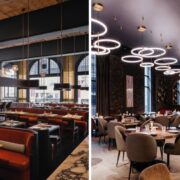
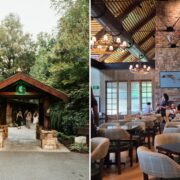
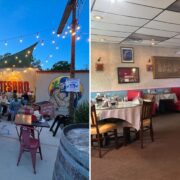
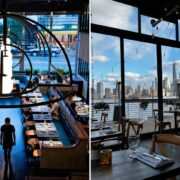



The culinary world is ever-evolving, with innovative chefs pushing boundaries and redefining what exceptional dining means.
By 2025, several restaurants are expected to stand out as true pioneers of gastronomy, offering unforgettable experiences that blend tradition with cutting-edge techniques.
1. Noma 3.0 (Copenhagen, Denmark)

René Redzepi's legendary restaurant has reinvented itself yet again. The pioneer of New Nordic cuisine now focuses entirely on hyperlocal ingredients with zero carbon footprint.
Diners experience a 22-course journey through Denmark's seasonal bounty, with dishes that change weekly based on foraging expeditions. The restaurant's on-site fermentation lab continues to produce some of the most complex flavour profiles in modern gastronomy.
2. Sushi Saito (Tokyo, Japan)

Master Takashi Saito's eight-seat sushi temple remains the most coveted reservation in Tokyo. Unlike other high-end sushi restaurants, Saito personally serves every piece to guests, creating an intimate connection.
His rice—perfectly body temperature and seasoned with a secret blend of vinegars—cradles fish that's been aged precisely to enhance umami. Time Out Worldwide notes that Saito's attention to detail makes this tiny restaurant worth the three-month waiting list.
3. Central (Lima, Peru)

Chefs Virgilio Martínez and Pía León have transformed their acclaimed restaurant into a research center for Peruvian biodiversity. Every dish represents a specific altitude of Peru's diverse ecosystem. Guests journey from the Pacific Ocean floor to the high Andes through meticulously crafted plates.
The restaurant now includes an adjacent laboratory where scientists work alongside chefs to document indigenous ingredients and preservation techniques.
4. Gaggan Anand 2.0 (Bangkok, Thailand)

After closing his eponymous restaurant in 2019, Chef Gaggan Anand returned with an even more boundary-pushing concept. His new venture combines Thai street food flavours with molecular gastronomy techniques.
The famous emoji menu has evolved into an interactive digital experience where diners use augmented reality to learn about each dish's inspiration. Tasteaway reports that Anand's reinterpretation of Mango Sticky Rice—transformed into spheres that burst with flavour—remains his signature masterpiece.
5. Mirazur Gardens (Menton, France)

Chef Mauro Colagreco has expanded his three-Michelin-starred restaurant into the surrounding hillside. The entire property now functions as a regenerative farm with over 300 varieties of vegetables, fruits, and herbs.
Guests begin their experience with a guided garden tour, selecting ingredients for their meal. The restaurant's commitment to sustainability extends to its zero-waste kitchen and solar-powered facilities, setting new standards for eco-conscious fine dining.
6. Osteria Francescana (Modena, Italy)

Massimo Bottura's culinary laboratory continues to reinvent Italian classics with philosophical depth. His latest tasting menu, "Memories of a Country That Doesn't Exist Anymore," preserves disappearing traditions through modern techniques.
The restaurant now features an adjacent food museum documenting Italian culinary heritage. Bottura's famous "Oops! I Dropped the Lemon Tart" has been joined by equally playful new creations that challenge perceptions while honoring Italian ingredients.
7. DiverXO (Madrid, Spain)

Dabiz Muñoz's three-Michelin-starred wonderland has evolved into a full sensory experience. Diners now wear special gloves to interact with certain dishes, while others arrive suspended from the ceiling or hidden within elaborate constructions.
The avant-garde chef combines Spanish traditions with Asian techniques in dishes that deliberately provoke emotional responses. His famous flying pig dish now literally flies to the table via custom-designed mechanical contraptions, blurring the line between cuisine and performance art.
8. SingleThread Farm (Healdsburg, USA)

Kyle and Katina Connaughton's farm-restaurant has expanded to include 15 acres of regenerative agriculture. The Japanese-influenced tasting menu now features over 70% ingredients grown on their own land. Guests can stay in on-site cabins overlooking the fields where their food is grown.
Their 11-course kaiseki-inspired menu changes daily, with dishes often completed tableside using donabe clay pots and custom-designed serving vessels that reflect the Sonoma landscape.
9. Atomix (New York, USA)

Husband-and-wife team Junghyun and Ellia Park have expanded their Korean fine-dining concept into a cultural institution. Beyond the intimate counter experience, they've added a research library dedicated to Korean culinary history.
Each course arrives with a custom-designed card explaining its cultural significance. The Parks now collaborate with Korean artisans to create unique serving vessels. Their signature dish—a reinterpreted bibimbap featuring seasonal micro-vegetables arranged like a garden—exemplifies their artistic approach.
10. Quintonil (Mexico City, Mexico)

Jorge Vallejo's celebration of Mexican biodiversity has evolved into a conservation project. Working with indigenous communities, the restaurant now features ingredients from endangered ecosystems, helping preserve traditional cultivation methods.
Their signature dish—a garden of native Mexican herbs and vegetables—now incorporates 25 different plants. Diners at Travel Drafts praise Vallejo's reinterpretation of birria tacos using heritage breeds of goat raised specifically for the restaurant.
11. Hiša Franko (Kobarid, Slovenia)

Ana Roš has transformed her remote restaurant into the epicenter of Alpine cuisine. Set in Slovenia's Soča Valley, the restaurant now includes foraging cabins where guests can stay overnight and join morning expeditions.
Her zero-kilometer philosophy means everything is sourced within walking distance. The restaurant's cheese cave ages products from their own cows, while the on-site fermentation lab processes seasonal bounty into year-round treasures.
12. Pho Fusion (Ho Chi Minh City, Vietnam)

This unassuming street food stall has revolutionized Vietnamese cuisine through molecular techniques. Chef Nguyen Van Minh applies scientific principles to traditional recipes, creating the world's most perfect bowl of pho.
His broth—simmered for exactly 37 hours at precisely controlled temperatures—delivers unparalleled clarity and depth. Insanely Good Recipes named his signature beef pho "life-changing," while Tasteaway praised the restaurant's innovative herb vapor infusion that diners inhale before tasting.
13. The Test Kitchen Africa (Cape Town, South Africa)

Luke Dale-Roberts' pioneering restaurant has evolved into a pan-African culinary laboratory. Working with chefs from across the continent, the menu now features dishes representing 14 African culinary traditions.
Their tasting experience includes a "heritage room" where traditional cooking methods like smoking, clay-pot cooking, and fire-roasting are demonstrated. GVIAfrica highlights their reinvented Khao Soi that fuses Thai technique with African ingredients as a standout cross-cultural achievement.
14. Septime Earth (Paris, France)

Bertrand Grébaut's neo-bistro has gone completely plant-based, proving that French gastronomy doesn't need animal products to achieve greatness. The restaurant's rooftop greenhouse supplies rare herbs and vegetables year-round.
Their signature mushroom dish—featuring seven varieties cultivated in their basement laboratory—offers more umami than any meat. The restaurant's wine program focuses exclusively on natural wines made by small producers committed to biodiversity.
15. Satay House (Singapore)

Hawker stall legend Madam Tan has been elevated to culinary royalty with her dedicated restaurant. Her satay—marinated for three days in a secret family recipe—has been recognized by UNESCO as culinary heritage.
The restaurant serves nothing but perfectly grilled skewers with her famous peanut sauce. Big 7 Travel named it "the world's best street food elevated to fine dining status," while Uncornered Market praised its unpretentious atmosphere despite international acclaim.
16. Taiyaki Innovation Lab (Kyoto, Japan)

Master confectioner Hiroshi Tanaka has elevated the humble fish-shaped pancake into an art form. His glass-walled laboratory features 25 different fillings that change with the seasons. Visitors watch as craftsmen use custom-made copper molds to create perfectly crisp exteriors.
Cozymeal reports that Tanaka's sakura-infused red bean paste, made from beans grown in his family's fields for seven generations, creates lines around the block during cherry blossom season.
17. Balık Ekmek Bosphorus (Istanbul, Turkey)

This floating restaurant, anchored in the Bosphorus Strait, has transformed Istanbul's famous fish sandwiches into culinary masterpieces. Chef Ahmet Demir sources fish directly from boats that dock alongside the restaurant.
His signature sandwich features lightly grilled mackerel, charred to perfection and dressed with a pomegranate reduction. Tasteaway calls it "the perfect balance of rustic tradition and refined technique," while Voices of Travel praised its panoramic views of the city's skyline.
18. Pupusa Paradise (San Salvador, El Salvador)

Maria Gonzalez has turned her grandmother's pupusa recipe into an international sensation. Her restaurant features 15 varieties of the traditional corn flatbread, each stuffed with increasingly innovative fillings. The open kitchen allows diners to watch as the dough is hand-patted into perfect circles.
Wikipedia notes that Gonzalez's preservation of traditional techniques alongside creative new fillings has helped elevate Salvadoran cuisine to global recognition.
19. Momo Mountain (Kathmandu, Nepal)

Three generations of the Sherpa family work side by side in this temple to Nepal's beloved dumpling. Their signature dish—the 21-fold momo—requires extraordinary dexterity to create the perfect pleats. Fillings range from traditional yak meat to innovative vegetable combinations.
Wikipedia reports that their secret lies in the dough, which uses glacial water collected from Himalayan streams, giving it a uniquely tender texture that's impossible to replicate elsewhere.
20. Takoyaki Universe (Osaka, Japan)

Chef Kenji Yamamoto has dedicated his life to perfecting these beloved octopus balls. His restaurant features a circular counter where chefs flip perfectly spherical takoyaki with mesmerizing precision. The signature version contains octopus caught daily from Osaka Bay.
Cathay Pacific's travel guide calls Yamamoto's takoyaki "the perfect balance of crispy exterior and molten interior," noting that his bonito flake sourcing involves relationships with specific fishing families.