As Ramadan begins, kitchens and bakeries prepare a variety of traditional sweets enjoyed throughout the season. These confections, often made with ingredients like sugar syrup, cardamom, and nuts, are an integral part of the celebration.
Each sweet carries cultural and historical significance, connecting families and communities across generations. From the delicate domes of maamoul to the golden layers of kunafa, these desserts are enjoyed during Iftar and other festive moments.
They reflect both culinary skill and the shared traditions that make the season meaningful for many.
All information is provided for general interest only. Taste, appearance, and availability may vary. Photos are for illustrative purposes only.
1. Baklava
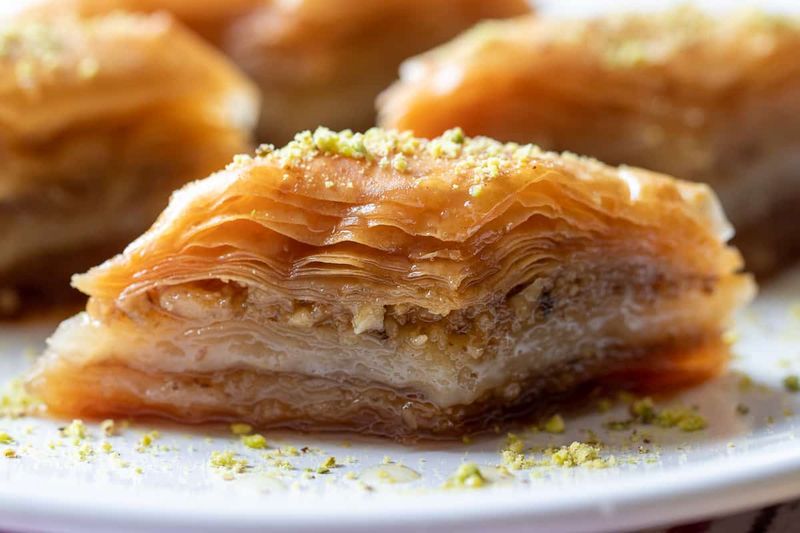
Crisp layers of phyllo dough, impossibly thin and buttery, stack up like edible architecture in this iconic pastry. Tucked between those golden sheets are crushed pistachios or walnuts, sweetened just enough to balance the richness.
Once baked to a perfect amber hue, the whole tray gets drenched in sugar syrup or honey, which seeps into every crevice. The result?
A textural masterpiece that shatters delicately under your fork, releasing waves of nutty, floral sweetness that linger long after the last crumb disappears.
2. Maamoul
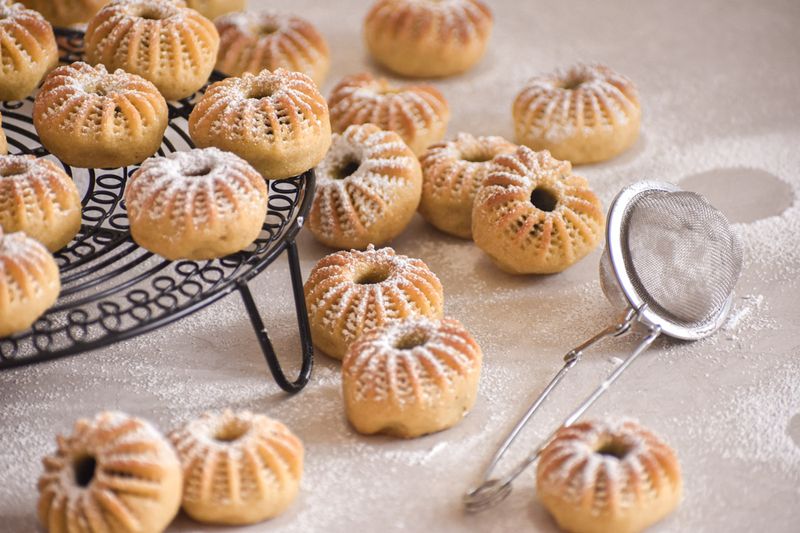
These shortbread-style beauties are instantly recognisable by the intricate patterns stamped onto their domed tops, made using carved wooden moulds passed down through families. Inside each crumbly shell hides a generous filling – usually dates, but sometimes figs or ground walnuts spiced with cinnamon.
The dough itself is tender and melt-in-the-mouth, thanks to clarified butter and a touch of orange blossom water. Bite through the delicate crust and you'll find a sweet, jammy centre that perfectly complements the buttery exterior, making them dangerously easy to devour by the handful.
3. Qatayef
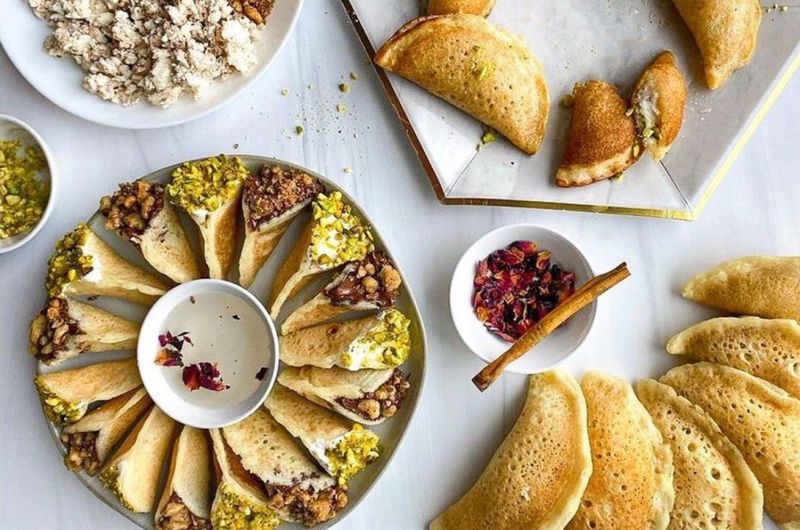
Picture a fluffy pancake that's only cooked on one side, leaving the surface bubbly and the underside golden. That's qatayef in its raw form, ready to be stuffed with either sweetened cream cheese or a spiced nut mixture.
Fold it into a half-moon, seal the edges, then either fry it until crispy or leave it soft before drowning it in sugar syrup. The contrast between the tender, slightly chewy pancake and the rich filling is pure magic.
Some versions get a final flourish of crushed pistachios, adding a pop of green and an extra layer of crunch.
4. Kunafa
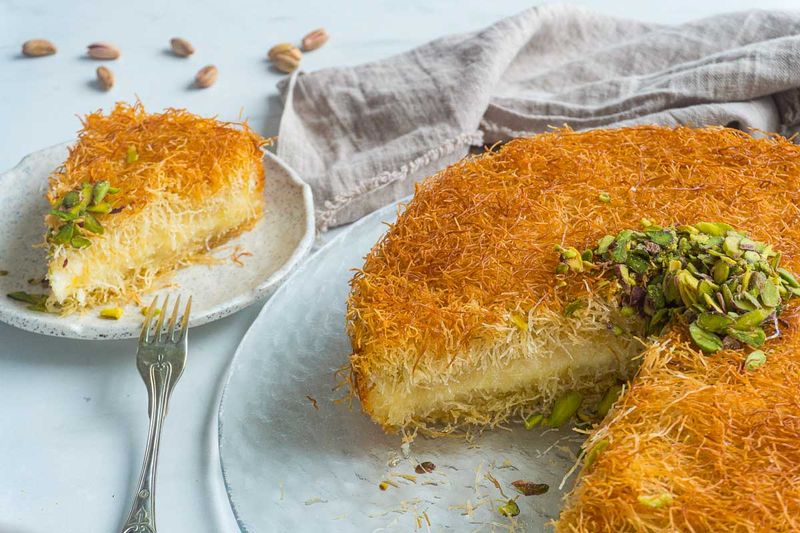
Shredded phyllo dough, known as kataifi, gets buttered and layered over a base of soft, stretchy cheese or a creamy semolina filling. Into the oven it goes, emerging with a crackling, golden top that shatters beautifully when you cut into it.
A generous pour of sugar syrup follows, soaking into the crispy strands and turning them glossy. The magic happens when you take a forkful – the contrast between the crunchy exterior and the gooey, slightly salty cheese creates an addictive sweet-savoury dance that keeps you coming back for more.
5. Basbousa
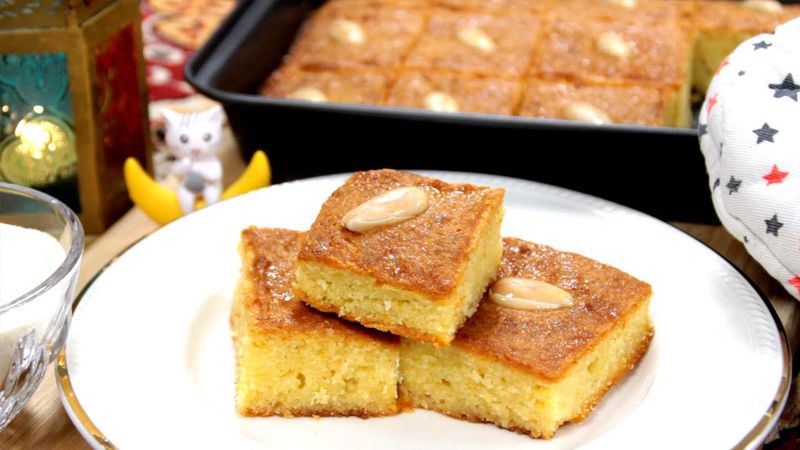
Semolina gives this cake its signature grainy texture, which is oddly satisfying and nothing like your typical sponge. Mixed with yoghurt, sugar, and a hint of coconut, the batter bakes into a dense, moist square that's then scored into diamonds.
While still warm, it gets absolutely drenched in sugar syrup flavoured with rose or orange blossom water, which the semolina soaks up like a sponge. Each piece is usually crowned with a blanched almond, adding a bit of crunch to the soft, syrupy crumb underneath.
6. Sheer Khurma
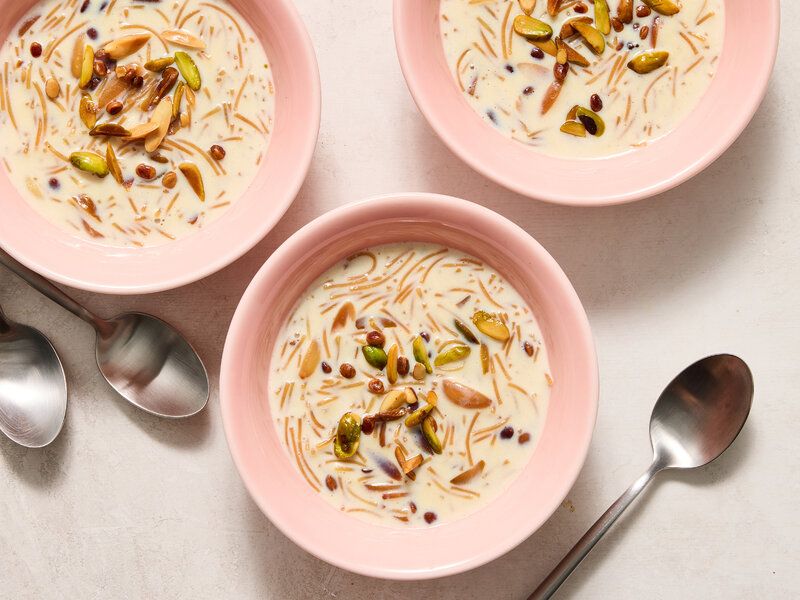
Vermicelli noodles might seem an odd choice for pudding, but roasted in ghee until golden, they become the star of this South Asian classic. Simmered slowly in full-fat milk sweetened with sugar, the noodles soften and release their starch, thickening the mixture into something utterly comforting.
Chopped dates, almonds, pistachios, and sometimes raisins get stirred through, along with a pinch of cardamom and a few precious saffron threads. Served warm or chilled, it's rich without being cloying, and the combination of textures makes every spoonful interesting.
7. Luqaimat
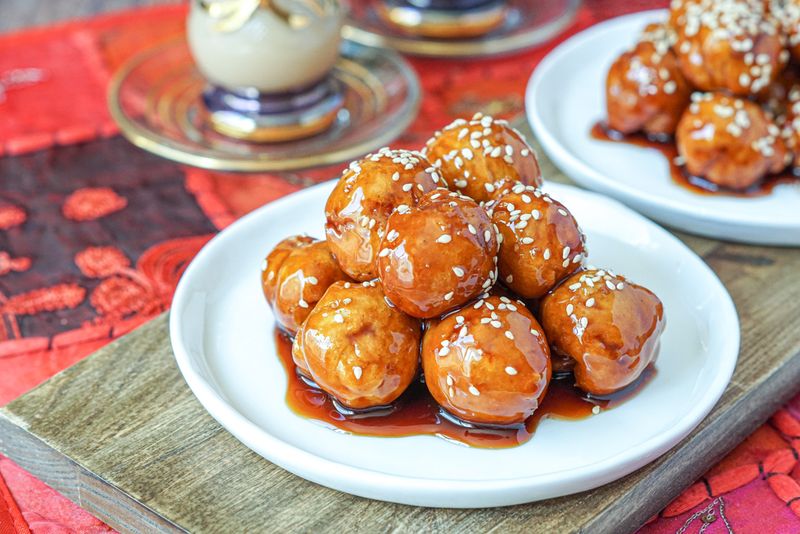
Think of these as the Middle Eastern answer to doughnuts, but smaller, lighter, and infinitely more addictive. A yeasted batter spiked with saffron and cardamom gets dropped by spoonfuls into hot oil, puffing up into golden, crispy-shelled orbs.
Once drained, they're smothered in sticky date syrup and showered with sesame seeds, creating a sweet-meets-nutty flavour that's hard to resist. The outside stays wonderfully crunchy while the inside remains soft and airy, making them the perfect bite-sized treat to enjoy with Arabic coffee after breaking fast.
8. Halva
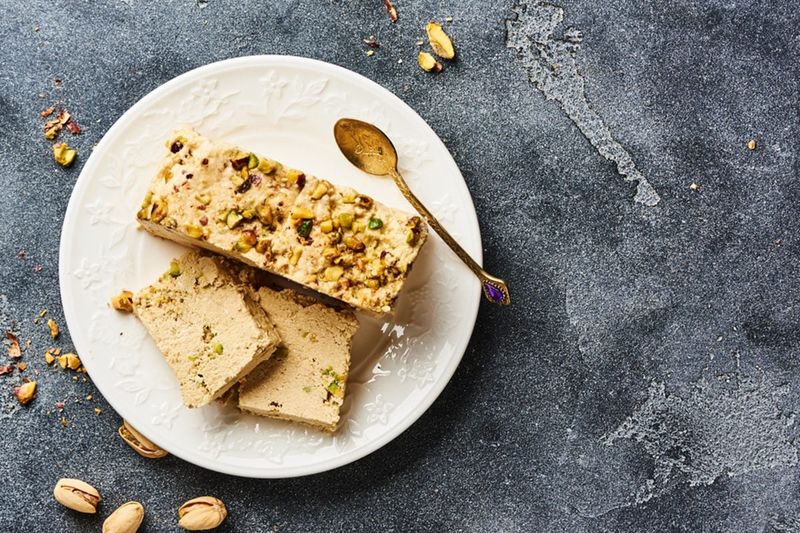
Tahini, the paste made from ground sesame seeds, transforms into something completely different when cooked with sugar syrup. The mixture is whipped and stretched until it develops a unique, crumbly-yet-creamy texture that literally melts on your tongue.
Some versions incorporate pistachios, almonds, or even swirls of cocoa for visual drama and extra flavour. It's intensely rich, so a small slice goes a long way, but that nutty, slightly bitter edge from the tahini keeps it from being too sweet.
Served alongside dates and strong coffee, it's a traditional way to end an iftar meal.
9. Atayef Asafiri
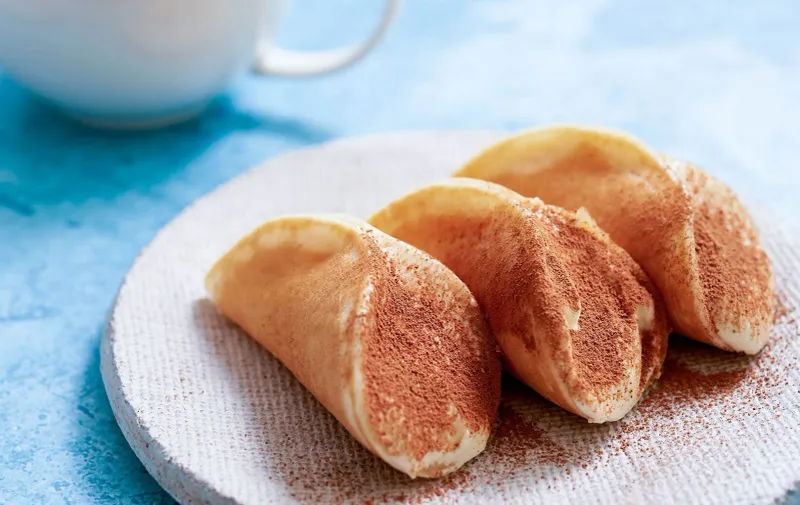
Consider these the daintier cousins of regular qatayef, made smaller and filled exclusively with thick, sweetened cream known as ashta. The mini pancakes are folded just enough to encase the filling but left open at the top, revealing a snowy white dollop of cream.
Unlike their fried relatives, these stay soft and tender, getting only a light drizzle of sugar syrup and a sprinkle of ground pistachios. The delicate size makes them perfect for nibbling throughout the evening, and their lighter nature means you can enjoy several without feeling too stuffed after a big iftar spread.
10. Ghraybeh
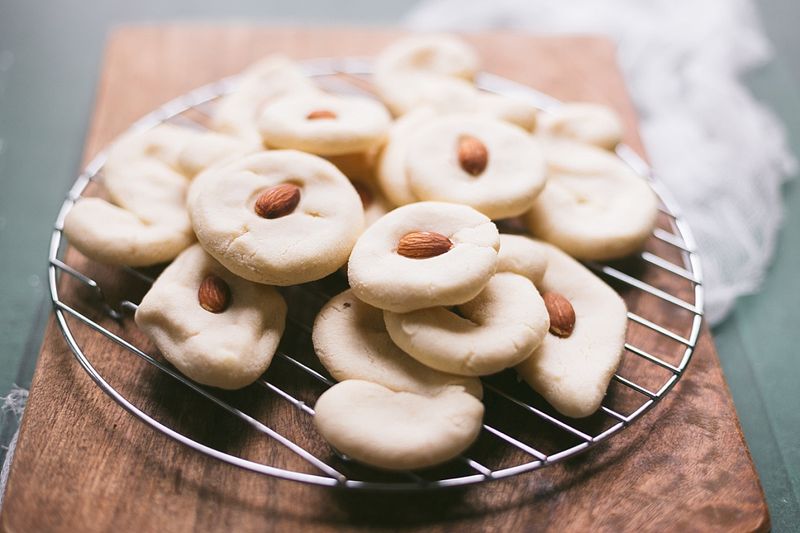
Simplicity defines these melt-in-your-mouth shortbread biscuits, made with just clarified butter, icing sugar, and flour. No eggs, no leavening agents – just three ingredients that somehow create the most delicate, crumbly texture imaginable.
Each round gets topped with a single blanched almond before baking, which serves as both decoration and a subtle flavour accent. They emerge from the oven pale and tender, with a buttery richness that coats your palate.
Often served alongside Arabic coffee, they're the perfect not-too-sweet ending to a rich meal, disappearing in just two bites but leaving a lasting impression.