









Greek cuisine is famous for its bold flavors, fresh ingredients, and incredible sweets that have been perfected over thousands of years. While baklava and loukoumades tend to steal the spotlight, Greece has a treasure trove of lesser-known pastries hiding in local bakeries and family kitchens.
From flaky phyllo creations to honey-soaked delights, these hidden gems deserve a spot on every food lover's travel list. Pack your appetite and get ready to discover the sweeter side of Greece.
1. Bougatsa
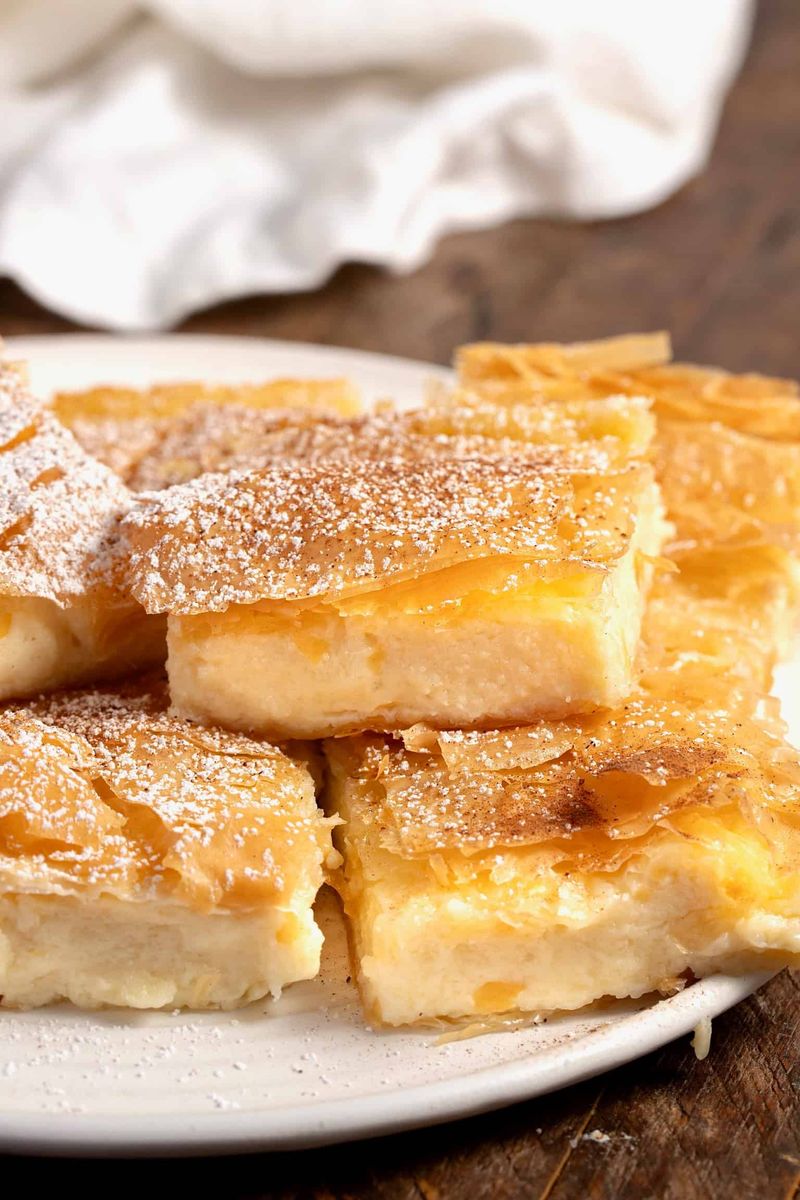
Walk through any Greek city at sunrise and you will likely smell bougatsa before you see it. This beloved morning pastry features crispy, paper-thin phyllo layers wrapped around a silky semolina custard filling.
Street vendors in Thessaloniki take special pride in their version, often finishing it with a generous dusting of powdered sugar and cinnamon. It is warm, comforting, and surprisingly light for something so satisfying.
2. Galaktoboureko
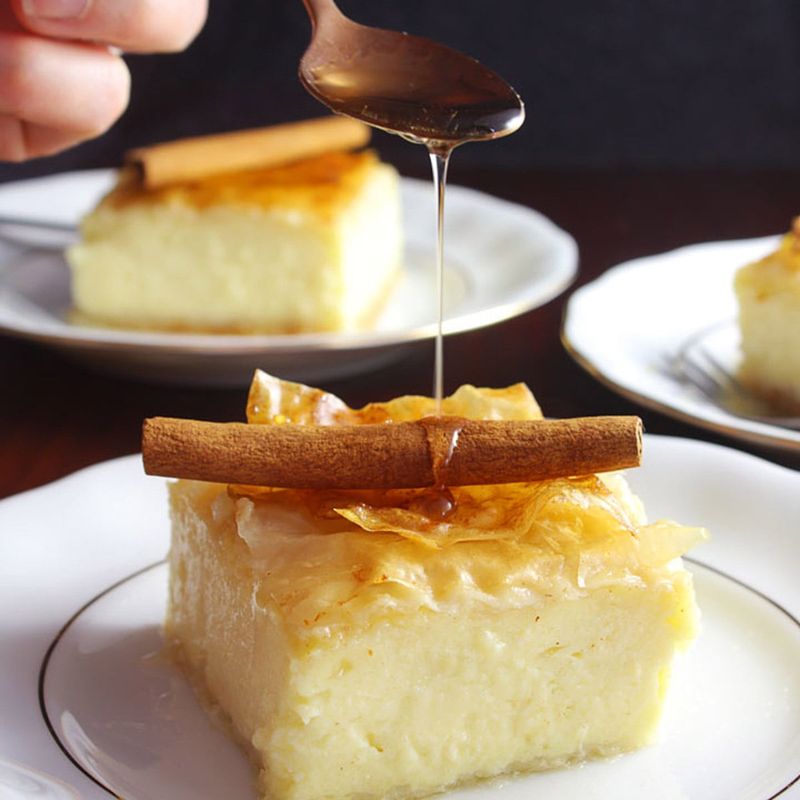
Galaktoboureko sounds complicated to say, but one bite makes you forget everything else. Hidden beneath its shatteringly crisp phyllo shell is a velvety custard filling made from semolina, milk, and eggs.
After baking, the whole thing gets drenched in a fragrant citrus syrup that soaks into every layer. It is sweet without being cloying, and the contrast between the crunchy pastry and creamy inside is absolutely magical.
3. Melomakarona
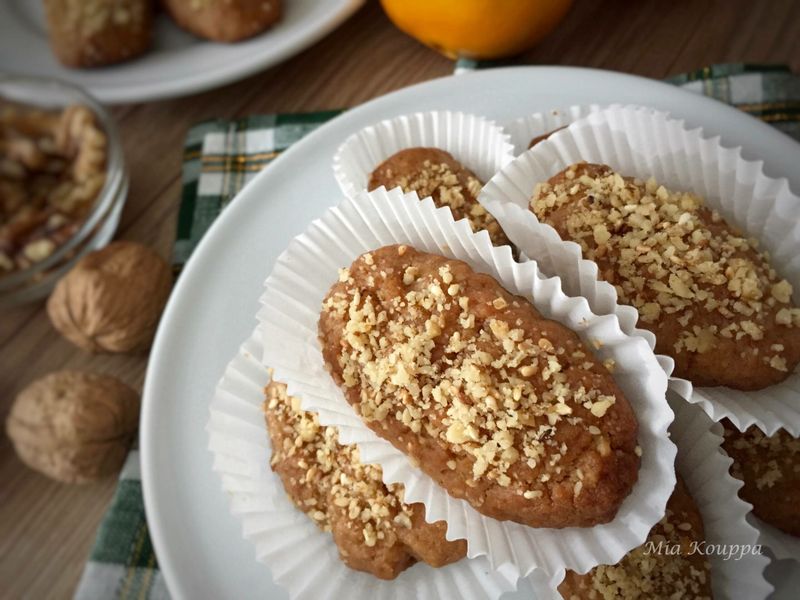
These little oval cookies carry the warmth of a Greek grandmother's kitchen in every bite. Made with olive oil, orange zest, and spices, melomakarona are baked until golden, then soaked in honey syrup and finished with crushed walnuts.
Traditionally enjoyed during Christmas, they have a soft, almost cake-like texture that soaks up the syrup beautifully. You can find them year-round in good Greek pastry shops, and they travel surprisingly well as edible souvenirs.
4. Kourabiedes
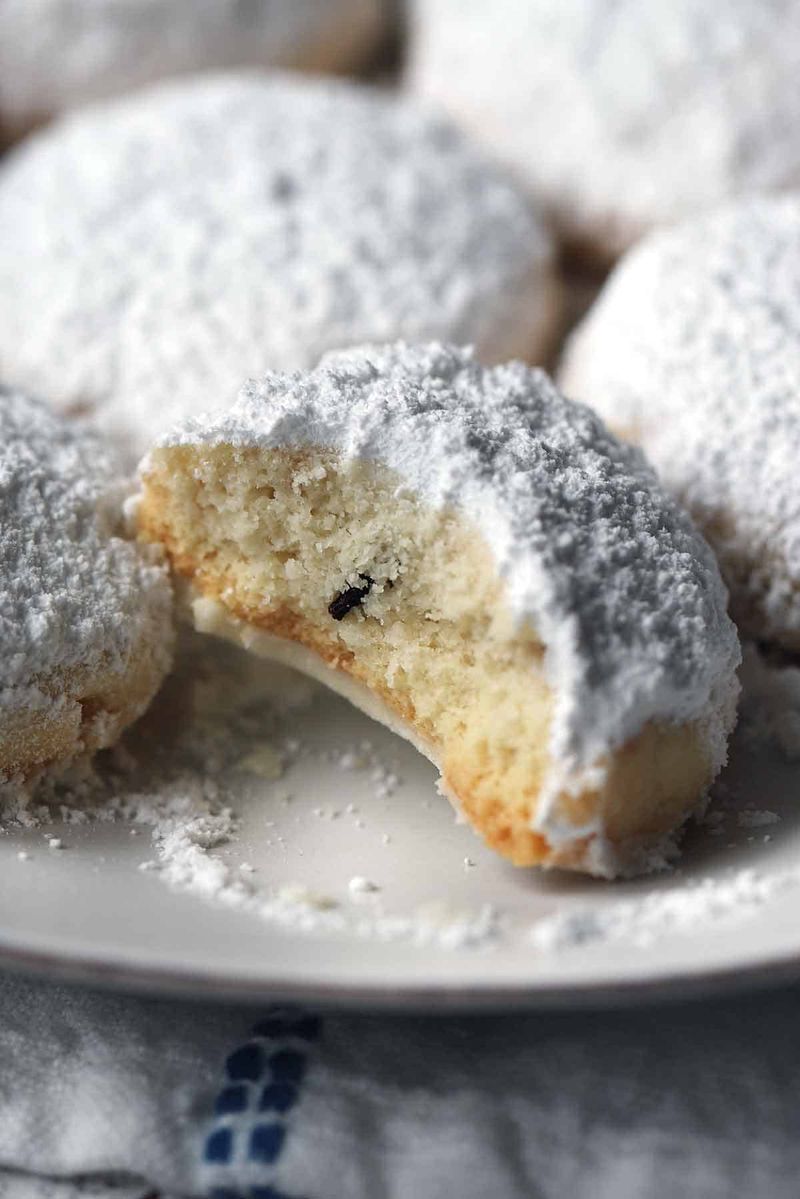
Biting into a kourabiede is like biting into a little cloud of butter and almonds. These crumbly shortbread cookies are made with real butter, toasted almonds, and a splash of brandy, then buried under a mountain of powdered sugar.
They practically melt on your tongue before the sweet, nutty flavor kicks in. Greek families have been making these for special occasions for centuries, and bakeries around the country sell them fresh all year long.
5. Loukoumades me Meli
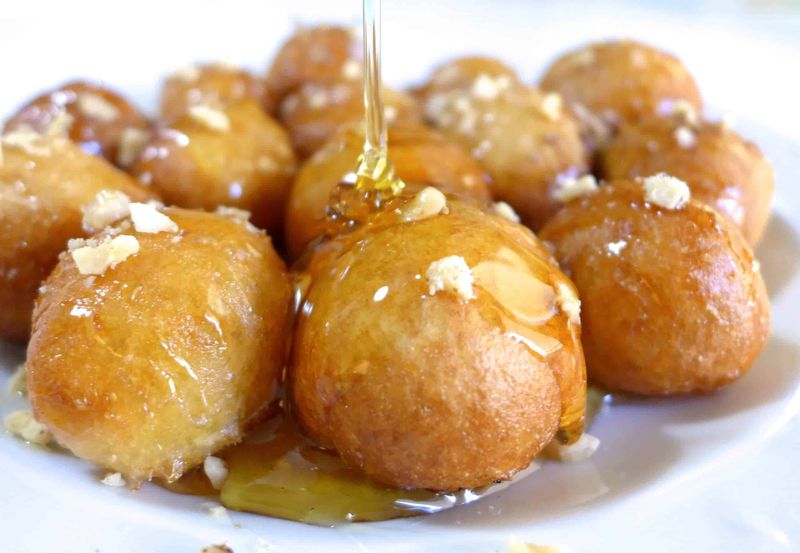
Loukoumades are already well known, but the traditional honey-and-sesame version found in smaller Greek towns is something else entirely. These tiny fried dough balls puff up into golden spheres with a crispy shell and a soft, airy center.
Drizzled with dark thyme honey and a sprinkle of sesame seeds, they taste like ancient street food because they essentially are. Ancient Greek texts reference something very similar, making this one of the oldest sweets you can still eat today.
6. Tiganites
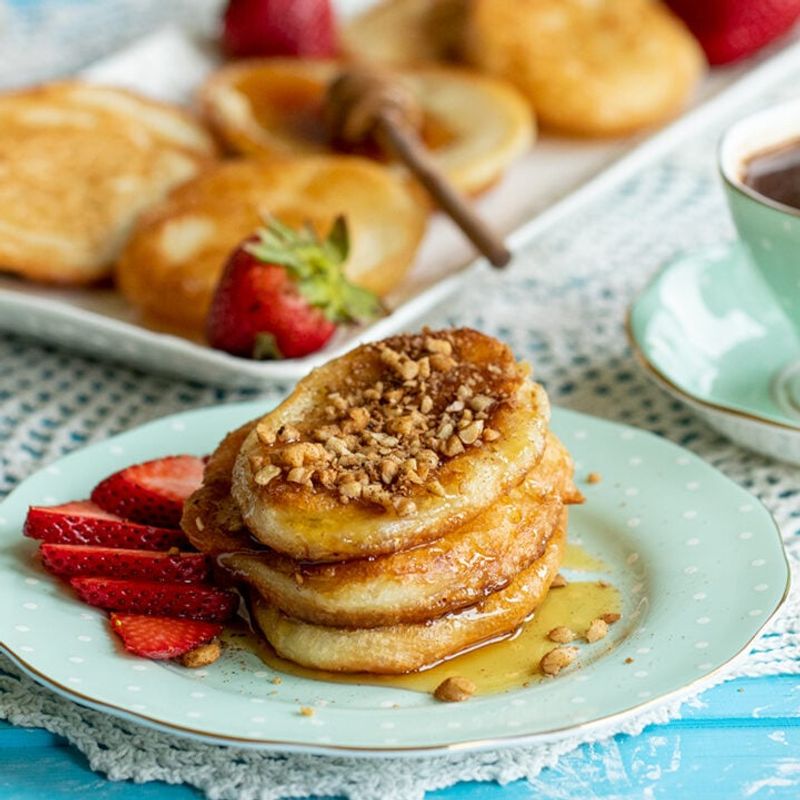
Long before modern brunch culture existed, Greek families were flipping tiganites on simple griddles. These rustic pancakes are made from a basic batter of flour, water, and sometimes yogurt, then fried in olive oil until golden.
The real magic happens when you top them with local honey, crumbled walnuts, and a pinch of cinnamon. Simple ingredients, huge flavor.
You will find them at village festivals and small countryside cafes that have not changed their recipe in decades.
7. Revani
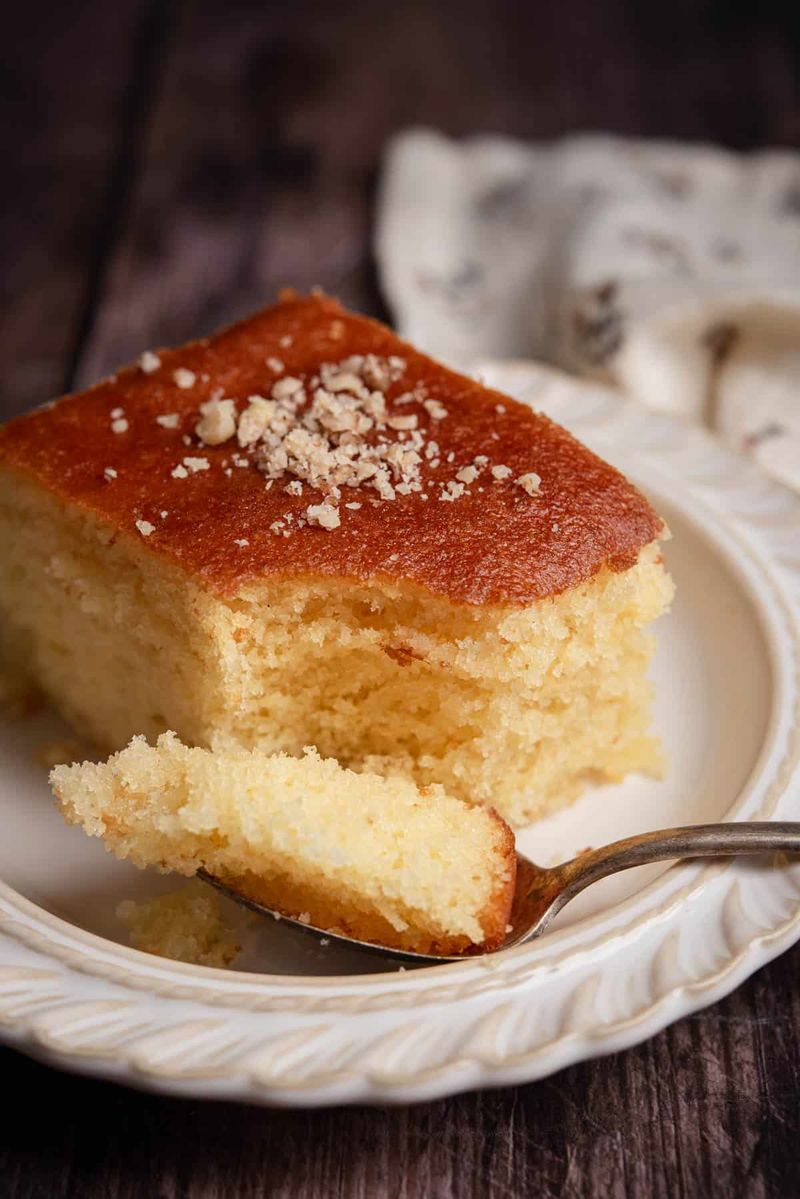
Revani might look unassuming at first glance, but its flavor tells a far richer story. This semolina-based cake gets its distinctive texture from coarse-ground wheat and often a handful of shredded coconut mixed into the batter.
Once baked, it is soaked in a light sugar syrup infused with lemon or rose water, making each slice incredibly moist and aromatic. Originally brought to Greece through Ottoman influences, revani is a beautiful example of how cultures share their sweetest traditions.
8. Diples
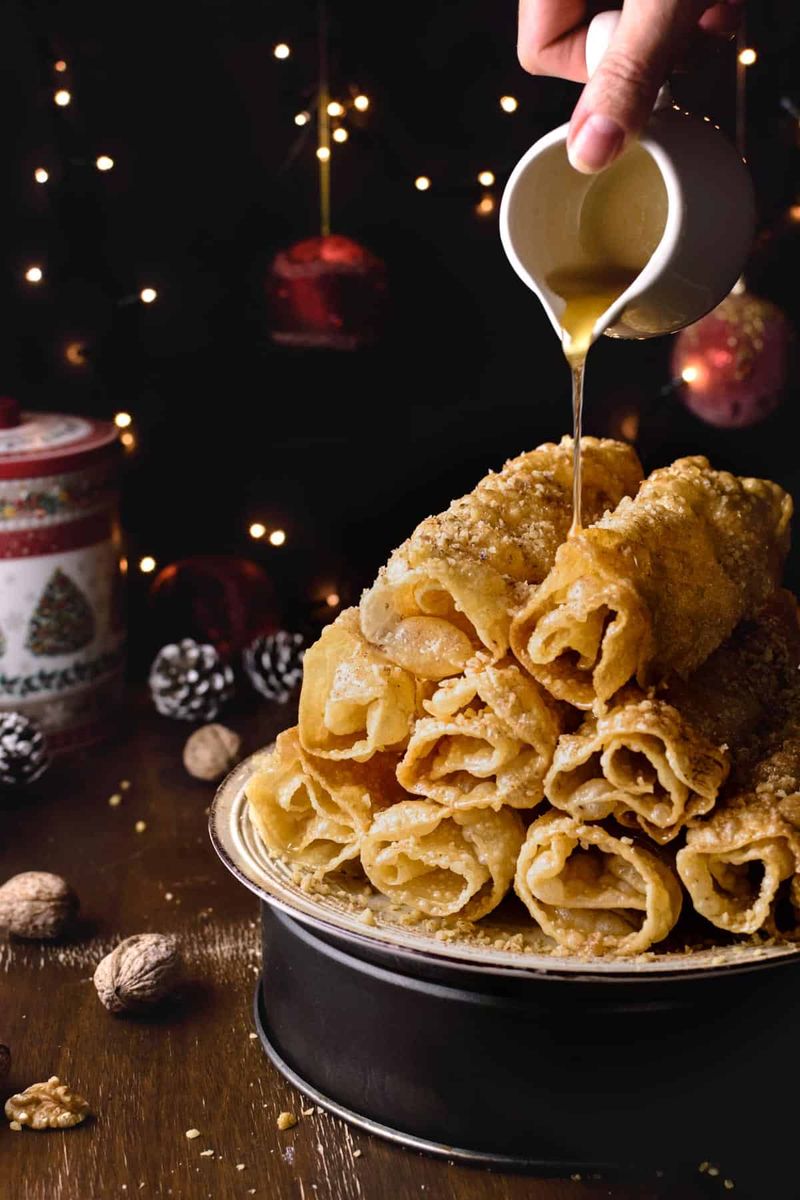
Making diples is considered an art form in many Greek households, especially in the Peloponnese region. Thin sheets of dough are rolled out, cut into strips, then twisted and fried until they turn into light, crispy ribbons.
Once they cool, they get drenched in honey and topped with walnuts and cinnamon. Traditionally served at weddings and celebrations, diples represent abundance and joy.
Watching a skilled cook make them is almost as enjoyable as eating them.
9. Amygdalota
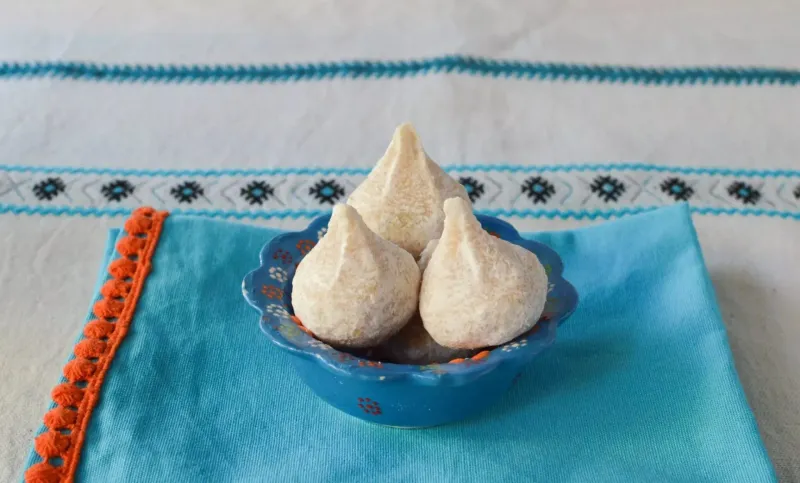
Originating from the Greek islands, amygdalota are the kind of sweet you want to discover by accident in a tiny island shop. Made almost entirely from ground almonds, sugar, and rose water, they have a soft, chewy center and a delicate floral fragrance.
Some versions are shaped into teardrops or flowers, making them as pretty as they are delicious. Hydra and Andros are especially known for their versions, so keep an eye out when island-hopping.
10. Samali
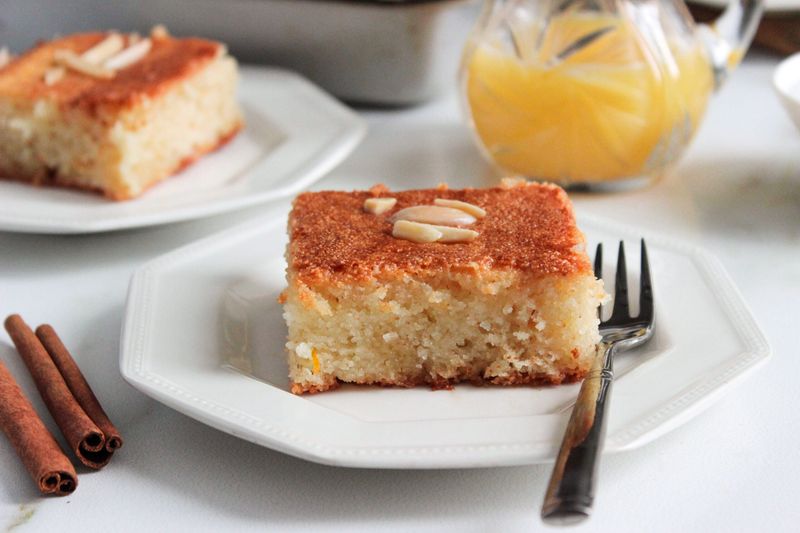
Samali has a pleasantly grainy texture that sets it apart from most other Greek sweets, and once you try it, that texture becomes the thing you crave. Made with semolina, yogurt, and mastic or vanilla, this dense cake soaks up its syrup slowly and evenly.
Each diamond-shaped slice is traditionally topped with a single blanched almond before baking. It holds up well for several days, which makes it a smart choice to pick up from a bakery early in your trip.
11. Kariokes
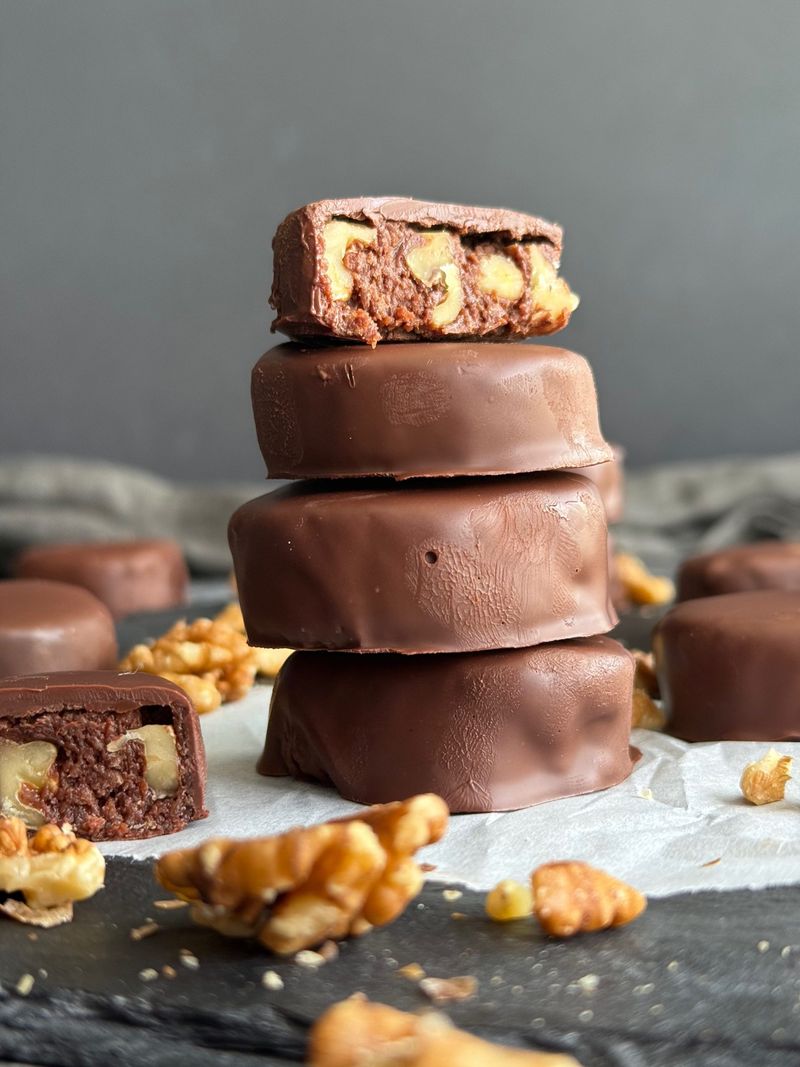
Kariokes are the kind of treat that chocolate lovers stumble upon and never forget. These small, indulgent sweets combine a rich walnut and chocolate filling with a thin outer layer, often made from wafer or a light pastry shell.
The name comes from a Greek word meaning walnut, and walnuts truly are the star of the show here. They are popular in northern Greece, particularly in Macedonia, where local patisseries have elevated them into something almost luxurious.
12. Halva tis Rinas
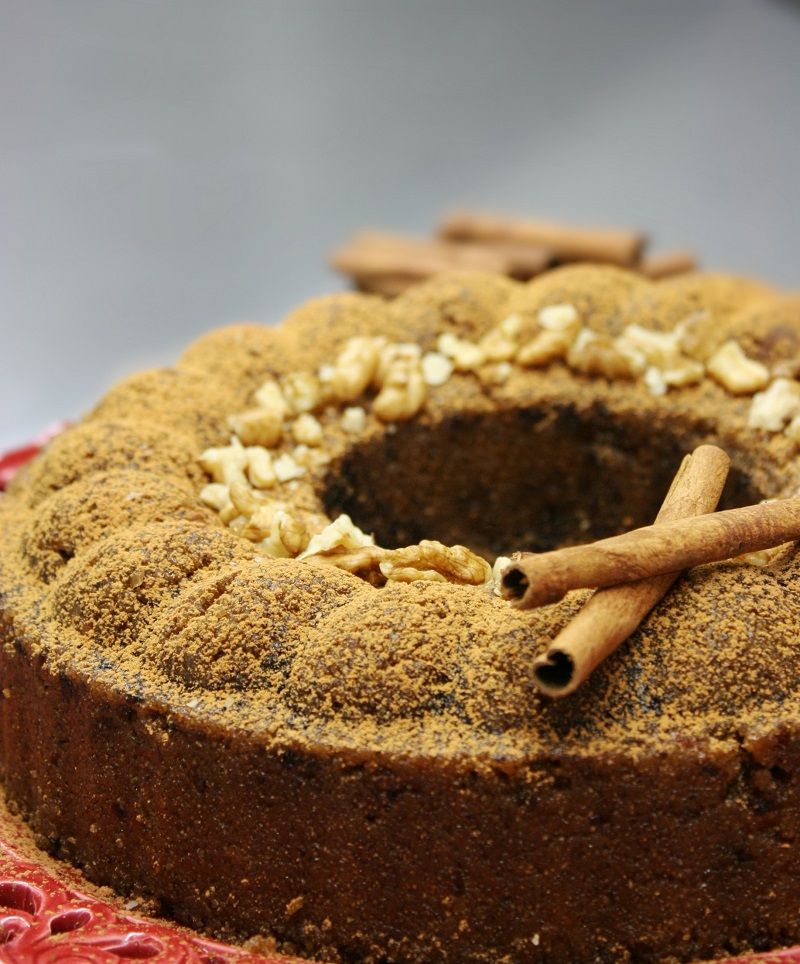
Halva tis rinas, sometimes called Greek village halva, is a humble but deeply satisfying sweet that often surprises first-time tasters. Made by toasting semolina in olive oil and then adding a hot sugar syrup, the mixture transforms into a firm, golden pudding-like cake.
Raisins, almonds, or pine nuts are folded in for texture and sweetness. It is an old-fashioned recipe rooted in simplicity, and its rich, nutty aroma fills the kitchen the moment cooking begins.
13. Pasteli
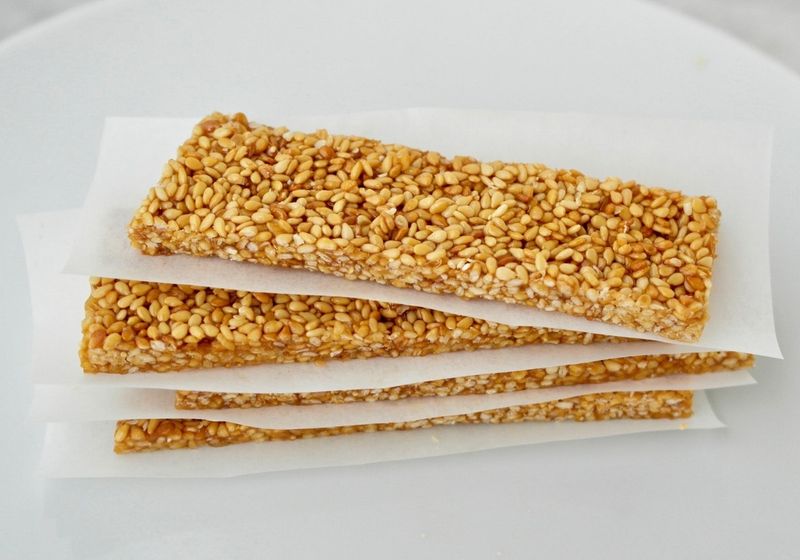
Pasteli is arguably the oldest energy bar in the world, and it has barely changed in thousands of years. Made from just two ingredients, sesame seeds and honey, this chewy, crunchy candy was eaten by ancient Greek athletes before competitions.
Modern versions sometimes include nuts or spices, but the classic two-ingredient bar remains the most popular. You will find them wrapped in cellophane at almost every market stall across Greece, and they make brilliant, lightweight snacks for sightseeing days.
14. Finikia
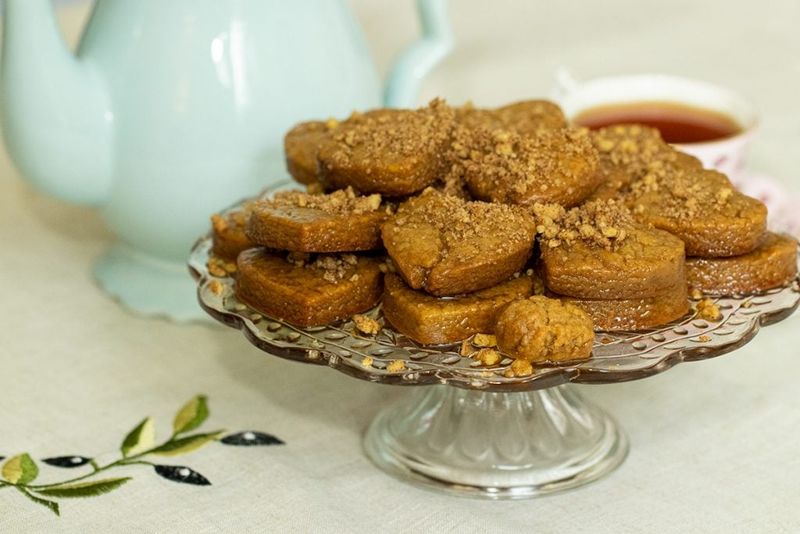
Finikia are the lesser-known cousin of melomakarona, and they deserve far more attention than they typically receive. These soft, spiced cookies get their character from orange juice, cinnamon, cloves, and a hint of cognac in the dough.
After baking, they take a quick dip in warm honey syrup before being rolled in finely chopped walnuts. The result is a cookie that is fragrant, moist, and complex in a way that keeps you reaching for another one without quite knowing why.
15. Tsoureki
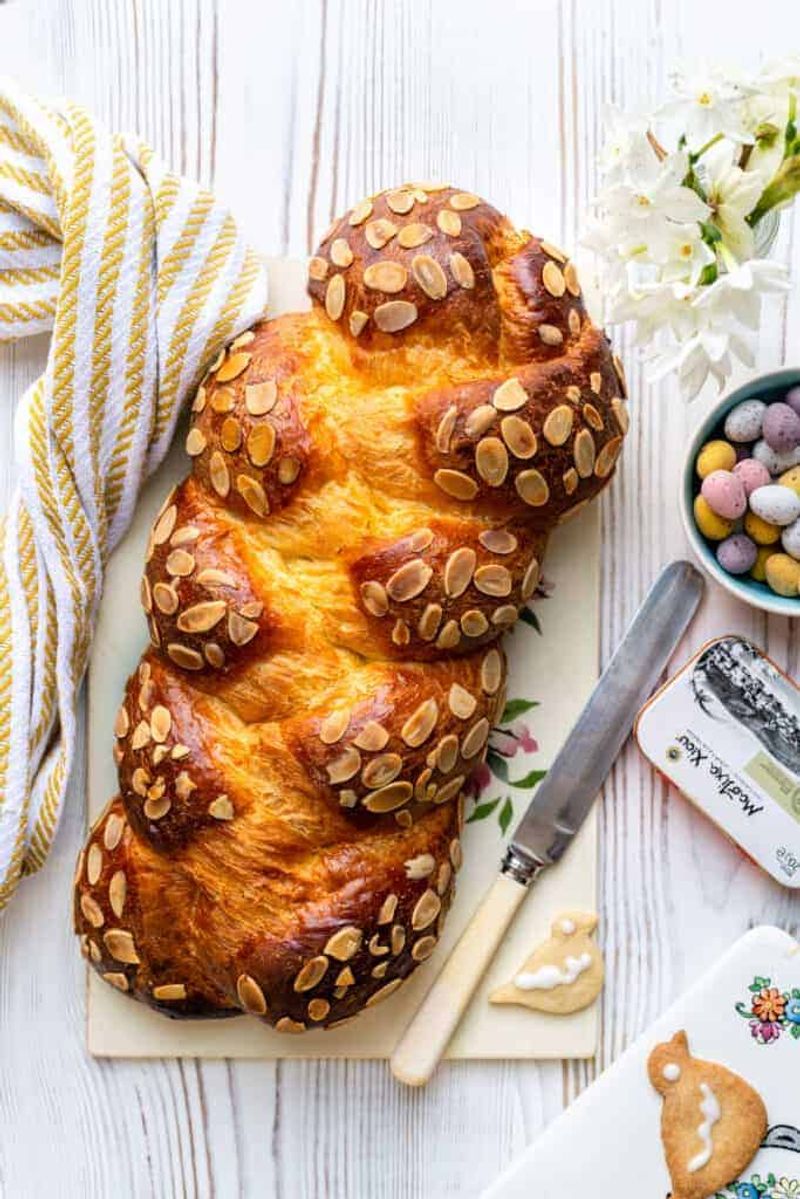
Tsoureki is Greece's answer to brioche, but with a personality all its own. This beautifully braided sweet bread gets its distinctive flavor from mastic resin and mahlab, a spice made from cherry pits, giving it a faintly floral, slightly bitter edge.
Traditionally prepared for Easter, tsoureki is now available year-round in most Greek bakeries. Tear off a piece and you will find a soft, pillowy interior with a satisfying chew.
It is equally wonderful plain or spread with butter and honey.
16. Skaltsounia
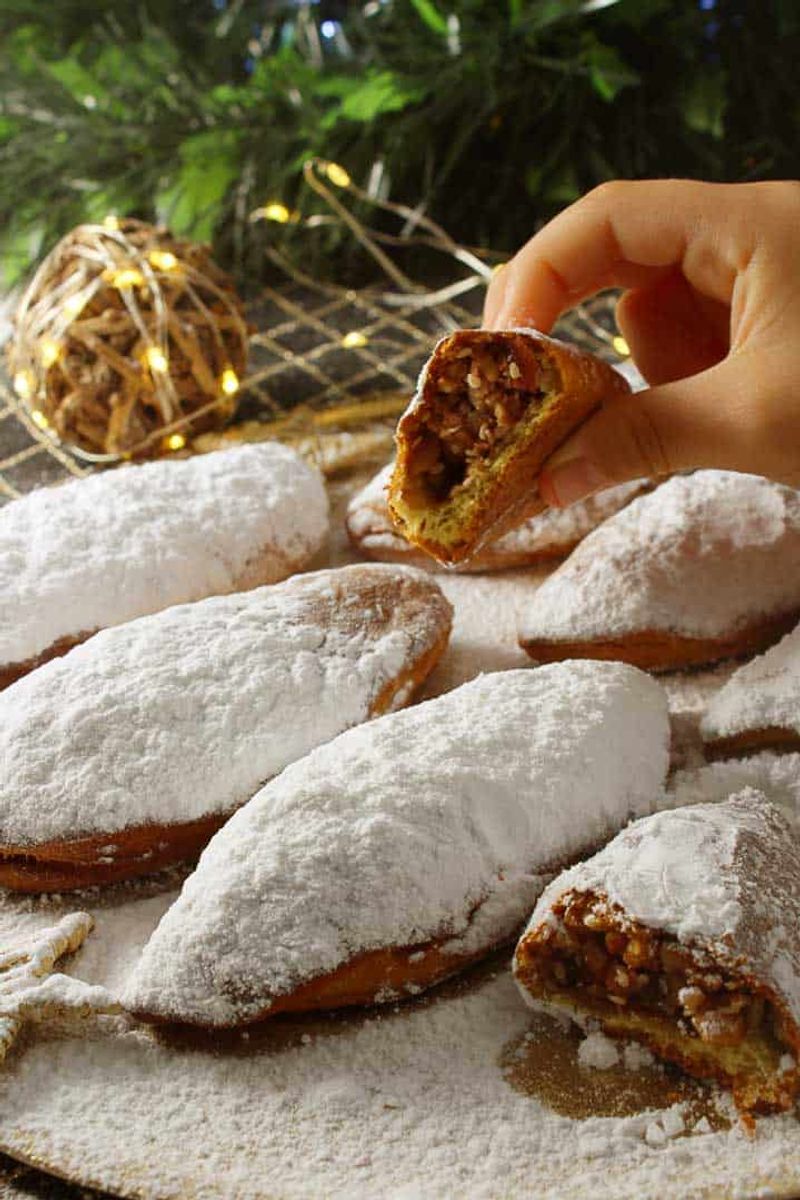
Crete has its own version of everything, and when it comes to sweets, skaltsounia are a true island treasure. These half-moon pastries are made from a simple dough that gets stuffed with a fragrant mix of crushed walnuts, honey, and cinnamon.
Once sealed, they are either fried or baked until golden, then buried in powdered sugar. Every Cretan family seems to have its own slightly different recipe, and tasting your way through different versions is one of the best reasons to explore the island's interior.
17. Trigona Panoramatos
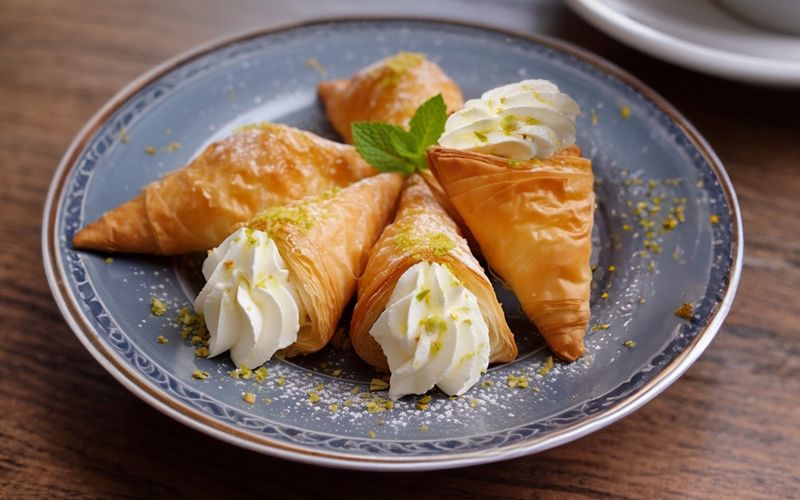
If you ever find yourself in Thessaloniki, hunting down trigona Panoramatos should be at the very top of your list. These crispy, cone-shaped phyllo triangles are baked to a deep golden color, then filled to bursting with a lightly sweetened whipped cream and finished with a drizzle of honey.
Named after the Panorama neighborhood where they were invented, these pastries have developed a near-cult following. Eat them immediately after filling because the contrast between crispy shell and cold cream is the whole point.
18. Portokalopita
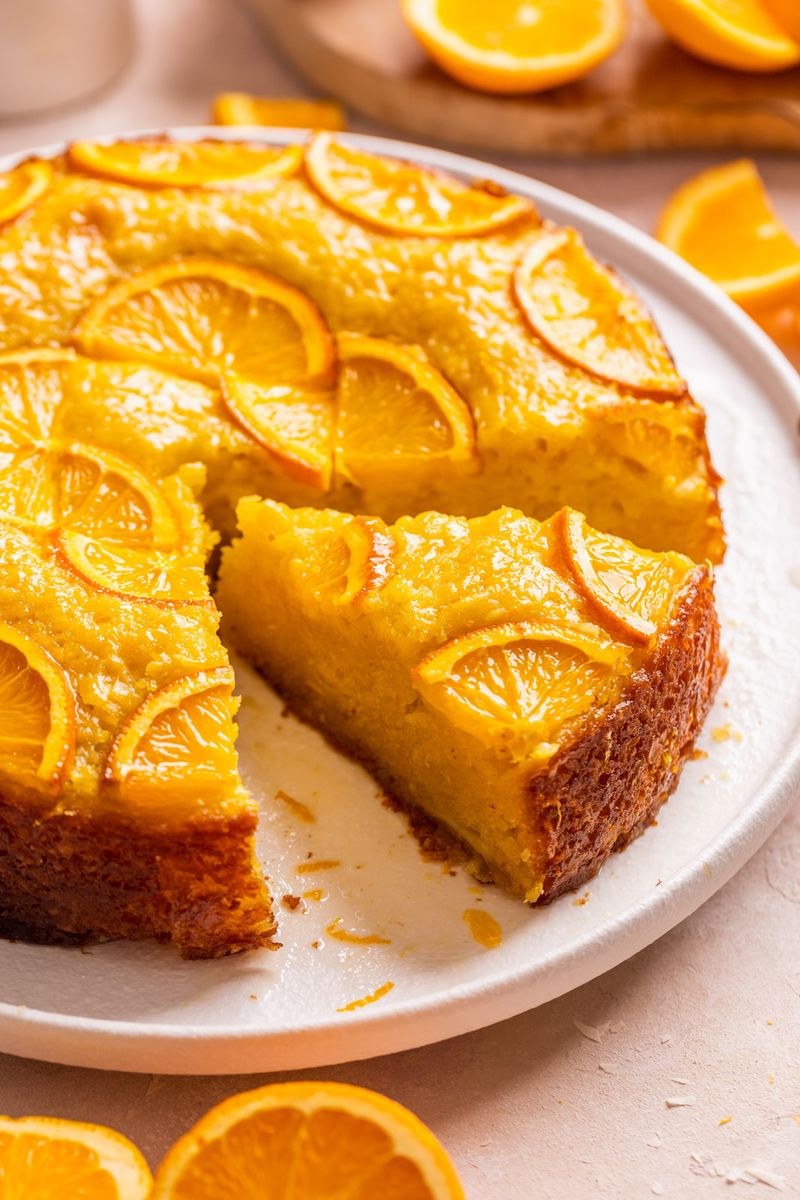
Portokalopita breaks every rule about what you can do with phyllo pastry, and the result is extraordinary. Instead of layering the phyllo neatly, you scrunch it up, mix it with a rich orange-yogurt batter, and bake the whole thing into a rustic, incredibly moist cake.
Once it comes out of the oven, a fragrant orange syrup gets poured over the top, soaking in deeply. The citrus flavor is bold and bright, making this one of the most refreshing sweets in the entire Greek repertoire.

Comments
No Comments