
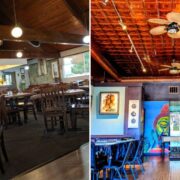
There was a time when dining out in Britain meant more than just a meal – it was an experience. Themed restaurants once filled our high streets and motorways, offering everything from medieval-style banquets to American diners complete with jukeboxes and milkshakes.
These nostalgic favourites defined family dinners, birthday outings, and weekend treats for generations. Today, most have vanished, but the memories of their quirky charm and comforting food live on in British hearts.
This article is for general informational and entertainment purposes only. Restaurant availability, branding, and menus mentioned may no longer exist. Photos are for illustrative purposes only and may not reflect original venues or décor.
1. Berni Inn

Brothers Frank and Aldo brought American steakhouse glamour to post-war Britain in 1955, wrapping it in cosy mock-Tudor trappings.
Their genius formula – prawn cocktail, steak and Black Forest gâteau – became the definitive 'posh meal out' for millions. At their peak, nearly 150 restaurants dotted the country.
Whitbread eventually purchased the chain in 1995, converting most locations into Beefeater grills as British tastes evolved beyond faux oak beams and standardised menus.
2. Little Chef

That chubby chef logo welcomed weary travellers along Britain's A-roads since 1958.
Families would eagerly spot the distinctive red-and-white buildings, knowing comfort food awaited inside – particularly the famous Olympic Breakfast that could fuel you through hours more driving.
At its height, 439 restaurants dotted the nation's highways before modern coffee chains and fast-food rivals gradually eroded its customer base. By 2018, after multiple failed revivals, the last location closed forever.
3. Happy Eater

Founded by a former Little Chef manager in 1973, this cheerful chain battled for hungry motorists with a family-first approach.
Outside stood colourful playgrounds where children could burn energy after long car journeys. Inside, smiling mascots adorned special kids' menus while parents refuelled on hearty British fare.
Even Prime Minister John Major stopped for a bite in 1991! The brand's distinctive yellow signs disappeared when owners Trust House Forte merged it with Little Chef by 1998.
4. Golden Egg

Fancy an omelette in mod surroundings? The Kaye family's hip chain brought affordable dining with mid-century flair to British high streets when eating out was still something special.
With its egg-focused menu and playful desserts like the 'Jamaican Longboat' banana split, Golden Egg became the place for young people to gather in the 1960s.
The slick coffee-bar atmosphere made it cooler than cafes but less formal than restaurants. As Britain's dining scene evolved into the 1980s, this once-ubiquitous chain scrambled away.
5. Fatty Arbuckle's

Named after a silent film star, this Plymouth-born chain served American excess on 13-inch plates!
Jukeboxes blared 50s tunes while waiters delivered mountainous burgers and milkshakes amid Hollywood memorabilia. The formula worked brilliantly – by 1999, 58 restaurants operated nationwide.
Troubles began with the BSE crisis hammering burger sales. Rapid expansion proved fatal when debts mounted, sending the chain into receivership in 2000. By 2006, even the rebranded 'Arbuckle's' restaurants had vanished completely.
6. Henry J. Bean's

Chicago-born restaurateur Bob Payton brought authentic American bar culture to 1980s London with this trendy concept.
Neon signs glowed above bartenders mixing potent cocktails while the grill sizzled with juicy burgers and racks of ribs. Chelsea's original location became the blueprint for franchises across the UK and beyond.
The chain changed hands multiple times through the 1990s, eventually losing its novelty as American-style dining became commonplace. By the 2010s, the once-fashionable brand had quietly disappeared from British high streets.
7. Old Orleans

Beads, jazz and jambalaya! This Louisiana-themed chain transported diners to the French Quarter without leaving their local retail park.
The restaurants captured New Orleans' vibrant atmosphere with colourful cocktails, Cajun-spiced food and carnival decorations. Families flocked to around 30 locations during the 1990s and early 2000s.
Ownership changed hands several times before the 2008 economic downturn proved fatal. Regent Inns' administration in 2009 began the final chapter, and by 2011, the last Mardi Gras beads had been packed away forever.
8. The Chicago Pizza Pie Factory

Bob Payton struck gold again in 1977 by introducing Brits to authentic Chicago deep-dish pizza in gangster-themed surroundings.
Fake bullet holes decorated walls while diners tackled pizza so deep it required knives and forks! The concept proved so successful it expanded internationally to Paris, Barcelona and beyond.
After Payton sold the company in 1990 and tragically died in 1994, momentum slowed. Rivals like Pizza Hut captured the market, and by 1996, this pioneering chain had disappeared – though its legacy lives on in Britain's enduring love for deep-pan pizza.
9. Pizzaland

Remember those penny pizza vouchers in newspapers? Pizzaland was once Pizza Hut's greatest rival, with restaurants everywhere sporting distinctive green-and-red branding.
Launched in 1970 with Associated Newspapers backing, their affordable Italian-American menu made pizza accessible to ordinary British families. Red-checkered tablecloths and casual service created a friendly atmosphere.
The chain's fate was sealed in 1996 when competitor Whitbread (Pizza Hut's UK franchisee) acquired Pizzaland's parent company. Almost overnight, branches were converted to Pizza Hut or other concepts.
10. Deep Pan Pizza Co

Students and bargain-hunters rejoiced when this unlimited pizza chain appeared in the late 1980s. For one fixed price, you could gorge yourself silly on endless slices of deep-dish pizza!
The chain's 89 restaurants became birthday party hotspots, with signature garlic bread 'dippers' and dessert pizzas adding to the indulgence.
Ironically, as British tastes shifted toward thinner, more authentic Italian crusts, Deep Pan Pizza's concept seemed increasingly outdated. In 1998, owners announced the brand would be scrapped, with sites converted to newer concepts like Frankie & Benny's.
11. Taybarns

Imagine a 30-metre food counter offering everything from roasts to curries to ice cream – all for one fixed price! Whitbread's ambitious 2007 creation took the buffet concept to extraordinary new levels.
Taybarns' barn-like restaurants in northern England and Wales became legendary for inducing 'food comas' as diners tried sampling every station. The recession-friendly pricing attracted families seeking maximum value.
Despite initial popularity, maintaining such vast food selections proved costly. By 2016, all seven locations had been converted to Brewer's Fayre pubs, ending this uniquely indulgent dining experiment after less than a decade.
12. Jamie's Italian

Jamie Oliver's mid-range Italian chain burst onto high streets in 2008 with rustic pasta, antipasti planks and the celebrity chef's cheeky personality infused throughout.
At its peak, 25 UK branches served fresh pasta to crowds drawn by Oliver's name and the promise of affordable quality. The restaurants helped elevate casual dining standards nationwide.
Overexpansion proved fatal amid rising costs and brutal competition. The sudden May 2019 collapse shocked the industry – 22 restaurants closed immediately, leaving 1,000 staff jobless and marking one of the most high-profile casualties of Britain's 'casual dining crunch'.
13. Wimpy

Wimpy holds a special place in the hearts of those who grew up in the 70s and 80s. Famous for its classic burgers and convivial atmosphere, Wimpy was a staple of British high streets.
With iconic red booths and retro jukeboxes, it was a slice of Americana in the UK. Families flocked to this cheerful diner for affordable meals and a touch of nostalgia.
The chain's decline was lamented by many, but for those who remember, Wimpy was more than just fast food; it was a cherished memory of simpler times.
14. Fuzzy's Grub

Step into Fuzzy's Grub, and you're enveloped in a world of mismatched charm and hearty food. Known for its eccentric decor, Fuzzy's was the place for traditional British fare with a twist.
Its cozy atmosphere made it feel like dining at a friend's eclectic home. Customers adored the generous portions of pies and stews, reminiscent of home-cooked meals.
The quirky ambiance, complete with vintage knick-knacks, invited diners to linger. Fuzzy's Grub was more than a meal; it was an experience that celebrated comfort and character in every bite.