







Each year on 25 January, Burns Night brings people together to mark the life and work of Robert Burns. Central to the evening is haggis, presented as part of a long-standing ritual that blends food, poetry, and shared tradition.
Its place on the table reflects practical origins as well as the influence of Burns’ writing and the formal suppers that developed over time. Looking at how haggis became linked to the occasion offers a useful way to understand how food and custom have evolved together in Scotland.
All information is provided for general interest only. Historical interpretations and traditions may vary.
Photos are for illustrative purposes only.
Origins As A Practical Highland Dish
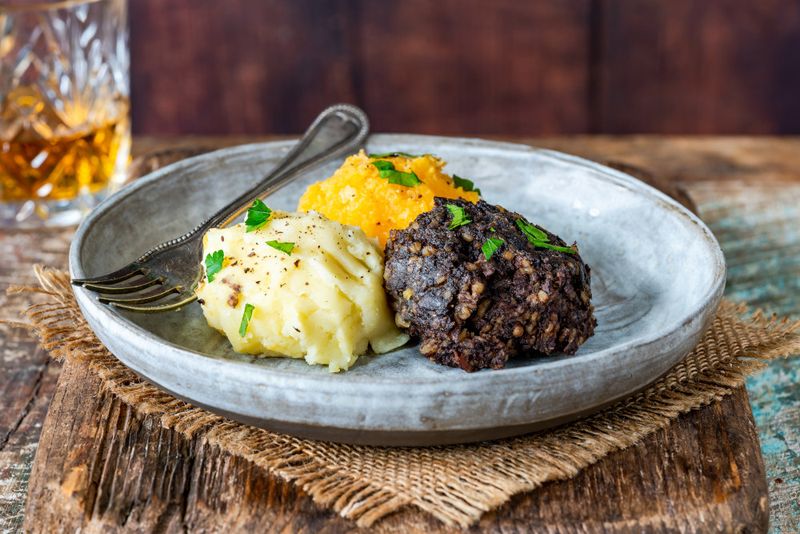
Long before it became a symbol of national celebration, haggis was born out of sheer necessity in the Scottish Highlands. Shepherds and crofters couldn't afford to waste a single scrap of meat, so they turned the less glamorous bits of a sheep into something hearty and filling.
Heart, liver, and lungs were minced up with oatmeal, suet, onions, and spices, then stuffed into a sheep's stomach and boiled.
This wasn't fancy cooking, it was survival with flavour. The oatmeal stretched the meat, the spices masked any gamey notes, and the result was a meal that stuck to your ribs through long, cold Highland winters.
Haggis kept families fed when times were tough, proving that resourcefulness often tastes better than extravagance.
Robert Burns' Address To A Haggis (1786)

In 1786, a young Robert Burns penned what would become one of Scotland's most famous poems: Address to a Haggis. He called it the Great chieftain o the pudding race, elevating this working-class meal to legendary status with his wit and warmth.
Burns wasn't mocking the dish, he was celebrating it, praising its honest, unpretentious nature in a world obsessed with fancy French cuisine.
The poem is cheeky, affectionate, and utterly Scottish. It captures the spirit of a dish that doesn't apologise for what it is.
Today, no Burns Night is complete without someone reciting these verses over a freshly cut haggis, often with great dramatic flourish and a wee dram nearby for courage.
The Rise Of Formal Burns Suppers In The 19th Century
The very first Burns Supper took place on July 21, 1801, organised by nine of the poet's friends to mark the fifth anniversary of his death. Haggis was on the menu, naturally, and the tradition stuck.
By the mid-1800s, Burns Clubs were popping up across Scotland and beyond, each hosting formal suppers complete with toasts, recitations, and of course, the ceremonial piping in of the haggis.
What started as an intimate gathering became a full-blown cultural event. The format grew more elaborate: a piper would lead the haggis into the room, someone would recite the Address, and the host would theatrically slice it open.
These rituals turned a simple meal into theatre, cementing haggis as the undisputed star of Burns Night.
Haggis As A Symbol Of Scottish Identity
Somewhere along the way, haggis stopped being just a meal and became a badge of honour. It represents resilience, resourcefulness, and a refusal to put on airs, qualities Scots hold dear.
When you tuck into a plate of haggis, you're not just eating dinner, you're connecting with centuries of history and a culture that values authenticity over pretence.
Burns Night amplified this symbolism. The dish became shorthand for Scottish pride, especially among expat communities who longed for a taste of home.
Even today, serving haggis on January 25th is a way of saying, This is who we are, and we're proud of it. It's comfort food with a side of national identity, and it tastes all the better for it.
Modern Burns Night Traditions And Variations
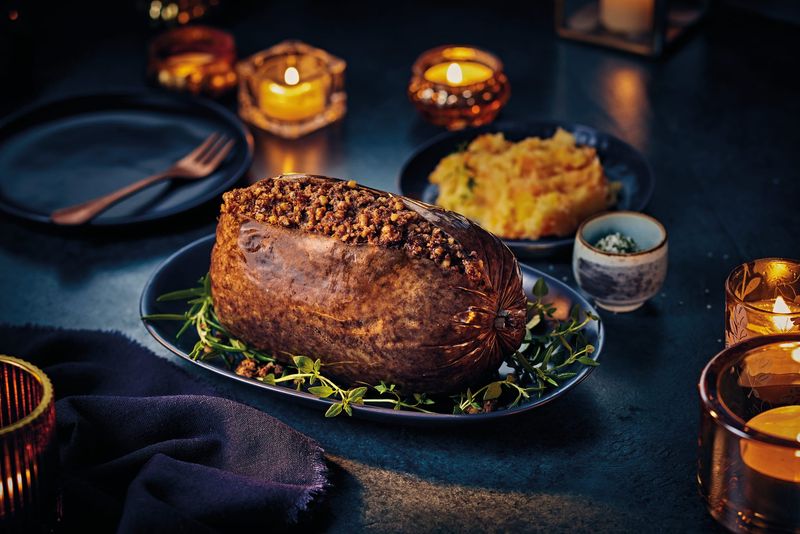
Fast forward to today, and Burns Night is still going strong, though with a few modern twists. Traditional haggis remains the centrepiece, served with neeps and tatties, but now you'll find vegetarian and vegan versions alongside the original.
These plant-based takes use lentils, beans, mushrooms, and spices to capture that savoury, peppery flavour without the offal.
The ceremony hasn't changed much, pipers still pipe, poets still recite, and diners still raise a toast. But whether you're at a grand formal supper or a casual gathering at home, the spirit is the same: honouring Burns, celebrating Scottish culture, and enjoying a meal that's as unpretentious as it is delicious.
Haggis has evolved, but its place at the table remains unshakeable.