











In honour of National English Toffee Day on 8 January, it’s a good moment to take a closer look at what actually separates English toffee from its American counterpart.
Although both share the same name, they follow different traditions when it comes to ingredients, cooking methods, texture, and how they’re typically enjoyed.
Understanding these small but important differences helps explain why one version tends to be softer and buttery, while the other is often firmer with added nuts or chocolate, giving each style its own character on the sweet shelf.
All information is provided for general interest only.
Taste, appearance, and availability may vary.
Photos are for illustrative purposes only.
1. How English And American Toffee Are Traditionally Made

English toffee is made by heating butter and sugar together until the mixture reaches the hard crack stage, usually around 150°C.
Some recipes include a small amount of water or lemon juice to help the sugar dissolve evenly at the beginning of cooking.
The mixture is stirred carefully and poured out to cool and harden once the correct temperature is reached.
American toffee often includes corn syrup alongside sugar and butter.
This changes how the sugar behaves during cooking and makes the mixture less likely to crystallise.
Nuts are commonly stirred directly into the hot mixture before it sets, rather than being added as a topping later.
Both styles require careful temperature control, but the American version generally allows a slightly wider margin for error.
2. The Main Ingredient Differences Between Both Styles
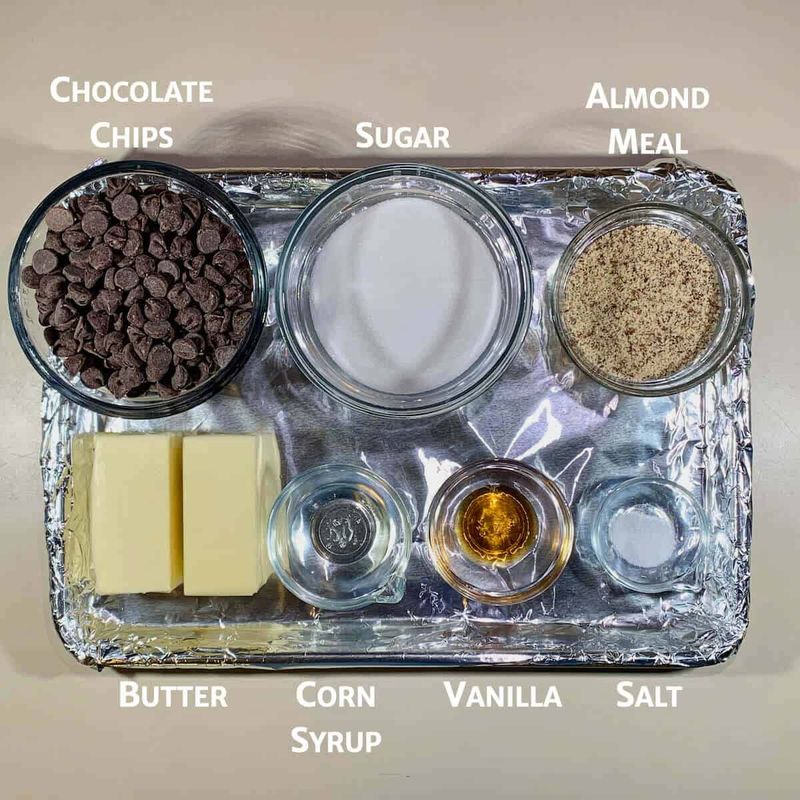
Traditional English toffee relies mainly on butter and sugar, sometimes using brown sugar or treacle to deepen colour and flavour.
Aside from small amounts of water or acid to support melting, the ingredient list stays relatively simple.
American toffee usually contains corn syrup and vanilla extract.
White sugar is more commonly used, keeping the colour lighter.
The corn syrup influences texture and helps create a smoother finish.
Nuts also differ in how they are used.
In English toffee they are often sprinkled on top, whereas American recipes tend to mix nuts directly into the toffee itself.
3. Texture And Crunch Compared Side By Side
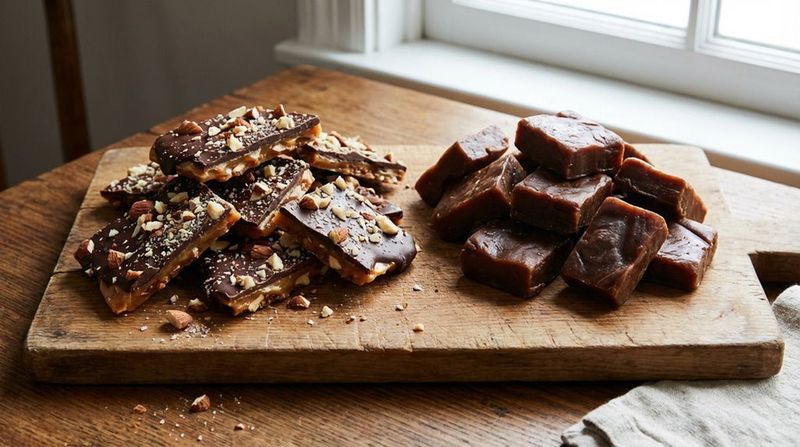
English toffee sets very firm and brittle once cooled.
It breaks cleanly into shards and delivers a sharp snap when bitten.
This texture comes from cooking the sugar and butter to a precise temperature without stabilising syrups.
American toffee has a slightly softer bite.
Corn syrup reduces brittleness and produces a more tender crunch that is less likely to splinter when broken.
Both textures appeal to different preferences.
English toffee suits those who enjoy a strong snap, while American toffee tends to feel gentler and easier to bite.
4. Typical Flavours And Add-Ins Used In Each Version
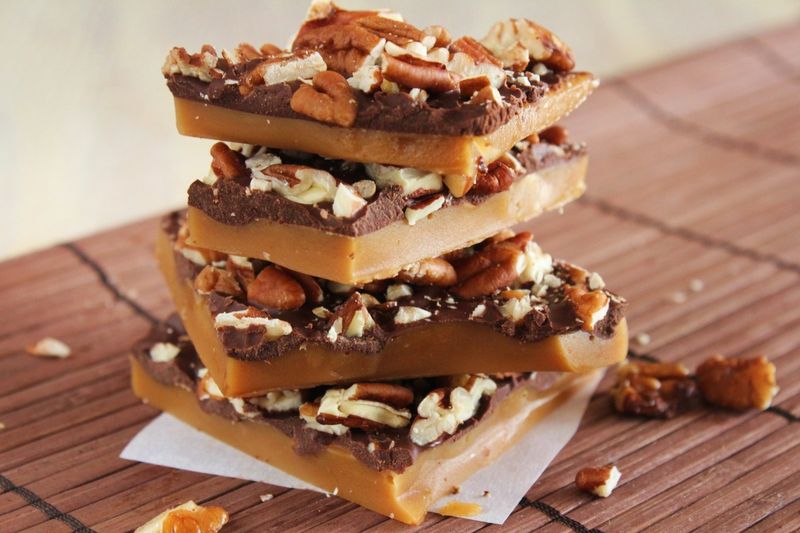
The flavour of English toffee centres on caramelised butter and sugar.
If brown sugar or treacle is used, the result may have a deeper, slightly darker sweetness, but the profile remains simple and traditional.
American toffee commonly includes vanilla flavouring and is frequently coated in chocolate once set.
Nuts, particularly almonds, are widely used and become part of the finished texture.
These additions create more layered flavours in American versions, while English toffee keeps a more straightforward caramel character.
5. Why Cooking Temperatures Affect The Final Result
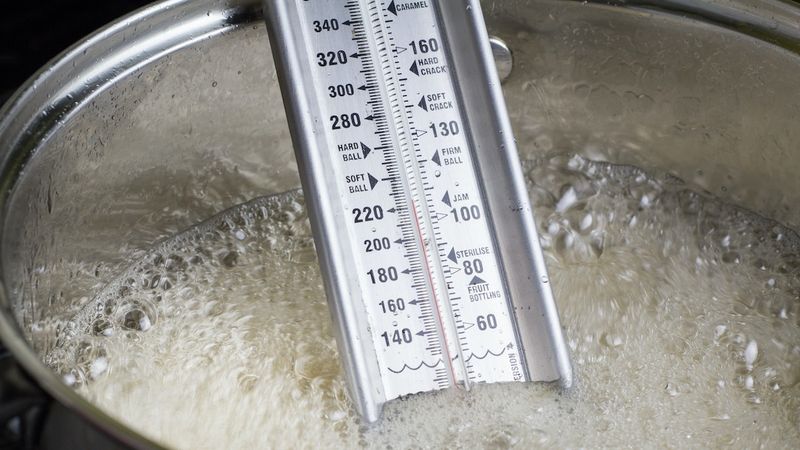
Both styles aim for the hard crack stage, roughly between 150°C and 155°C.
Reaching this range ensures the sugar sets firmly once cooled.
English toffee requires precise temperature control because there is no corn syrup to stabilise the mixture.
If the temperature is slightly too low, the result may remain sticky rather than crisp.
American toffee benefits from the presence of corn syrup, which helps prevent unwanted crystallisation and provides more consistency during cooking.
6. How Each Type Is Commonly Served And Enjoyed
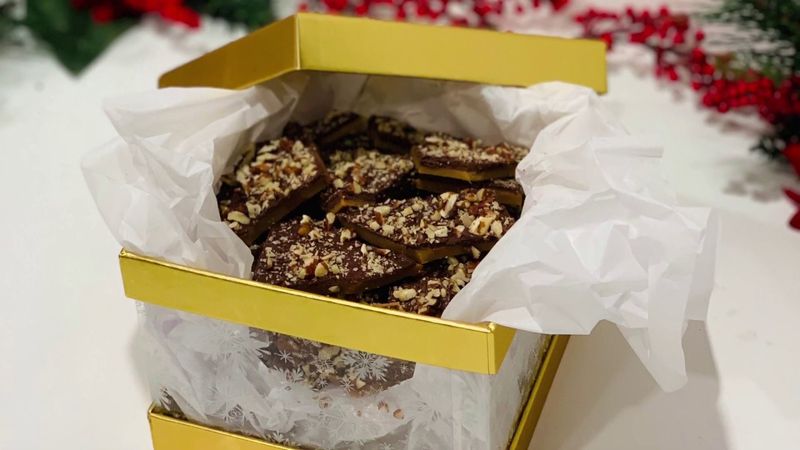
English toffee is often broken into irregular pieces and packaged simply in tins or paper wrapping.
It is commonly shared at home or offered alongside tea and coffee.
American toffee is frequently presented in neat pieces, coated in chocolate, and packaged in gift boxes.
It is often associated with seasonal gifting and confectionery displays.
Both versions suit casual snacking, though American styles are more often positioned as boxed treats.
7. Regional Baking Traditions That Shaped Both Styles

The word toffee appeared in Britain in the early 19th century, with the sweet becoming popular at fairs and community gatherings.
Different regions developed their own small variations based on available ingredients.
In the United States, confectioners adapted British recipes using ingredients that were easier to source locally, including corn syrup and nuts.
Over time, this created a distinct style that diverged from the original.
These adaptations reflect how regional availability and tastes influence traditional foods.
8. Why The Names Can Cause Confusion Internationally
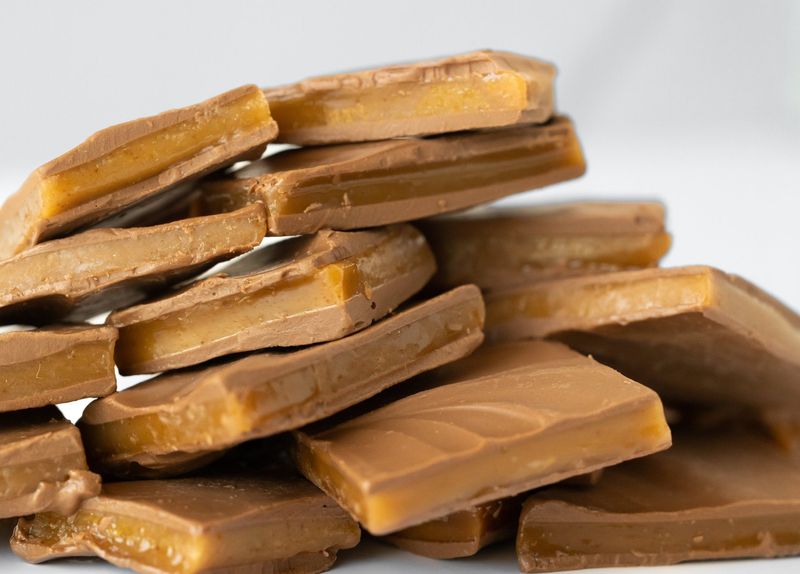
In many American shops, products labelled as English toffee are often buttercrunch, which is actually an American-style sweet.
Traditional English toffee does not usually contain chocolate or nuts mixed into the base.
In Britain, the word toffee may describe a wide range of sweets, from firm to chewy varieties.
In the United States, the term is more narrowly associated with hard, buttery confectionery.
This difference in terminology can lead to mixed expectations when purchasing internationally.
9. Which Recipes Are Easier For Home Cooks To Try
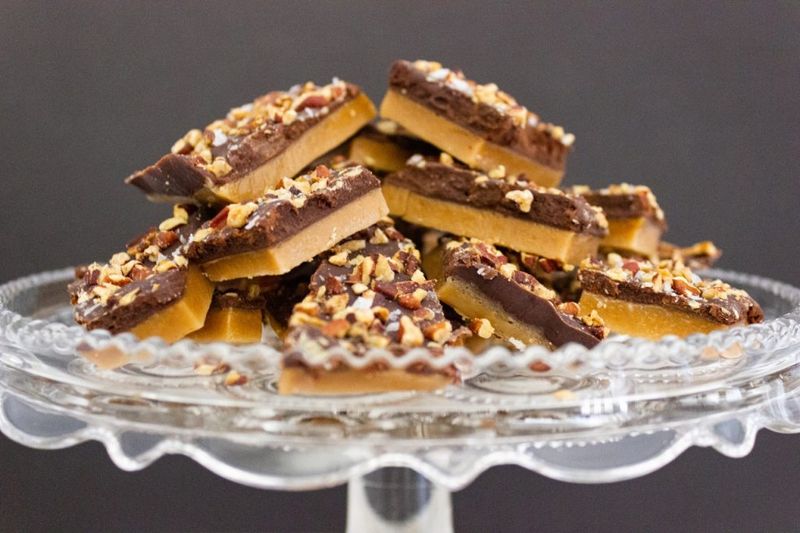
American toffee is generally more forgiving for beginners.
Corn syrup reduces the risk of crystallisation and allows more flexibility with temperature control.
English toffee requires closer monitoring and quicker handling once the correct temperature is reached, making it slightly more demanding for inexperienced cooks.
Both versions can be made successfully at home with a reliable thermometer, steady heat control, and patience.