







British and American English share a lot in common – until you step into the kitchen. From vegetables and herbs to everyday snacks, many UK food terms have completely different names across the Atlantic.
What Brits call crisps, Americans know as chips, and an innocent biscuit can cause more confusion than you’d think. Here are 14 common British food terms that leave Americans reaching for a translation guide.
This article is for general informational purposes only. Food terminology, ingredient types, and product availability may vary by region and brand. Photos are for illustrative purposes only.
1. Courgette - Zucchini

The elegant-sounding "courgette" comes from French, while Americans use the Italian "zucchini" for this summer squash. British chefs cherish these green veggies in everything from ratatouille to chocolate cakes.
Courgette flowers are even considered a delicacy, often stuffed with cheese and fried in tempura batter.
2. Aubergine - Eggplant

Another French-inspired term that causes transatlantic confusion. The glossy purple vegetable that Americans call "eggplant" is "aubergine" in British English.
Famous in Middle Eastern baba ganoush and Italian parmigiana, this versatile nightshade features prominently in British curry houses as the star of baingan bharta.
3. Prawns - Shrimp

Order "shrimp" in Britain and you might get tiny specimens, while "prawns" are the larger crustaceans Americans typically call shrimp. Technically, they're different creatures, but Brits use 'prawns' broadly.
The classic British prawn cocktail - served with Marie Rose sauce - remains a nostalgic 1970s starter still found on pub menus nationwide.
4. Chips - Fries

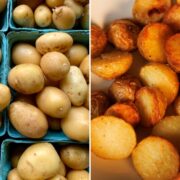
Ask for chips in Britain and you'll receive thick-cut potatoes - closer to what Americans call steak fries. They're chunkier, fluffier inside, and traditionally served with fish.
British chips are often twice-fried and doused with malt vinegar rather than ketchup. The average Brit consumes nearly 100 pounds of chips annually!
5. Crisps - Potato Chips

What Americans call "potato chips," Brits know as "crisps" - those thin, crunchy potato slices that come in foil packets. British crisp flavours often reflect national tastes with varieties like prawn cocktail, pickled onion, and Marmite.
Walkers, the UK's leading crisp brand, sells over 11 million packets daily across the country.
6. Biscuit - Cookie

The British "biscuit" encompasses what Americans call cookies, crackers, and some wafers - essentially any baked, crisp, sweet or savory snack. American biscuits resemble what Brits call scones.
Tea-dunking is practically a national sport in Britain. The country spends over £2 billion annually on biscuits, with the average Brit consuming 2 kilograms yearly.
7. Rocket - Arugula

The peppery leaf Americans know as "arugula" goes by "rocket" in British supermarkets and restaurants. The name derives from the French 'roquette' and Italian "rucola," highlighting Britain's European culinary influences.
Once considered a Mediterranean specialty, rocket now grows abundantly in British gardens and features prominently in posh sandwiches and salads nationwide.
8. Swede - Rutabaga

This humble root vegetable creates genuine confusion. The "swede" (named for its Swedish origins) is called "rutabaga" or sometimes "yellow turnip" in America.
Essential to traditional British cooking, swedes are mashed with carrots to make "neeps" in Scotland, roasted for Sunday dinners, and feature prominently in warming winter stews across the UK.
9. Spring Onion - Green Onion

Those slender onions with the long green tops and small white bulbs? Americans call them "green onions" or "scallions," while Brits say "spring onions."
They're essential in British Chinese takeaway dishes and classic potato salad. British chefs particularly value their mild flavor for Welsh rarebit and cheese dishes where stronger onions would overwhelm.
10. Fairy Cake - Cupcake

The dainty "fairy cake" predates America's supersized "cupcake" in British baking. Traditionally smaller with a simple glace icing rather than towering buttercream, these treats got their whimsical name because they're supposedly sized for fairies.
Children's birthday parties and village fetes wouldn't be complete without these light sponge cakes topped with pastel-colored icing.
11. Jacket Potato - Baked Potato

The British "jacket potato" is identical to America's "baked potato" - but the name conjures the crispy skin that "jackets" the fluffy interior. A proper British jacket comes with classic fillings like beans and cheese or tuna mayo.
Street vendors sell them from foil-lined carts in winter, and they're a staple of university canteens nationwide.
12. Minced Beef - Ground Beef

The foundation of countless British comfort foods, "minced beef" is exactly what Americans call "ground beef." The term "mince" alone typically refers to beef unless specified otherwise.
Shepherd's pie (though technically made with lamb), cottage pie, and proper British bolognese all rely on quality mince. During Christmas, sweet mincemeat confusingly contains no meat at all!
13. Coriander – Cilantro

In the UK, the word 'coriander' refers to both the fresh leaves and the seeds of the Coriandrum sativum plant. Across the pond in the US, the fresh leaves are known as 'cilantro,' while the seeds maintain the name 'coriander.'
This distinction might seem minor, but it highlights a curiosity in how language evolves. The term 'cilantro' comes from the Spanish name for the plant, reflecting the influence of Mexican cuisine in the United States.
14. Bangers – Sausages

In the UK, 'bangers' is a term affectionately used for sausages, often associated with the classic dish 'bangers and mash.' The term originated during World War I when sausages were made with water and would burst when cooked.
In the US, they are simply called 'sausages,' and the term 'bangers' is rarely used outside British-themed restaurants or menus.