










Ever noticed how a rough night can quietly change the way your appetite behaves the next day, even when your meals stay the same. The body has its own way of signalling hunger and fullness, and sleep plays a bigger role in that balance than most people realise.
Small shifts in energy levels, focus, and cravings can start to add up in ways that feel confusing at first. Taking a closer look helps make sense of those signals and gives you a better handle on everyday food choices.
This article is provided for general informational purposes only and does not replace professional medical or nutritional advice. Individual responses to sleep and appetite can vary.
Feeling Hungrier Even After Eating Well

Your stomach might be satisfied, but your brain hasn't got the memo. Sleep deprivation disrupts the communication between your digestive system and your mind, leaving you convinced you need more food even after a proper meal.
Studies show that people who sleep fewer than six hours often consume hundreds of extra calories daily. Your body's confusion between genuine hunger and sleep-related signals makes it tricky to trust your appetite.
Finding It Harder To Feel Full
Satiety signals take longer to kick in when you're running on empty. Normally, your body releases hormones that tell you to stop eating, but sleep loss weakens these messages considerably.
This delay means you might polish off an entire packet of biscuits before realising you've had enough. The disconnect between eating and feeling satisfied becomes more pronounced with each night of poor sleep, creating a frustrating cycle that's hard to break.
Stronger Cravings For Sweet And Salty Snacks
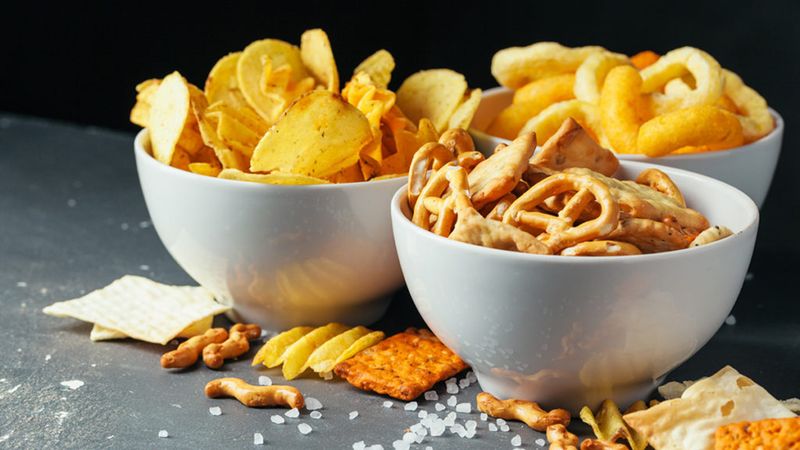
Fancy a bag of crisps at 3 PM? Your exhausted brain is screaming for quick energy, which usually comes in the form of sugar and salt.
When you're knackered, your brain's reward centres light up more intensely for junk food than healthy options. This isn't weakness - it's biology.
Your body desperately seeks fast fuel to compensate for the energy you didn't restore during sleep, making those chocolate bars nearly impossible to resist.
Tired Brains Mistaking Fatigue For Hunger
Here's a wild fact: your brain uses similar pathways to process tiredness and hunger, which means it sometimes gets its wires crossed. Feeling wiped out?
Your mind might interpret that exhaustion as a need for food instead.
This mix-up explains why you reach for snacks when what you really need is a nap. Your body's attempting to boost energy levels through calories when rest would actually solve the problem more effectively than any meal could.
Hunger Hormones Falling Out Of Balance

Ghrelin and leptin are your body's hunger management team, but sleep loss throws them completely off track. Ghrelin (the hunger hormone) increases whilst leptin (the fullness hormone) decreases when you're sleep-deprived.
This hormonal chaos creates a perfect storm for overeating. Your body essentially receives constant hunger signals whilst the stop-eating messages get muffled.
Restoring proper sleep patterns helps rebalance these hormones naturally, making appetite regulation feel effortless again.
Portion Control Becoming More Difficult
Sleep deprivation weakens your prefrontal cortex - the bit of your brain responsible for self-control and decision-making. Without proper rest, saying no to seconds (or thirds) becomes genuinely harder.
Research shows sleep-deprived people serve themselves larger portions without realising it. Your judgement about appropriate serving sizes gets clouded, and the ability to stop eating when you've had enough diminishes significantly.
It's not about lacking willpower; your brain simply isn't functioning at full capacity.