







Bananas have a habit of ripening faster than expected, often going from perfectly yellow to heavily spotted in just a few days.
With so many tips claiming to slow browning, it can be hard to know which ones are actually worth trying.
To find out what really makes a difference, we tested seven common banana storage methods over the course of a week, paying close attention to colour, texture, and taste.
The results showed that appearances can be misleading, and that browning does not always mean a banana is past its best.
All information is provided for general interest only.
Storage conditions, ripening speed, and results may vary depending on temperature, banana variety, and starting ripeness.
Photos are for illustrative purposes only.
Why Bananas Turn Brown So Quickly
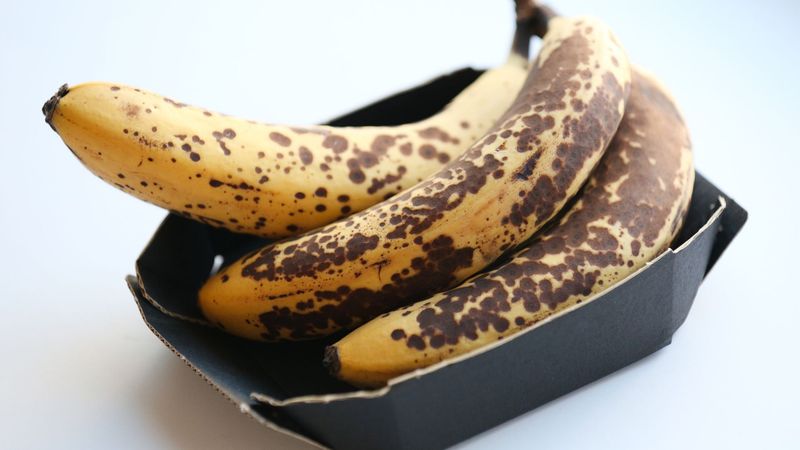
Bananas may look tough on the outside, but they are surprisingly dramatic fruit.
As they ripen, they release ethylene gas through their stems, which speeds up the breakdown of starches into sugars.
This process is what turns green bananas yellow, then brown, and eventually very soft.
Light, warmth, and nearby fruit can all accelerate the change, making bananas one of the fastest ripening items in the fruit bowl.
The browning peel might look alarming, but it does not always reflect what is happening inside.
The Seven Storage Methods We Put To The Test
To see what really makes a difference, we tested seven common banana storage methods over a full week.
These included wrapping stems with tin foil or cling film, separating individual bananas, storing them with other fruit, refrigerating them, and keeping them in a cool, dark cupboard.
Each method was chosen because it is often recommended as a way to slow browning.
By tracking colour, texture, and overall condition on days one, three, and seven, we were able to compare which tricks actually worked and which ones made things worse.
How Browning Affected Taste And Texture
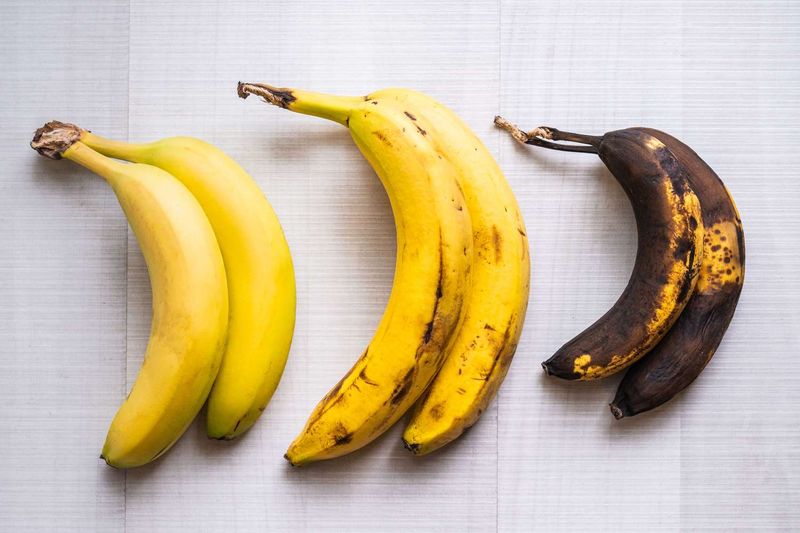
One of the most interesting discoveries was that the browniest bananas were not always the worst to eat.
Refrigerated bananas looked grey, dark, and unappealing on the outside, but the flesh inside stayed perfectly ripe and flavourful.
Meanwhile, bananas kept in a fruit bowl browned quickly and became overly soft and watery.
This showed that peel colour alone is not a reliable indicator of taste, and that some storage methods protect the fruit inside even if the skin suffers.
What Worked Best And What Did Not
Two methods stood out for different reasons.
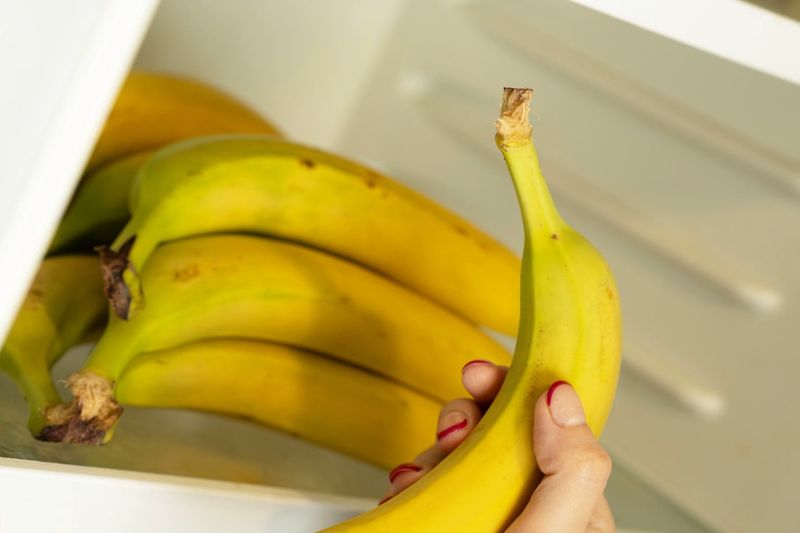
Keeping bananas in a cool, dark cupboard helped maintain a yellow peel for the longest time, making them the best option for appearance.
Refrigerating just ripe bananas preserved the best tasting flesh, even though the skins darkened significantly.
The least effective method was storing bananas in a fruit bowl with other fruit, where added ethylene caused rapid browning and spoilage.
Wrapping the stems helped slightly, but did not prevent browning entirely.
Simple Ways To Store Bananas More Effectively
The results suggest that the best method depends on what matters most to you.
If you care about how bananas look, store them away from light and heat.
If flavour and texture are your priority, refrigerating ripe bananas can be surprisingly effective.
For bananas that are already very ripe, peeling, slicing, and freezing them is a practical way to reduce waste and keep them ready for smoothies or baking.
Sometimes the simplest solution is not about stopping browning at all, but about using bananas at the right stage.