













Britain is famous for its scones and Victoria sponge, but tucked away in bakeries, farmhouses, and village halls across the country are dozens of cakes most people have never heard of. From the misty Scottish Highlands to the rolling hills of Wales, every region has its own sweet secret waiting to be discovered.
These hidden gems carry centuries of history, local ingredients, and proud traditions in every slice. Get ready to explore 25 remarkable cakes that deserve a spot on every baker's radar.
1. Sad Cake (Lancashire)
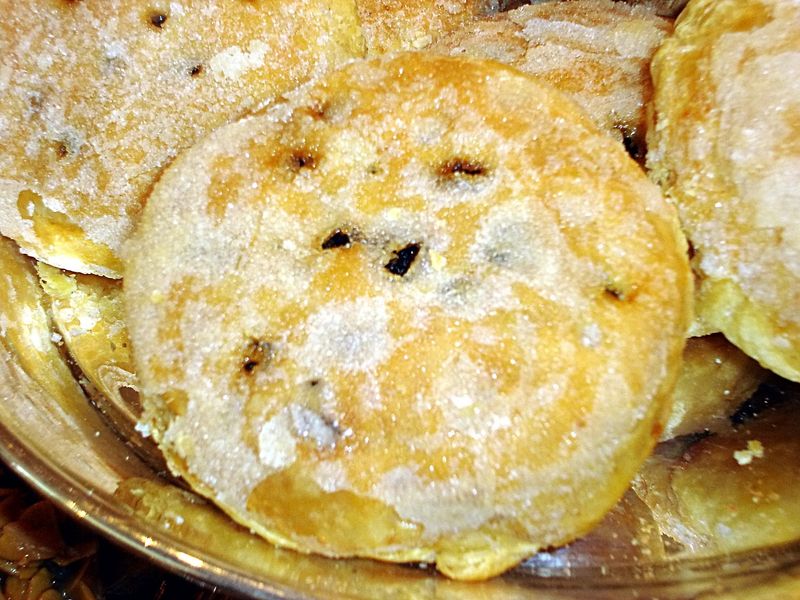
Don't let the name fool you — Lancashire Sad Cake is anything but miserable. This flat, unleavened pastry is packed with currants and sugar, giving it a sweet, satisfying chew.
The name actually comes from the Old English word meaning "flat," not the emotion.
Baked on a griddle rather than in an oven, it has a slightly crisp exterior and a soft, fruity centre. It was a staple for working-class families who needed something filling and affordable.
2. Gur Cake (Irish-British Communities)
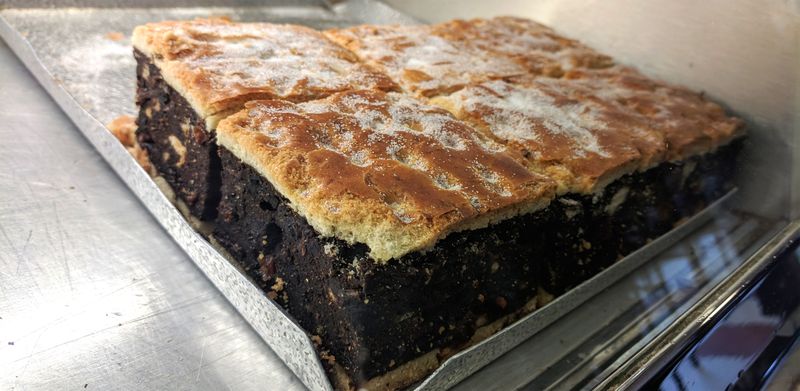
Gur Cake has a wonderfully rebellious origin story. Bakers in Dublin — and later in Irish communities across Britain — made it using leftover stale bread and cake scraps, sandwiched between two layers of shortcrust pastry.
Nothing went to waste.
Spiced with cinnamon and mixed peel, it delivers a deeply warming flavour. Street kids in old Dublin, called "gurriers," were said to love it — that's where the name comes from.
3. Coventry Godcakes
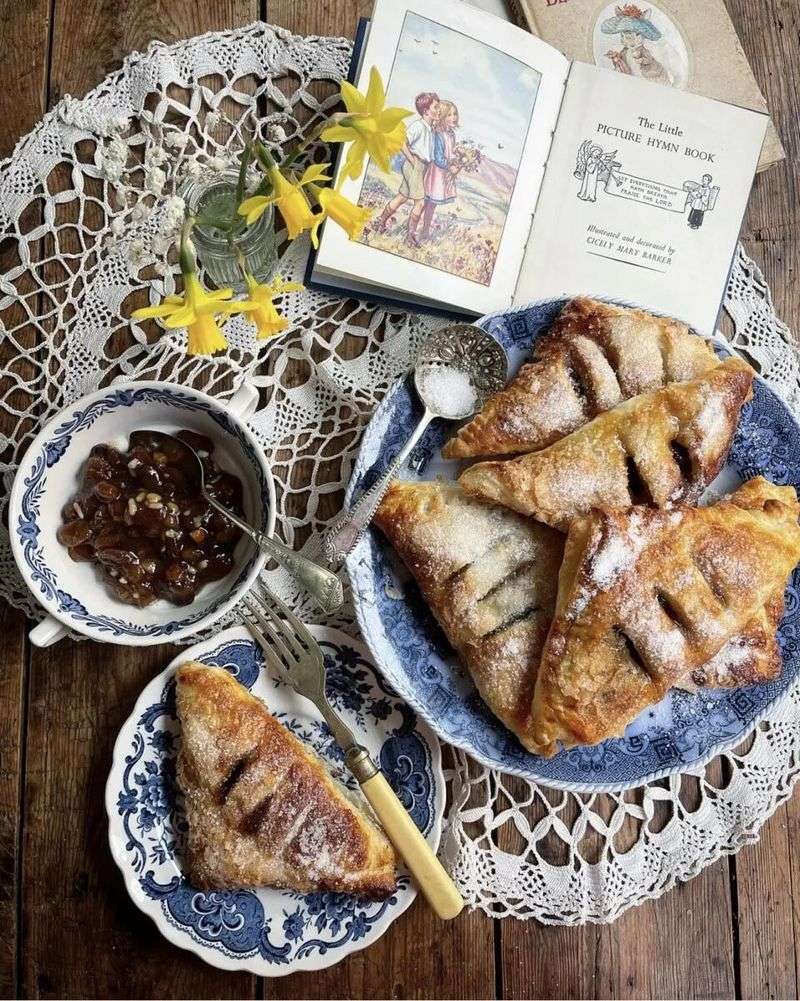
Shaped like a triangle and packed with mincemeat, Coventry Godcakes have a fascinating tradition behind them. Godparents once gave these pastries to their godchildren on New Year's Day as a blessing for the year ahead.
The three corners represent the Holy Trinity.
Crispy, golden, and dusted with sugar, they are surprisingly addictive. Coventry bakers have been making them since the 14th century, making this one of England's oldest surviving regional bakes.
4. Clootie Dumpling (Scotland)
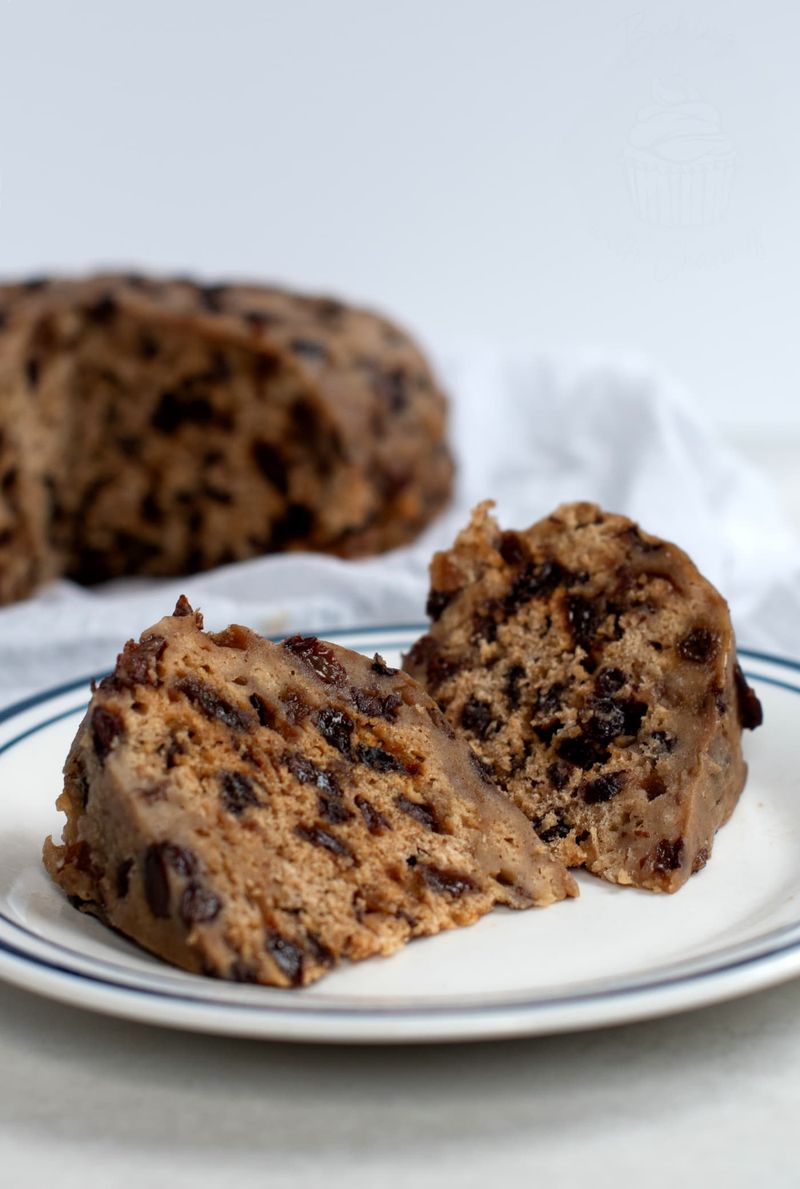
Steamed in a cloth — or "cloot" — for several hours, this Scottish classic is more pudding than cake, but locals proudly call it a dumpling. Packed with dried fruit, oatmeal, spices, and treacle, it has a dense, intensely spiced flavour that warms you from the inside out.
Traditionally made for birthdays and Hogmanay, coins were sometimes hidden inside for luck. Leftover slices are often fried in butter the next morning — a truly Scottish move.
5. Bara Brith (Wales)
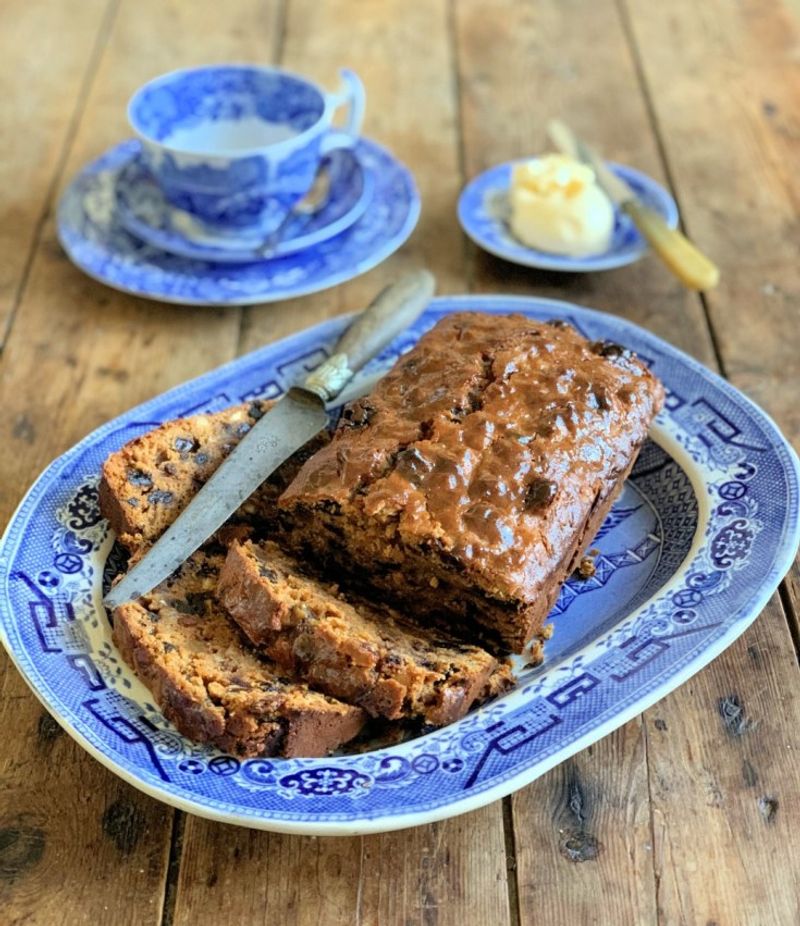
Bara Brith translates from Welsh as "speckled bread," and one bite explains exactly why. Dried fruit is soaked overnight in strong black tea before being folded into a lightly spiced dough, creating a moist, flavourful loaf with a beautiful deep colour.
Every Welsh grandmother seems to have her own version, and debates about the "right" recipe are taken very seriously. Spread generously with salted butter, it pairs perfectly with a cup of tea on a rainy afternoon.
6. Yorkshire Curd Tart
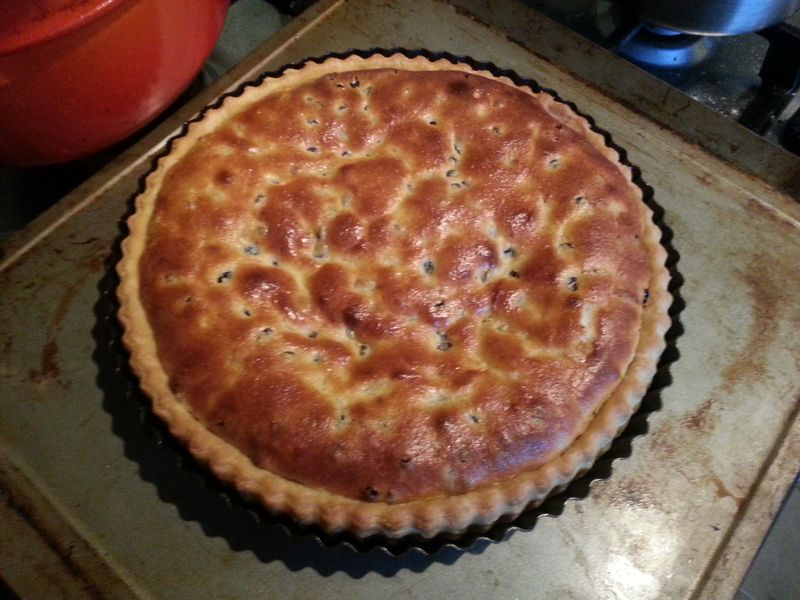
Yorkshire Curd Tart is the county's answer to cheesecake — and arguably better. Made with fresh curd cheese, eggs, butter, currants, and a generous grating of nutmeg, it has a creamy, slightly tangy filling nestled in a short, buttery pastry case.
It was traditionally served at Whitsuntide fairs across Yorkshire, making it a cake tied to community celebrations. The nutmeg is non-negotiable — it gives the filling that distinctive, nostalgic warmth that sets it apart from any modern dessert.
7. Cornish Heavy Cake
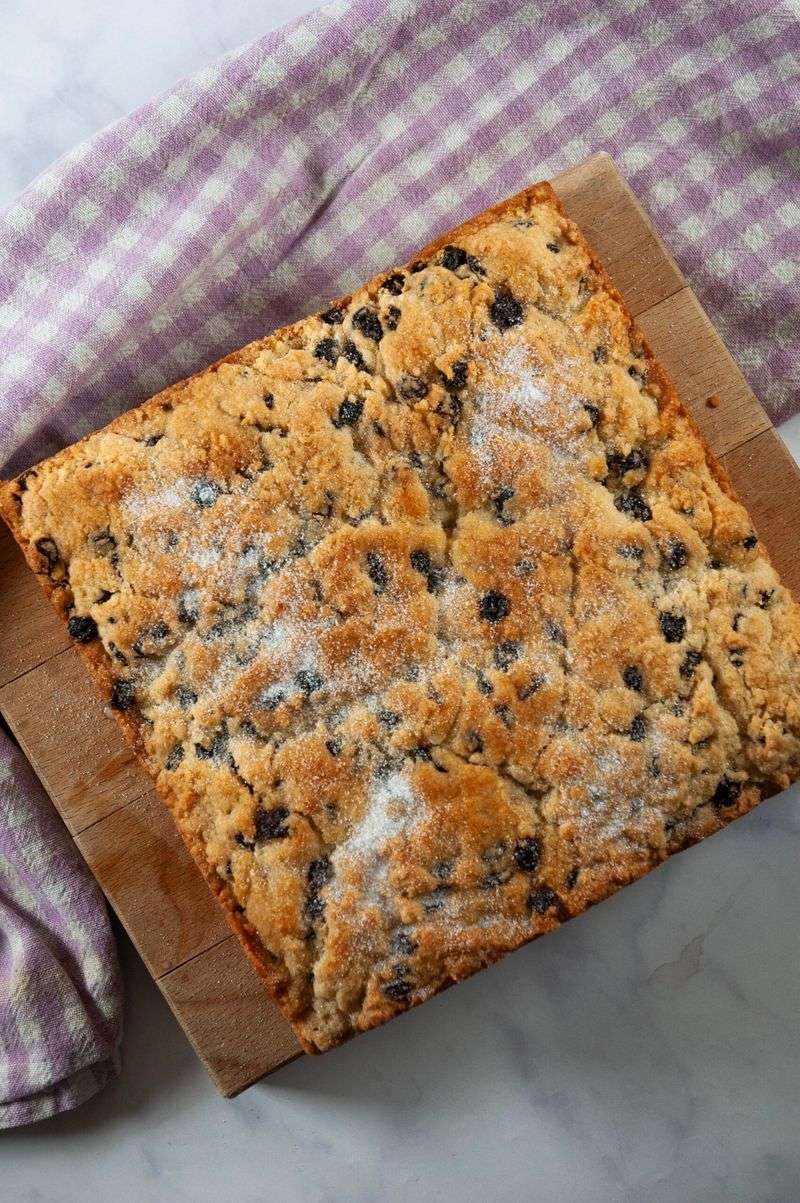
Heavy Cake from Cornwall is not for the faint-hearted — or the calorie-conscious. Made with lard-enriched pastry, packed with currants, and sometimes flavoured with saffron, it is dense, rich, and unmistakably Cornish.
The name refers to its weight, not its mood.
Fishermen's wives reportedly made it to sustain their husbands through long days at sea. That heritage gives every bite a sense of gritty, coastal history that no supermarket cake could ever replicate.
8. Grasmere Gingerbread (Cumbria)
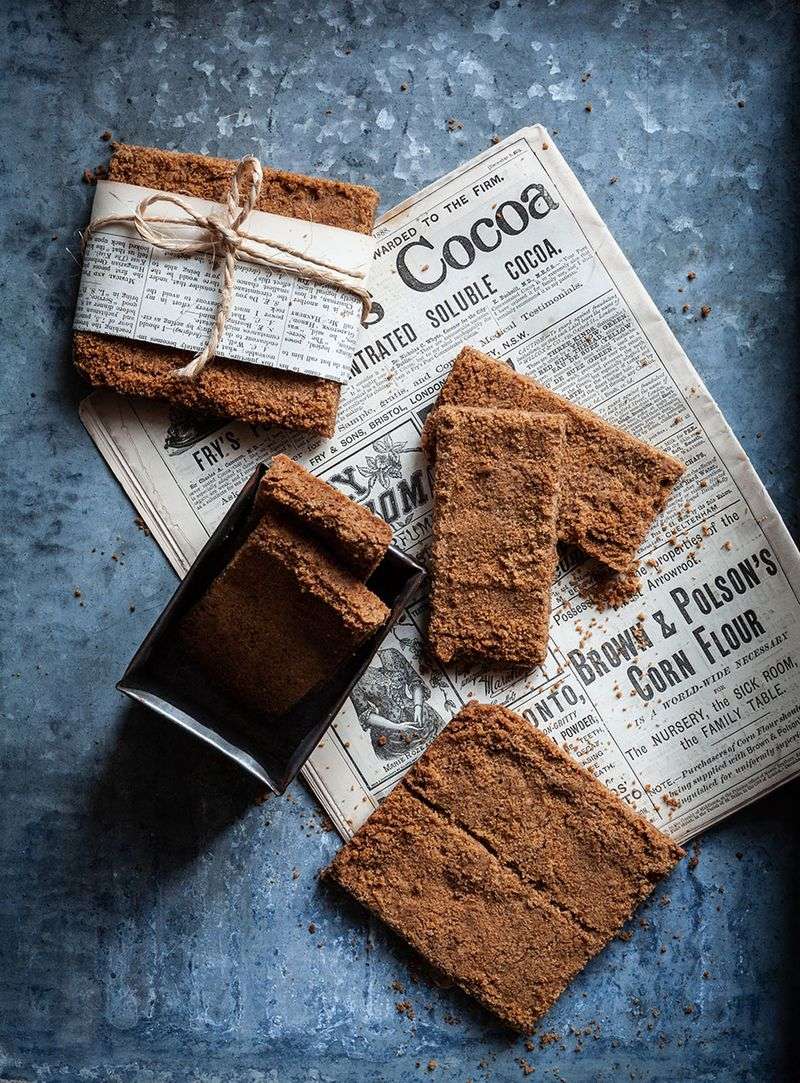
Part biscuit, part cake, entirely addictive — Grasmere Gingerbread is one of the Lake District's most fiercely guarded food secrets. Sarah Nelson created the original recipe in 1854, and it has been made in the same tiny Grasmere cottage ever since.
The exact recipe is locked in a bank vault.
Spiced with ginger and slightly chewy in the middle, it is unlike any other gingerbread you have tasted. Visitors travel specifically to Grasmere just to buy a packet.
9. Sly Cake (Derbyshire)
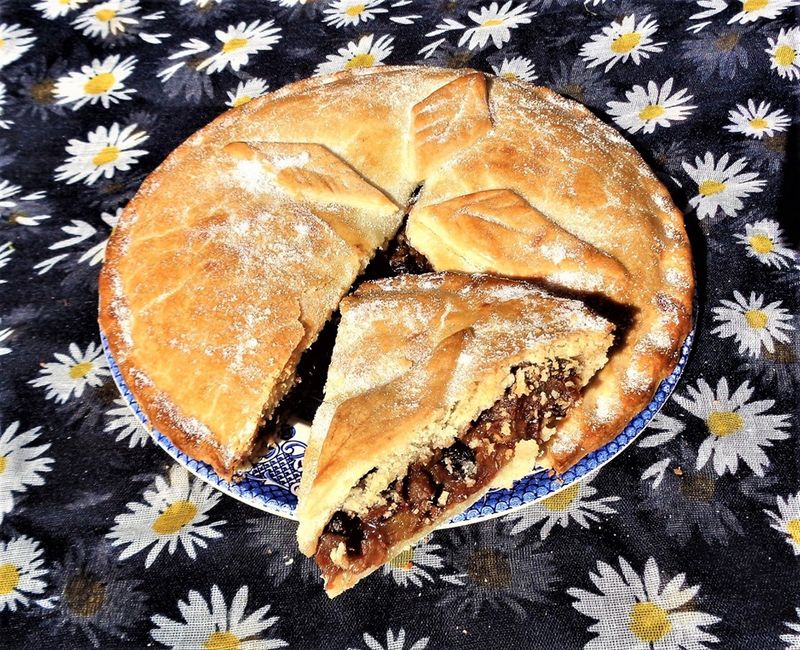
Sly Cake earned its cheeky name because you cannot tell what is inside just by looking at it. A plain, unassuming pastry exterior hides a richly spiced filling of oats, dried fruit, sugar, and butter — a genuine surprise in every bite.
Popular in Derbyshire for centuries, it was a practical bake that used pantry staples without fuss. Bakers loved it because it kept well, meaning it could be made ahead and sliced whenever visitors arrived unexpectedly.
10. Black Bun (Scotland)
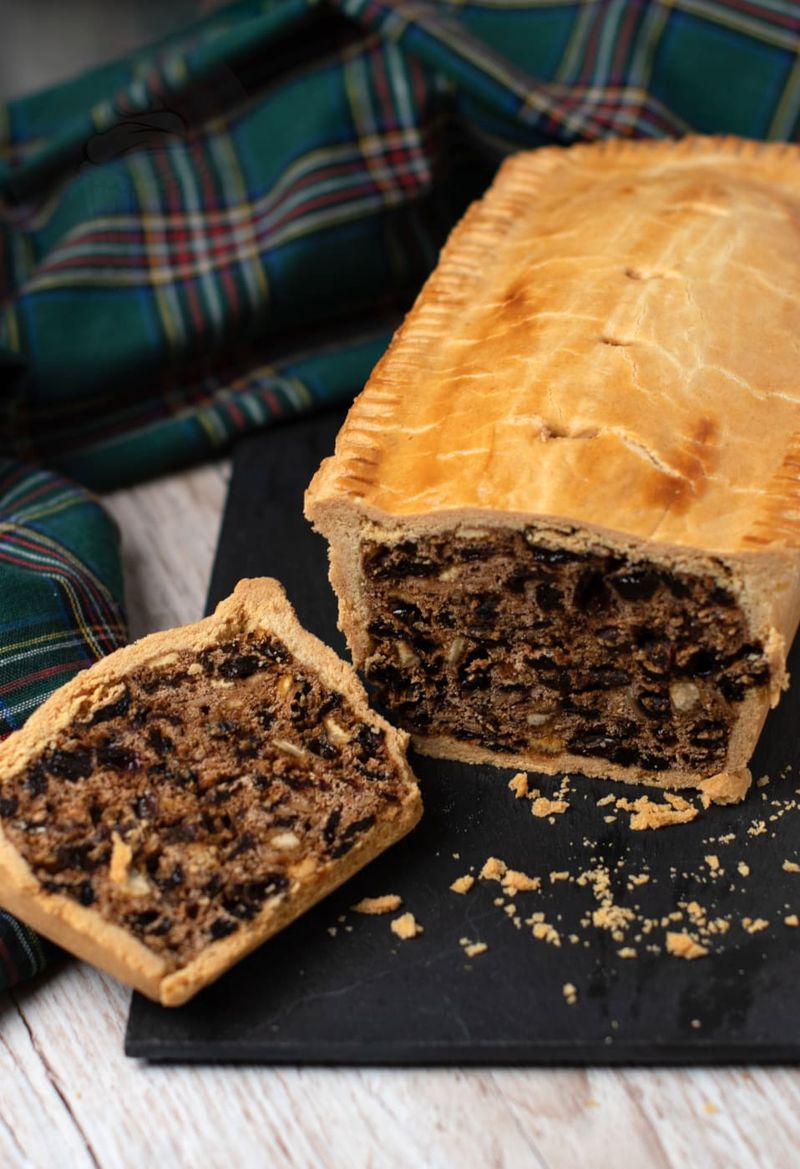
Scottish Black Bun looks deceivingly plain on the outside, but slice it open and you will find a jet-black, intensely spiced fruit filling packed with raisins, currants, almonds, and whisky. It is traditionally eaten at Hogmanay as part of the "first-footing" custom.
The outer pastry casing acts as a container rather than a feature — the filling is the real star. Robert Burns himself mentioned Black Bun in his writings, cementing its place in Scottish cultural history.
11. Hawkshead Wig (Cumbria)
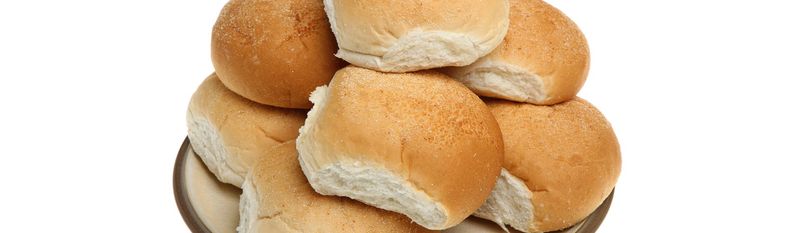
Wigs were once the most popular spiced buns in Britain, and Hawkshead in the Lake District still remembers them fondly. Flavoured with caraway seeds and lightly sweetened, these soft buns have a gentle aniseed warmth that is both old-fashioned and utterly charming.
William Wordsworth reportedly ate them as a schoolboy in Hawkshead, which gives them a lovely literary connection. They are rarely found outside Cumbria today, making them a true hidden treasure of northern English baking.
12. Ashbourne Gingerbread (Derbyshire)
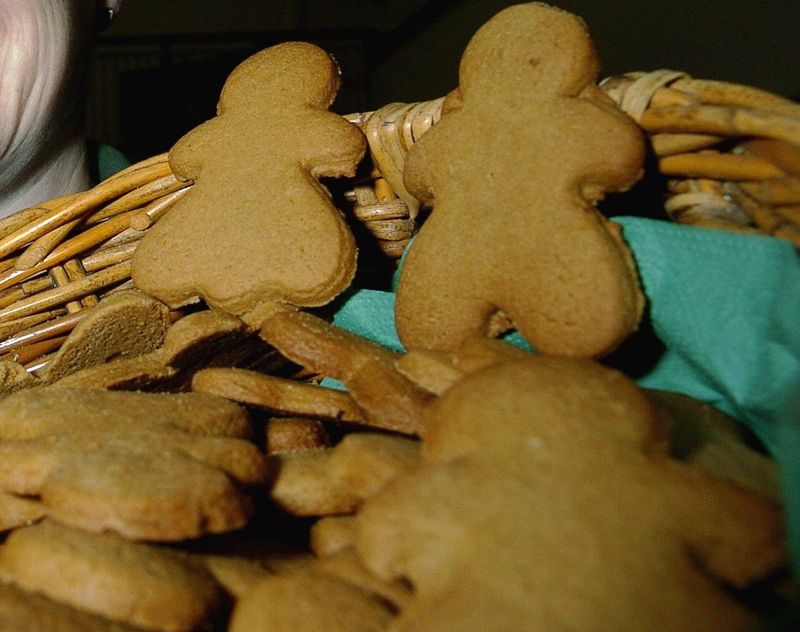
Not to be confused with its Lake District cousin, Ashbourne Gingerbread from Derbyshire has its own distinct character. Crisp and golden with a pronounced ginger kick, it sits somewhere between a thick biscuit and a small cake.
Local bakers have been making it for well over 200 years.
The town of Ashbourne is famous for its wild annual Shrovetide football game, and gingerbread was historically sold at the festivities. That connection to community events makes it feel wonderfully alive.
13. Singing Hinny (Northumberland)
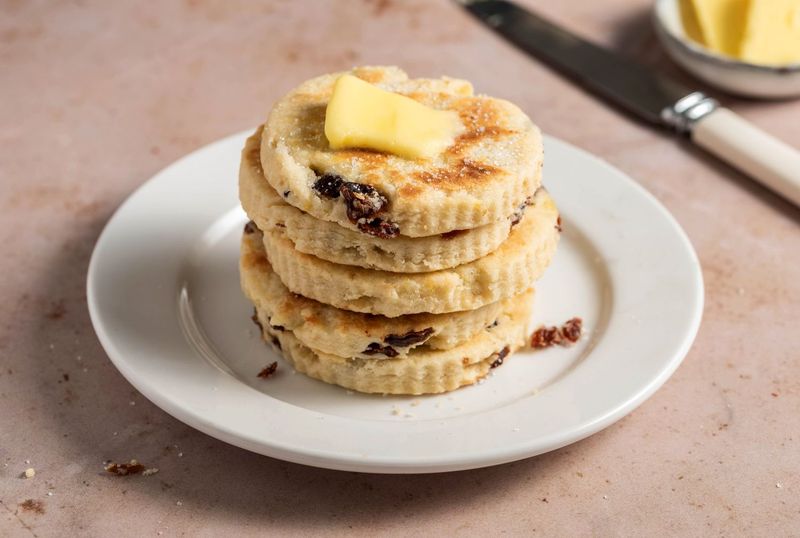
The Singing Hinny gets its quirky name from the sizzling sound it makes as it cooks on a griddle and the affectionate Geordie term "hinny" meaning "honey." Made with flour, lard, cream, and currants, it is a griddle scone-cake hybrid with a crisp, buttery crust.
Served split and spread with butter while still warm, it is simple comfort food at its finest. Northumberland miners' families relied on it as a quick, filling snack that required minimal ingredients and no oven.
14. Welsh Cakes (Pice ar y Maen)
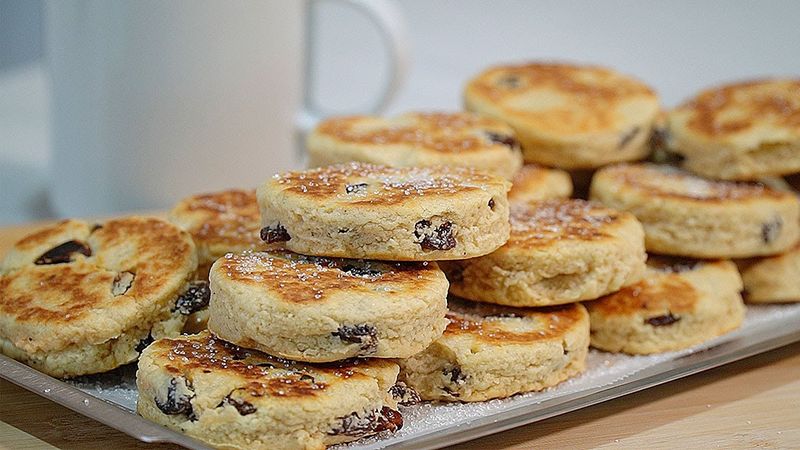
Welsh Cakes might be the most beloved tea-time treat in Wales, yet they remain surprisingly unknown across the border. Cooked on a flat bakestone rather than baked in an oven, they have a unique texture — crisp outside, soft and slightly doughy inside — with currants and a hint of mixed spice.
Markets in Cardiff still sell them warm from the griddle, and the smell alone is enough to stop anyone in their tracks. Dust them with sugar and eat immediately.
15. Forfar Bridie (Scotland)
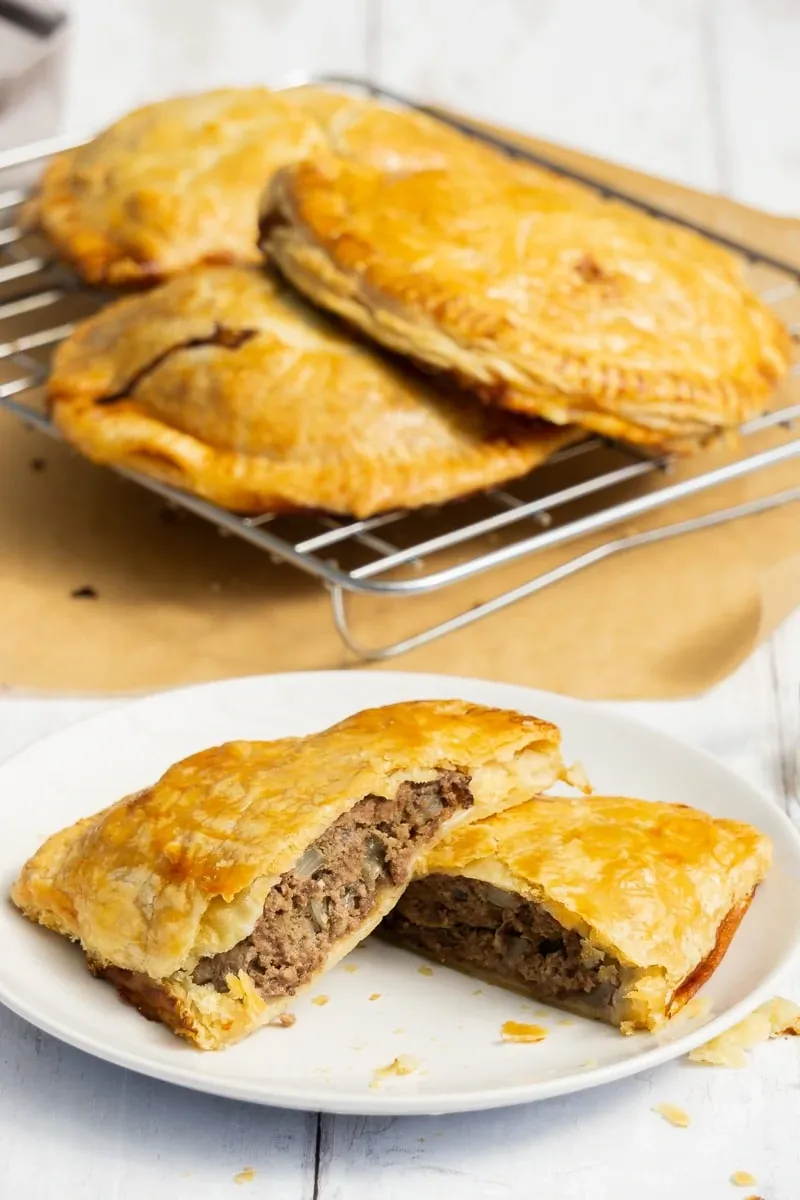
Technically a savoury pastry, the Forfar Bridie from Angus, Scotland, blurs the line between pie and cake in the most delicious way possible. Made with minced beef, onion, and suet inside a shortcrust pastry shell, it is hearty, hand-held, and historically significant.
Legend says they were named after a woman called Belle Bridie who sold them at Forfar market in the 1800s. Whether that story is true or not, the Bridie is a genuinely iconic Scottish bake worth seeking out.
16. Saffron Cake (Cornwall)
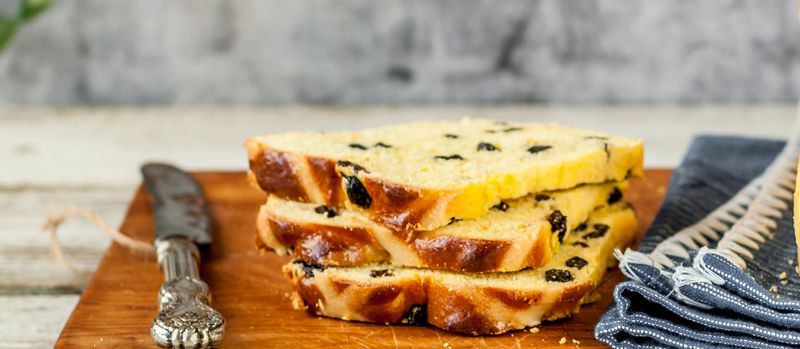
Cornwall's love affair with saffron goes back centuries, and nowhere is that relationship more delicious than in a traditional Saffron Cake. The bright yellow crumb, fragrant floral aroma, and lightly sweetened flavour make it unlike any other fruit loaf in Britain.
Saffron was historically imported through Cornish ports, making it more accessible there than elsewhere in England. Baked for Easter and special occasions, this golden loaf carries the warmth of the Cornish coast in every slice.
17. Lardy Cake (Wiltshire)
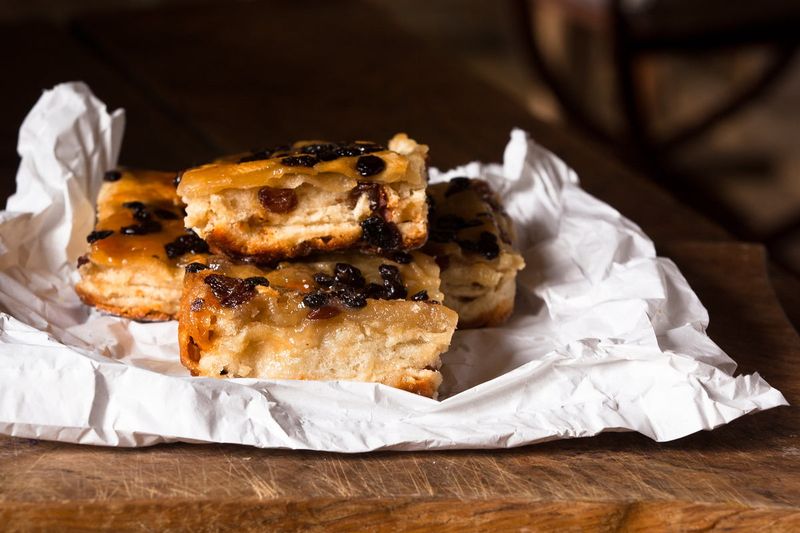
Lardy Cake from Wiltshire is unabashedly indulgent, and proud of it. Layers of bread dough are folded with lard, sugar, and dried fruit, then baked until the bottom caramelises into a sticky, glossy crust that peels away like toffee.
It is gloriously messy.
Originally made by bakers who had leftover bread dough at the end of the week, it was a practical treat that became a regional icon. Eating it straight from the tin, upside-down, is the only correct method.
18. Pitcaithly Bannock (Scotland)
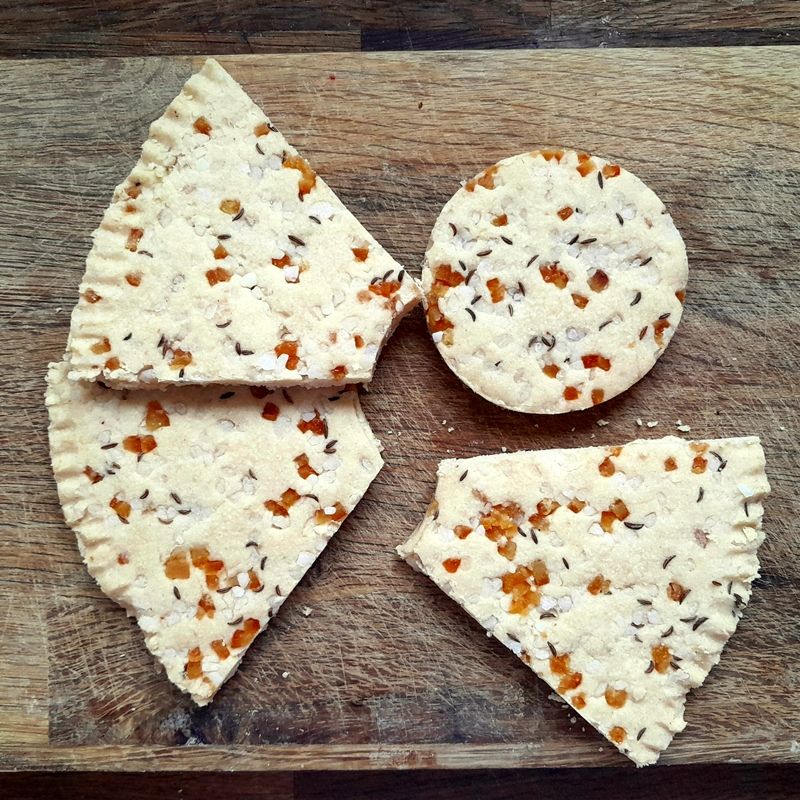
Pitcaithly Bannock is a luxurious Scottish shortbread enriched with chopped almonds and candied citrus peel. Richer and more festive than standard shortbread, it was traditionally made for special occasions like weddings and New Year celebrations in Perthshire.
The combination of buttery shortbread with the crunch of almonds and the sweet citrus peel makes it genuinely special. It is the kind of bake that feels like a gift — and in Scotland, it often was one.
19. Fat Rascals (Yorkshire)
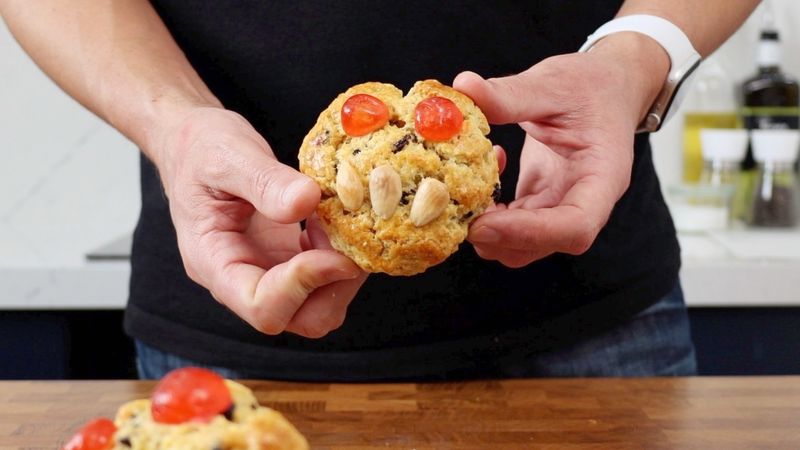
Fat Rascals are the personality-packed bakes from Betty's Tea Rooms in Harrogate, Yorkshire — round, golden, and decorated with cherry eyes and almond teeth to resemble a cheeky face. They are a cross between a scone and a rock cake, with dried fruit and citrus zest throughout.
Crisp on the outside and wonderfully dense inside, they are best eaten slightly warm. Betty's has been making them since the 1980s, though similar bakes existed in Yorkshire long before that.
20. Grantham Gingerbread (Lincolnshire)
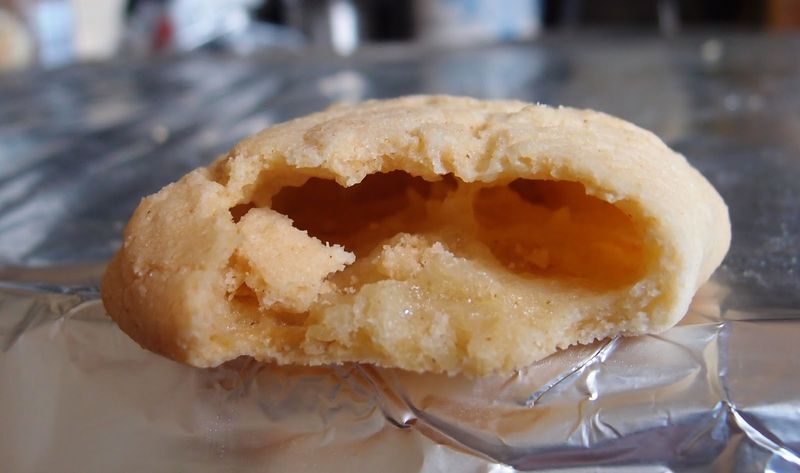
Here is a gingerbread that breaks every expectation. Grantham Gingerbread from Lincolnshire is not dark and sticky — it is pale, almost white, and completely hollow inside.
The result is a light, crisp, airy shell with a delicate ginger flavour that practically dissolves on your tongue.
It was supposedly created by accident in 1740 when a baker mixed the wrong ingredients. That happy mistake produced one of England's most unusual and charming regional biscuit-cakes, still made in Grantham to this day.
21. Selkirk Bannock (Scotland)
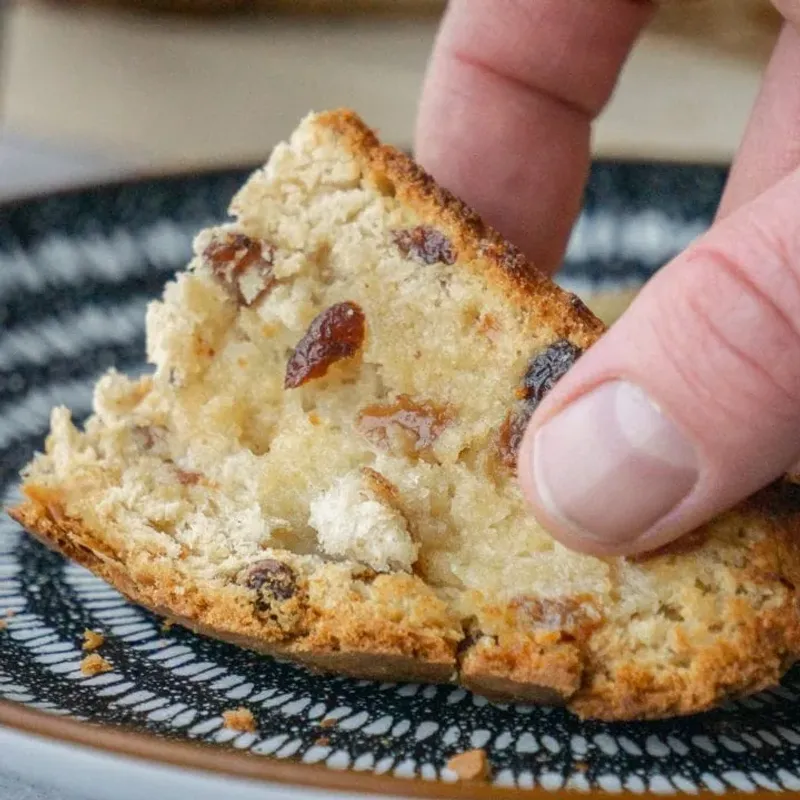
Rich, round, and packed with juicy sultanas, the Selkirk Bannock from the Scottish Borders is one of Scotland's most celebrated breads-turned-cake. Made with a buttery yeast dough loaded with fruit, it is soft, golden, and deeply satisfying without being overly sweet.
Queen Victoria herself reportedly tasted one at Sir Walter Scott's home and declared it delicious — which is about as royal an endorsement as a bannock can get. It is still made in Selkirk bakeries today using the original method.
22. Kent Huffkins
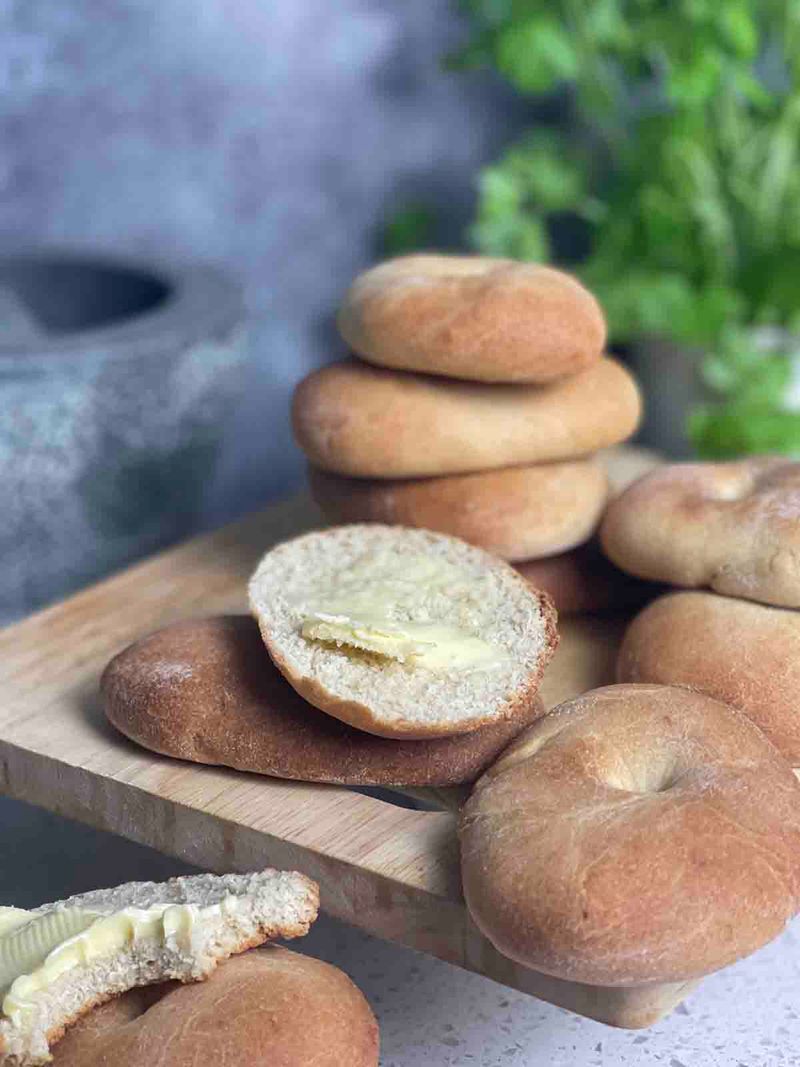
Kent Huffkins are soft, flat bread rolls with a characteristic dimple pressed into the centre — and they sit right on the border between bread and cake. Made with a slightly enriched dough, they have a tender crumb and a soft crust that makes them irresistible fresh from the oven.
Traditionally eaten at hop-picking festivals in Kent, they were the sustaining snack for seasonal farm workers. Spread with jam and clotted cream, they rival any scone at a cream tea.
23. Borrowdale Tea Bread (Cumbria)
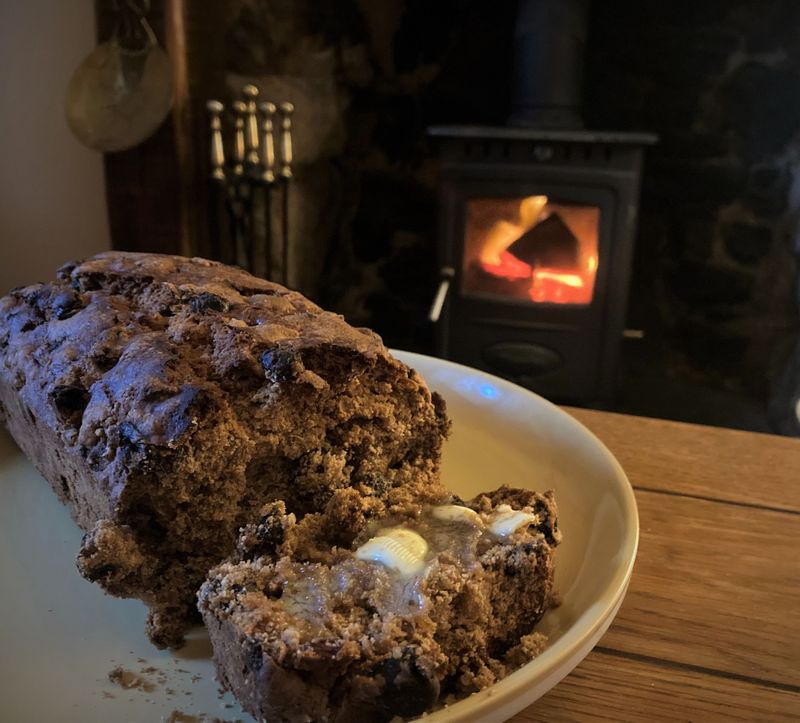
Named after the gorgeous Borrowdale valley in the Lake District, this tea bread is everything a rainy afternoon demands. Dried fruit is soaked in hot tea overnight, then folded into a simple batter and baked low and slow until deeply moist and fragrant with spice.
Unlike many fruit loaves, it contains no fat beyond what the fruit provides, making it surprisingly light. Sliced thick and eaten plain or with a scraping of butter, it is quiet, unpretentious perfection.
24. Northumberland Singin' Cake
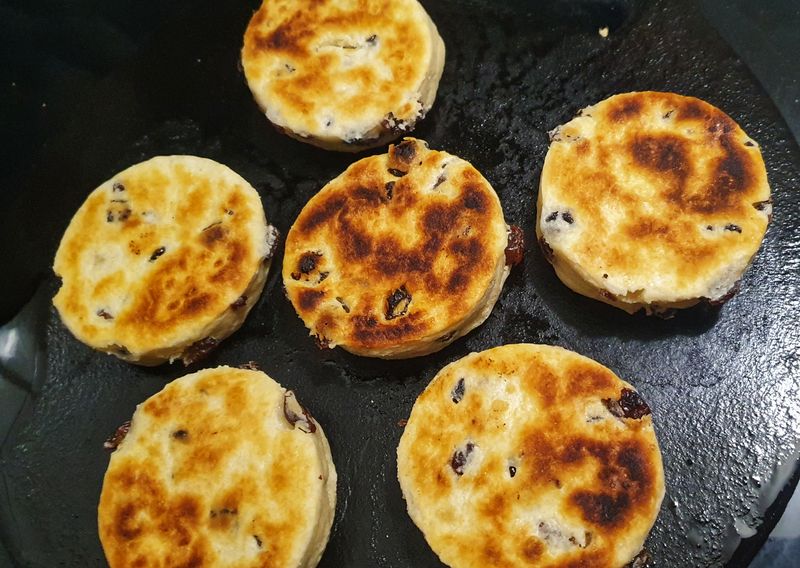
A close relative of the Singing Hinny, the Northumberland Singin' Cake is thicker, richer, and packed with more dried fruit. The sizzling sound it makes on the griddle inspired the name — a sound that still signals comfort and warmth in farmhouse kitchens across the region.
Made with buttermilk for a slight tang and lard for richness, it is hearty enough to fuel a full working day. Finding it outside Northumberland is nearly impossible, which only adds to its charm.
25. Anglesey Cake (Teisen Sir Fon, Wales)
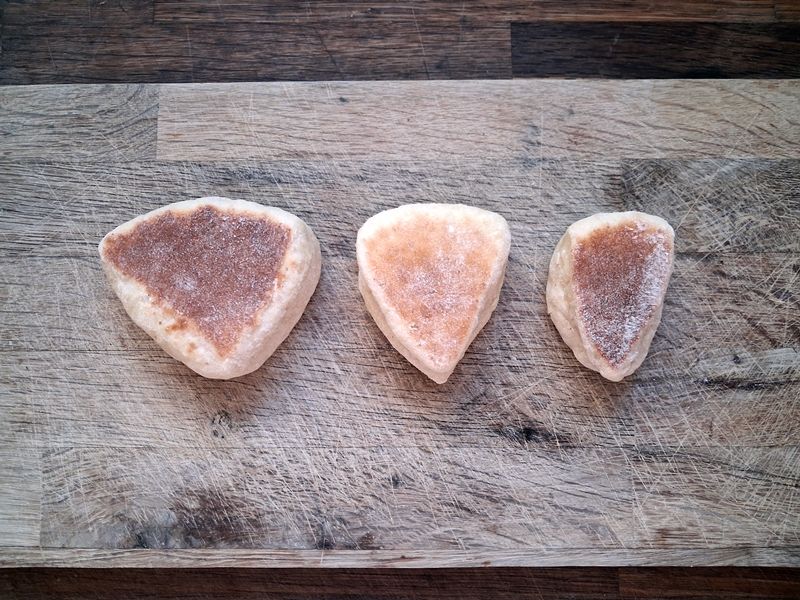
From the beautiful island of Anglesey off the coast of North Wales comes this wonderfully understated griddle cake. Made with buttermilk, flour, lard, and currants, it is simple, unpretentious, and quietly delicious — the kind of cake that does not need decoration to make an impression.
Anglesey has a proud farming heritage, and this cake reflects that — made from basic, locally available ingredients with no unnecessary fuss. It is the sort of thing a Welsh grandmother would produce seemingly from nothing, and it always tastes extraordinary.




Comments
No Comments