













There’s something almost magical about making pasta by hand - the soft dough, the gentle rolling, and that first silky bite fresh from the pot. It’s simpler than it looks, and the reward is worth every bit of flour on your counter. Once you try homemade pasta, you might never go back to the boxed kind again.
This article is for general informational purposes only. Ingredients and results can vary based on technique and equipment. Always ensure food is cooked safely and to appropriate temperatures.
1. Gather Your Ingredients
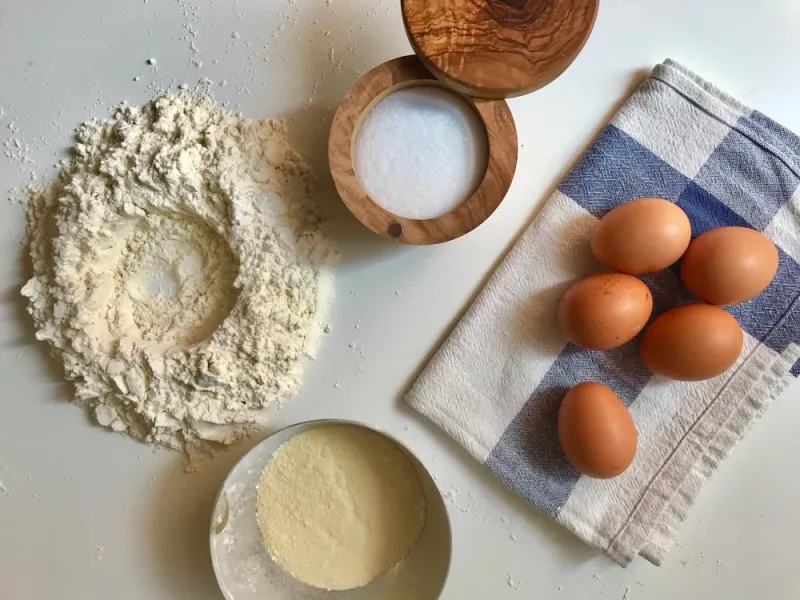
Before you begin, collect everything you need. Fresh pasta requires just three basics: all-purpose flour, eggs, and a pinch of salt.
Most recipes call for about 100 grams of flour per egg. Having your ingredients ready makes the process smoother and more enjoyable, setting you up for success right from the start.
2. Measure Flour And Create A Well
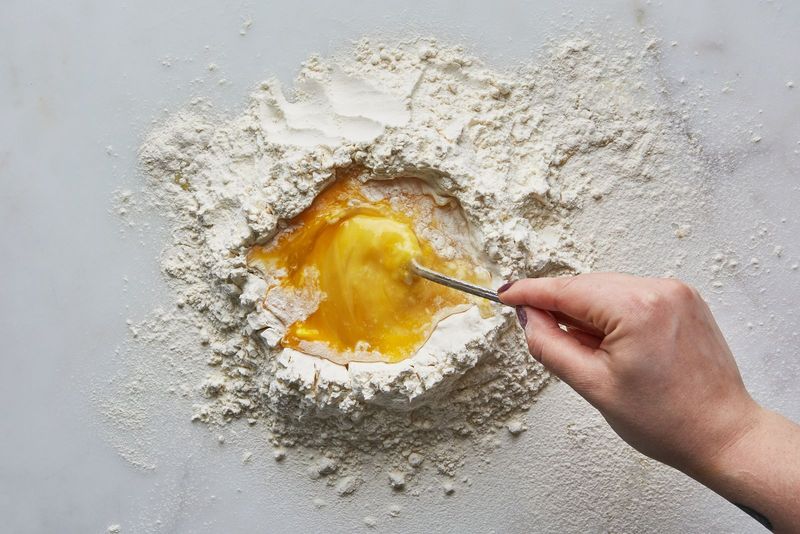
Pile your flour onto a clean work surface and shape it into a small mountain. Using your fingers, press down in the middle to form a deep crater.
This well will hold the eggs and prevent them from running everywhere. Make sure the walls are thick enough to contain the liquid when you add it.
3. Add Eggs To The Centre
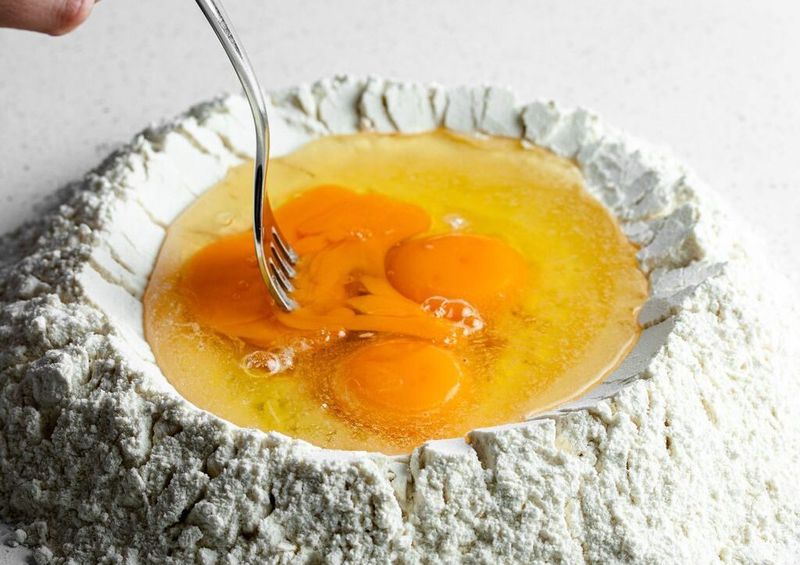
Crack your eggs directly into the well you created. Add a small pinch of salt at this stage for flavour.
Try not to break the flour walls as you add the eggs. Keep everything contained within the centre so you can control the mixing process better in the next step.
4. Mix Slowly Until Dough Forms
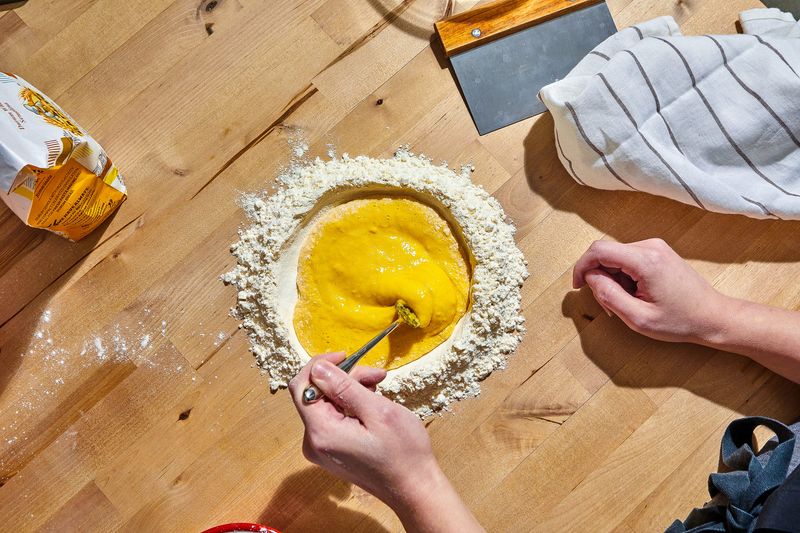
Using a fork, gently beat the eggs whilst gradually pulling in flour from the inner walls. Work slowly and carefully to avoid breaking the outer edges.
As you continue mixing, the dough will start coming together. Once it becomes too thick for the fork, switch to using your hands to bring everything together properly.
5. Knead Until Smooth And Elastic
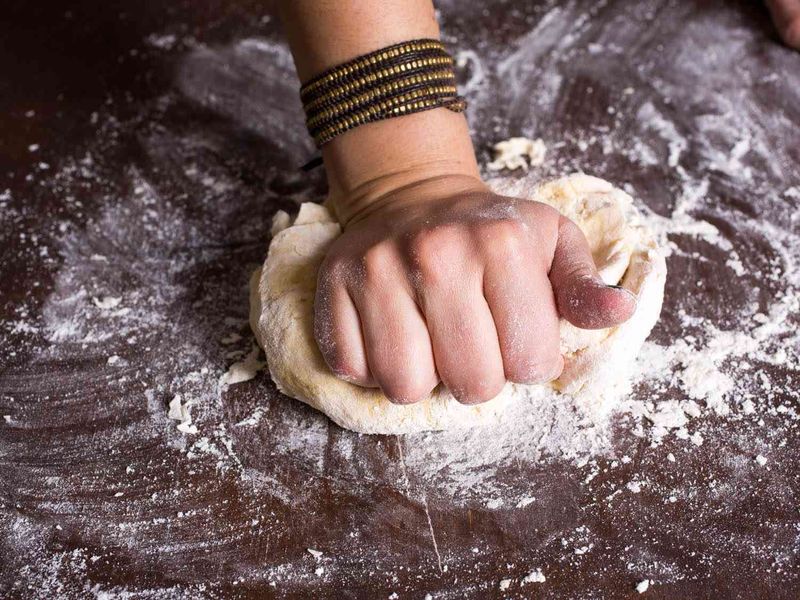
Push the dough away from you with the heel of your hand, then fold it back over itself. Rotate it slightly and repeat this motion.
Knead for about 10 minutes until the dough feels smooth, stretchy, and springs back when poked. This develops the gluten that gives pasta its perfect texture.
6. Let The Dough Rest
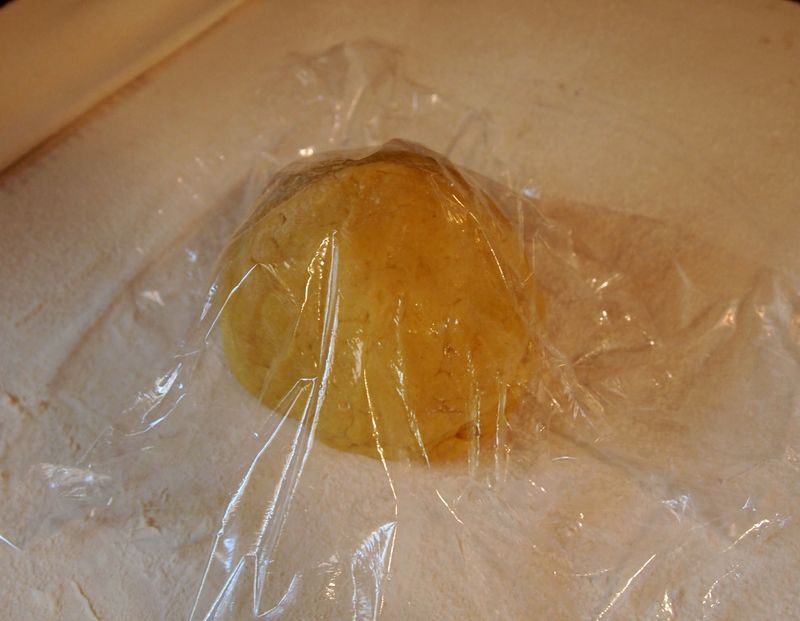
Wrap your dough tightly in cling film to prevent it from drying out. Leave it to rest at room temperature for at least 30 minutes.
This resting period allows the gluten to relax, making the dough much easier to roll out later. Skipping this step will result in dough that fights back when you try to shape it.
7. Divide And Flatten The Dough
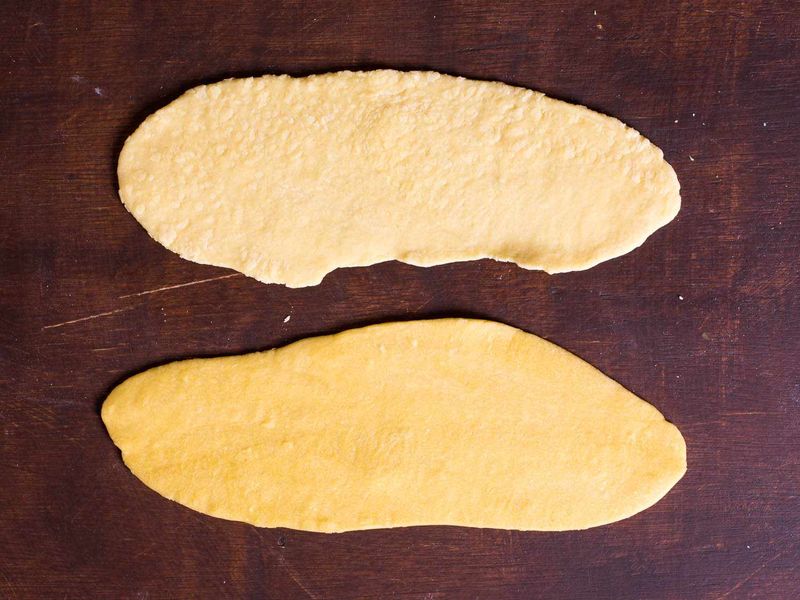
Cut your rested dough into four equal pieces. Keep the portions you're not working with covered to stop them drying out.
Take one piece and flatten it with your palm into a rough rectangle or oval shape. This makes it easier to feed through a pasta machine or roll by hand in the following step.
8. Roll Out Using A Pasta Machine Or Rolling Pin
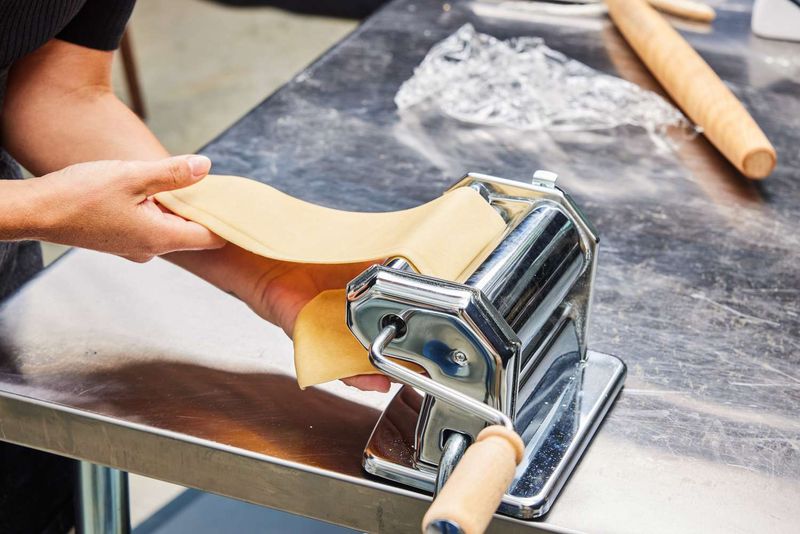
Feed your flattened dough through a pasta machine on the widest setting, then fold and repeat. Gradually decrease the thickness settings until you reach your desired thinness.
If using a rolling pin, work from the centre outwards, rotating the dough frequently. Aim for a thickness of about 1-2 millimetres for most pasta types.
9. Cut Into Desired Shapes
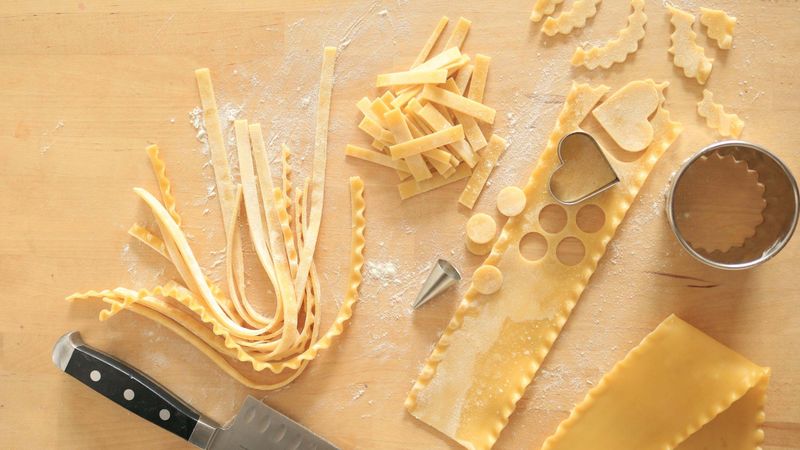
Once rolled thin, choose your preferred shape. Use a pasta machine attachment for fettuccine or tagliatelle, or cut by hand for wider ribbons.
For filled pasta like ravioli, use cutters or a knife. Dust the cut pieces with flour to prevent sticking, then arrange them in loose nests until you're ready to cook.
10. Cook Briefly In Boiling Salted Water
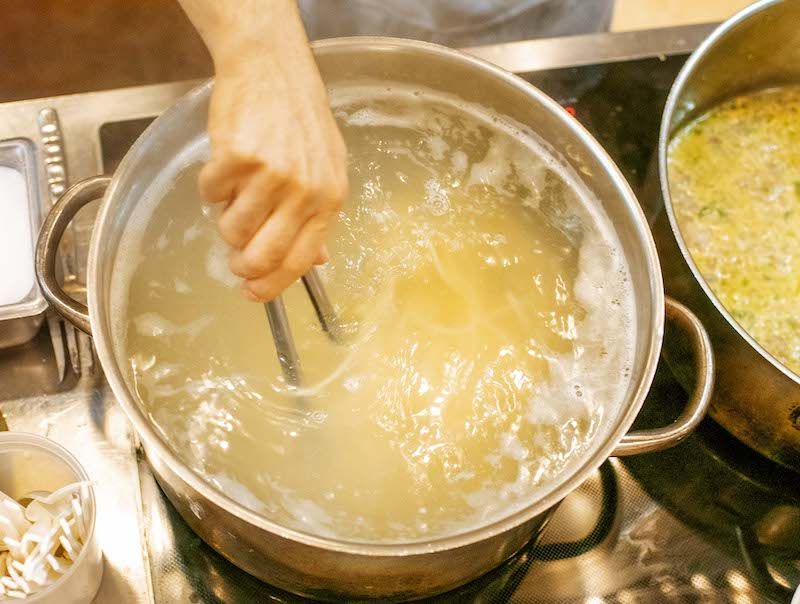
Bring a large pot of water to a rolling boil and add plenty of salt. Drop in your fresh pasta and stir gently to prevent clumping.
Fresh pasta usually cooks in 1–4 minutes, depending on thickness. Taste a strand to check if it's done, then drain and serve immediately with your favourite sauce.



