










Ever wondered what adventurous eaters around the world are enjoying? From fermented fish to insect delicacies, our planet offers some truly mind-boggling culinary experiences.
These unusual dishes might make your stomach turn or your mouth water – either way, they represent cultural traditions and bold flavors worth exploring for any food adventurer.
This article is for general information only. The dishes listed are shared as cultural examples and recommendations, not as requirements to try. Availability and preparation methods may differ by region. Photos are illustrative and end results may vary.
1. Escamoles, Mexico
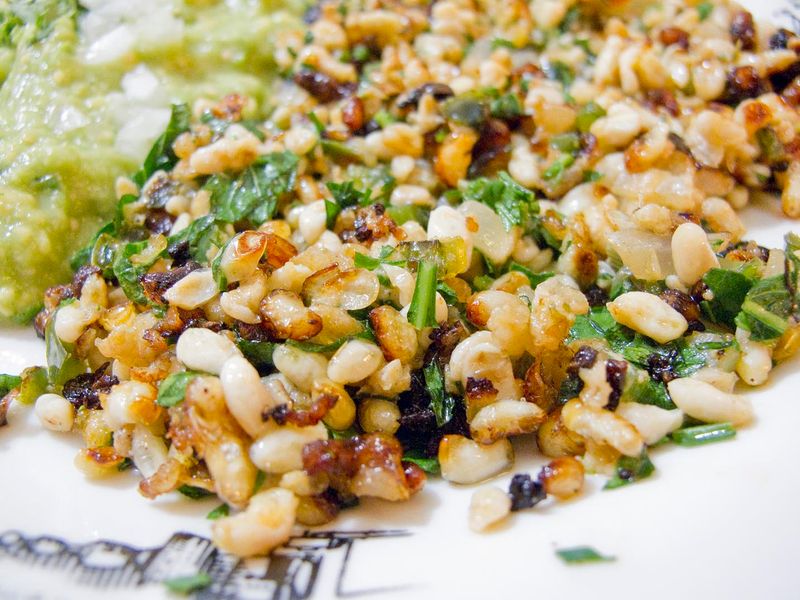
Often called "insect caviar," these ant larvae harvested from agave plant roots have a nutty, buttery flavor. Their appearance resembles small pine nuts or white corn kernels.
Ancient Aztecs prized escamoles as a royal delicacy. Today, they're typically sautéed with butter and spices, then served in tacos with guacamole for a luxurious treat that costs a pretty penny.
2. Surströmming, Sweden
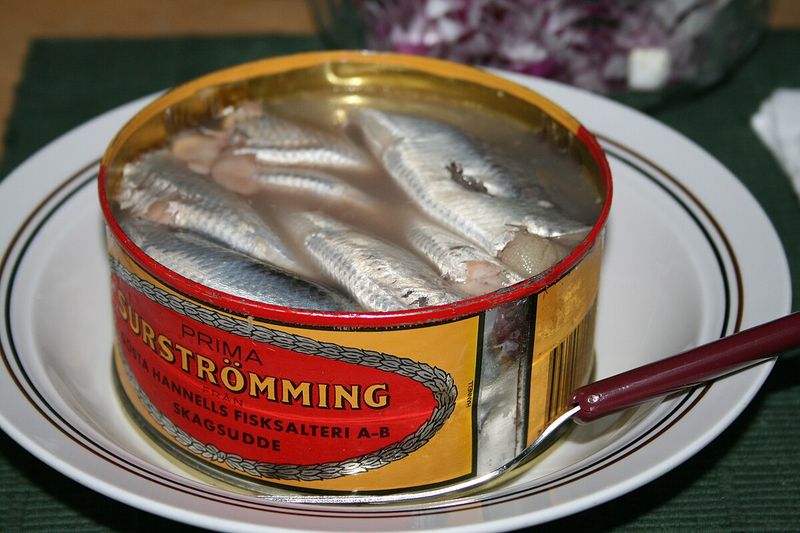
The world's smelliest food contest would crown this fermented Baltic herring the undisputed champion. Swedes typically eat it outdoors due to its overpowering aroma.
Opening a can releases a smell so potent it's been known to clear rooms. Despite the odor challenge, locals enjoy it on tunnbröd (flatbread) with potatoes, onions, and sour cream.
3. Century Egg, China
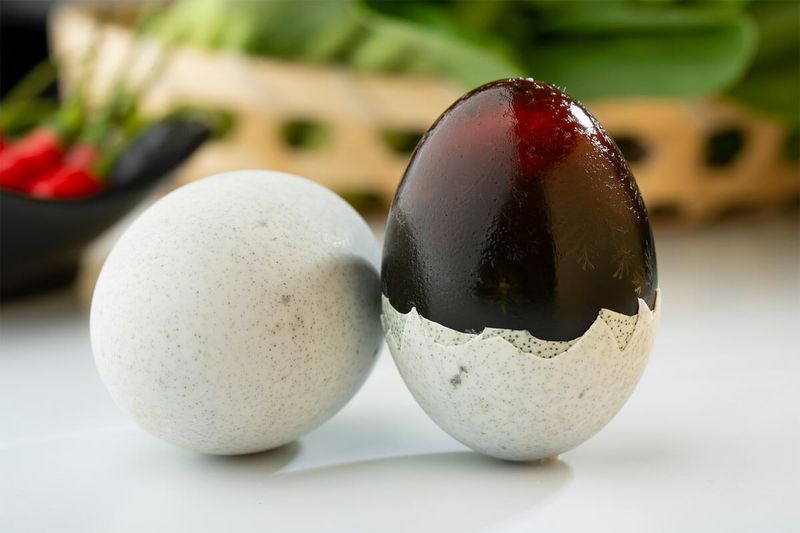
Despite the name, these preserved duck eggs aren't actually a hundred years old - just preserved for several months in a mixture of clay, ash, salt, and quicklime.
The transformation creates a dark greenish-black yolk surrounded by a translucent brown jelly-like white. Their creamy, cheese-like flavor pairs wonderfully with congee (rice porridge) or as part of a cold appetizer platter.
4. Balut, Philippines
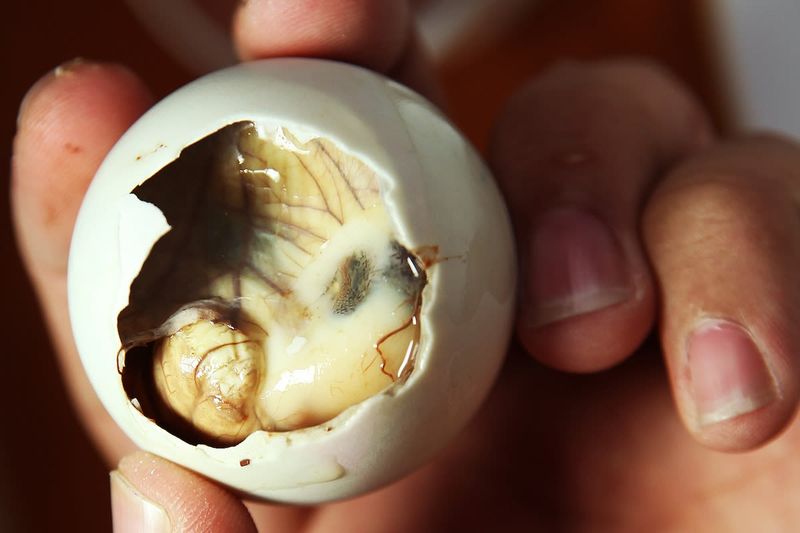
Street vendors announce their arrival with distinctive calls as they sell these fertilized duck eggs that contain a partially developed embryo.
Eaten straight from the shell with a pinch of salt, balut is considered both an aphrodisiac and a protein-rich snack. Filipino children often eat their first balut as a rite of passage, marking their culinary bravery.
5. Fugu, Japan
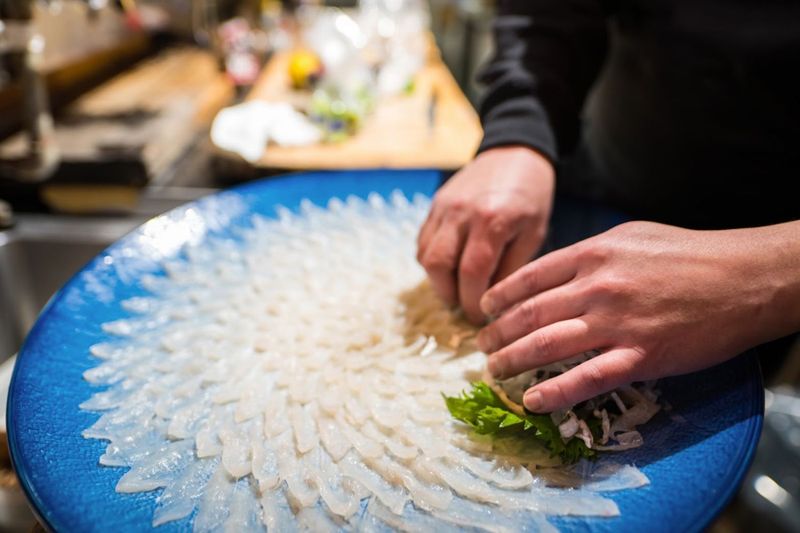
Chefs train for at least three years to earn a license to prepare this potentially lethal pufferfish. One wrong cut near the toxic organs could be fatal.
The thrill of danger enhances the experience of eating paper-thin slices arranged like chrysanthemum flowers. Connoisseurs describe its subtle flavor as delicate with a pleasant tingling sensation on the lips.
6. Lutefisk, Norway
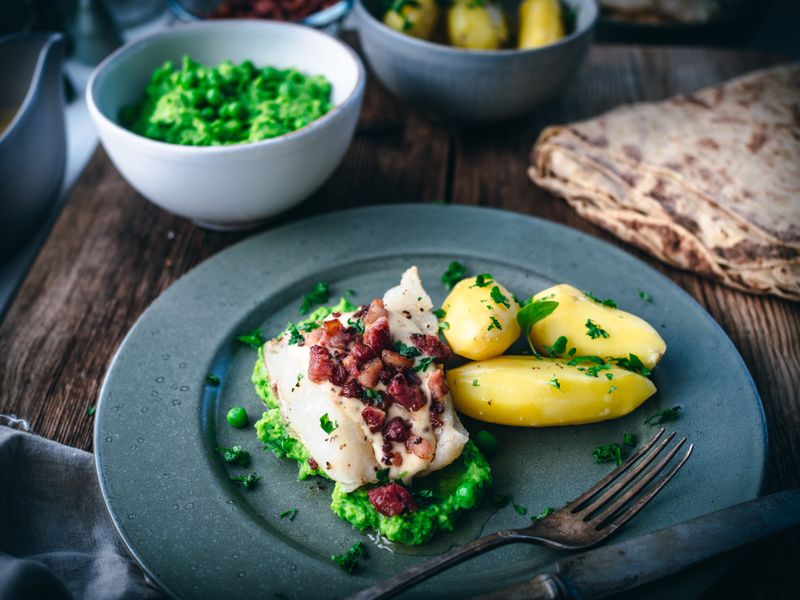
Christmas wouldn't be complete in many Norwegian households without this gelatinous whitefish soaked in lye solution until it reaches a jelly-like consistency.
The intense preparation process transforms dried cod into something barely recognizable. Served with bacon, peas, and potatoes, lutefisk divides families into passionate defenders and horrified detractors with few neutral opinions.
7. Sannakji, South Korea
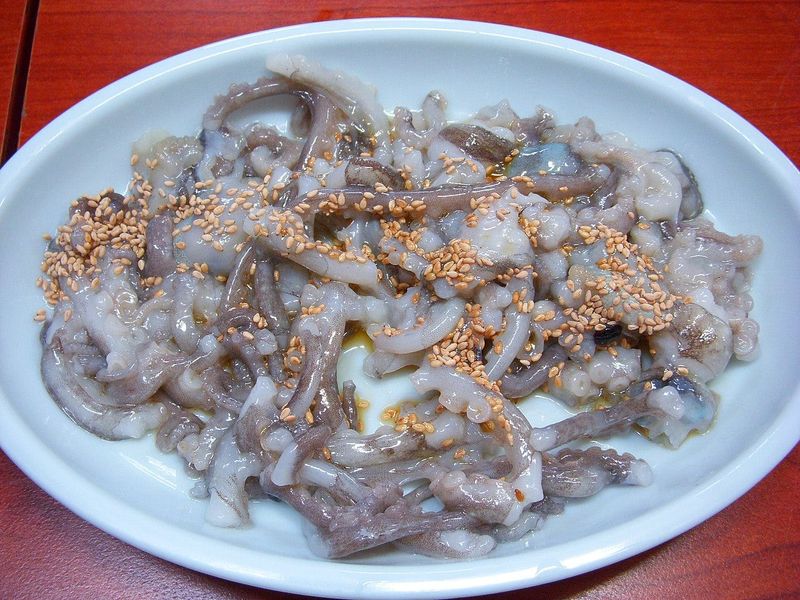
Small octopus tentacles squirm across your plate despite being freshly chopped moments before. Their suction cups can still attach to your throat, making this dish literally dangerous to eat.
Chewiness gives way to a mild, ocean-fresh flavor enhanced by sesame oil and seeds. Smart diners chew thoroughly and wash it down with soju to prevent the notorious choking hazard.
8. Stargazy Pie, England
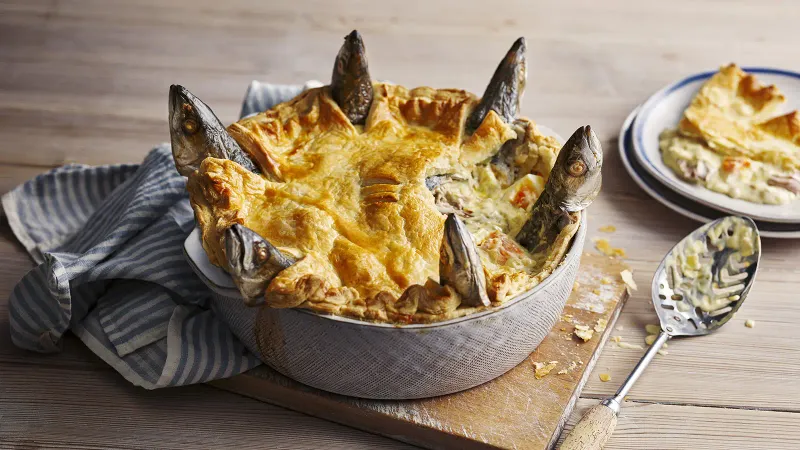
Fish heads poking through the crust appear to be gazing at the stars in this Cornish masterpiece that commemorates a legendary catch that saved a village from starvation.
Beneath the theatrical presentation lies a savory pie filled with pilchards, bacon, eggs, and potatoes. The protruding heads allow oils to flow back into the filling, creating a self-basting effect that enhances the rich flavor.
9. Mopane Worms, Southern Africa
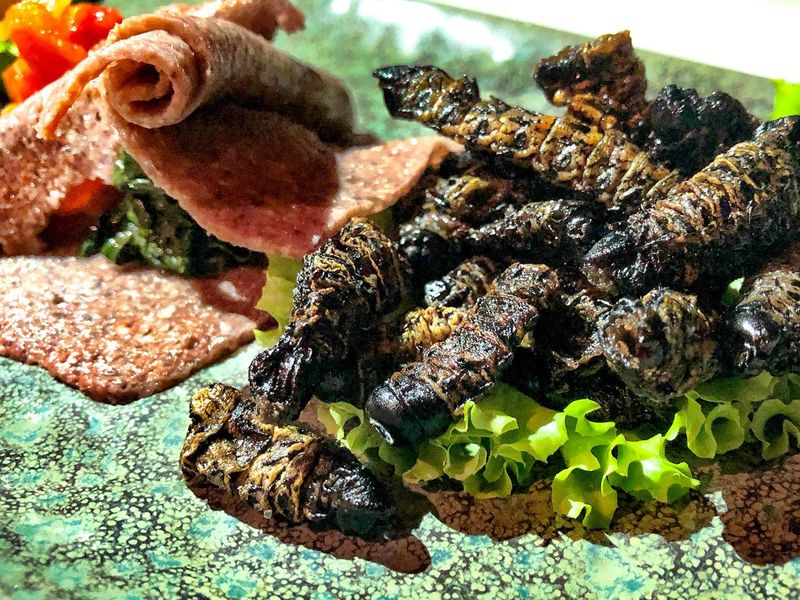
Hand-harvested from mopane trees, these plump, colorful caterpillars are a protein-packed snack eaten across Zimbabwe, Botswana, and South Africa.
After their innards are squeezed out, they're dried in the sun or smoked over fire. The resulting chewy, earthy-flavored morsels taste surprisingly like beef jerky with a distinctive woodland undertone.
10. Rocky Mountain Oysters, USA
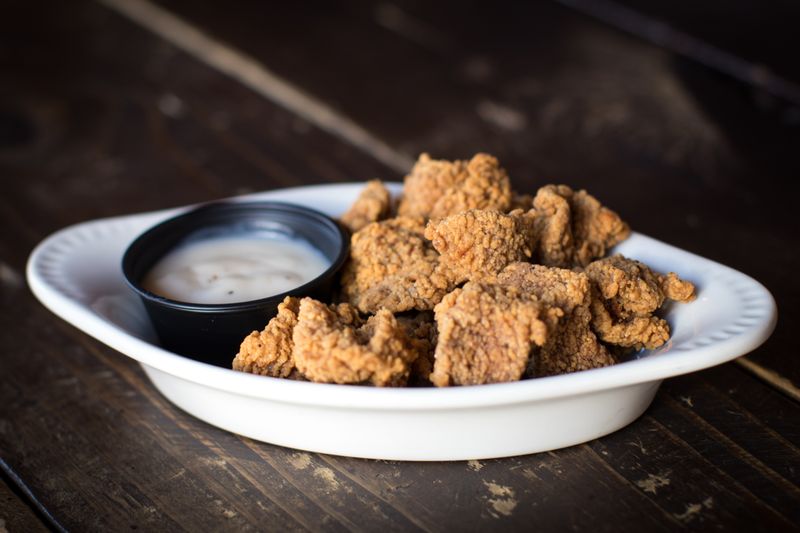
Cowboys developed this frontier delicacy that has nothing to do with seafood - they're actually bull testicles, usually sliced, breaded, and deep-fried.
Ranchers originally ate these during cattle brandings as a way to use all parts of the animal. Their mild flavor resembles veal, with a tender texture similar to calamari, making them popular at western festivals and bars.
11. Witchetty Grub, Australia
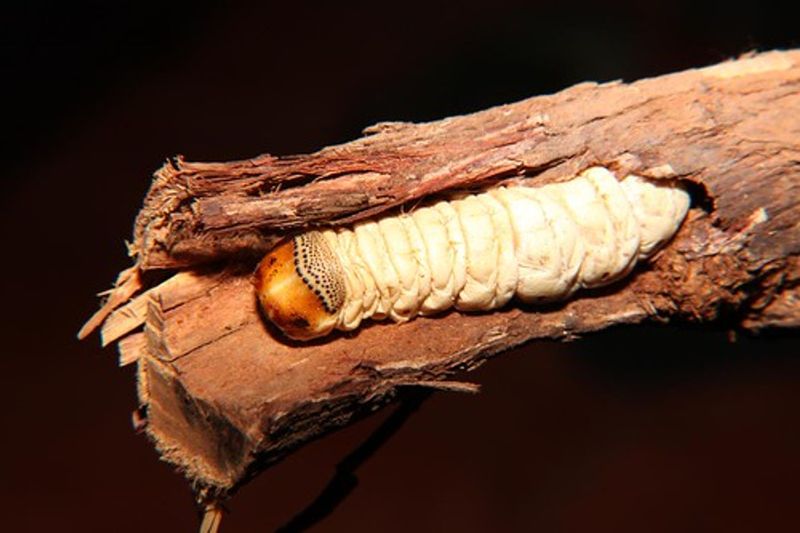
Aboriginal communities have harvested these thumb-sized wood-eating larvae from tree roots for thousands of years as a reliable bush tucker staple.
Raw grubs taste like almonds with a creamy center, while cooked ones develop a crispy skin with a flavor reminiscent of roasted chicken. They're packed with protein and essential nutrients, making them both a cultural tradition and survival food.
12. Sea Cucumber, East Asia
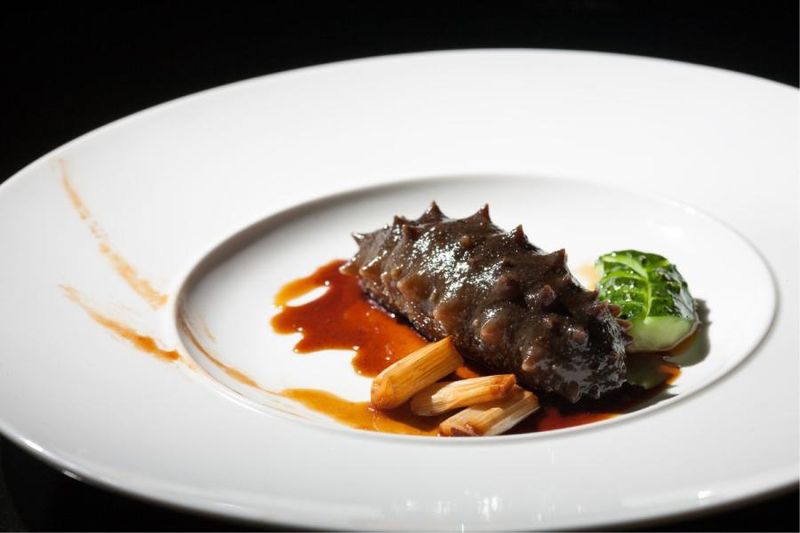
Despite their vegetable-like name, these marine animals are prized across China, Japan, and Korea for their unique texture and supposed medicinal properties.
After extensive preparation to remove sand and toxins, they develop a slippery, gelatinous quality. Nearly tasteless themselves, they excel at absorbing the flavors of the rich broths and sauces they're typically served in.
13. Fried Tarantula, Cambodia
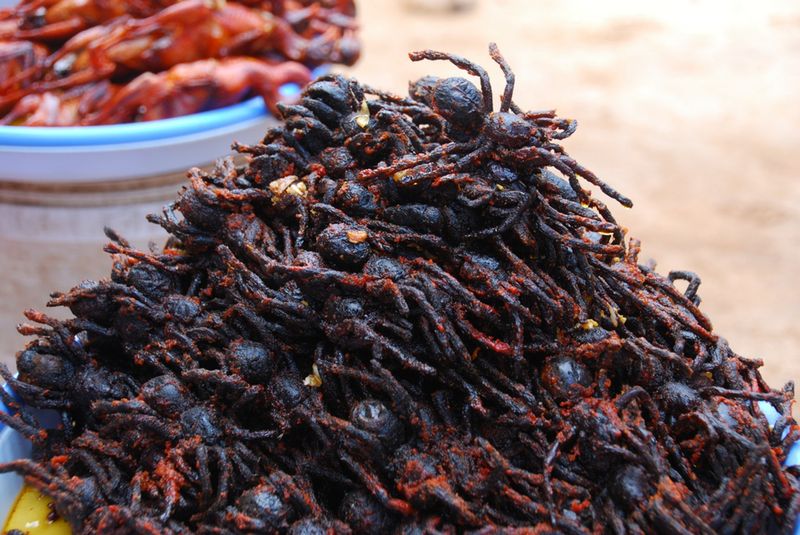
Born of necessity during the Khmer Rouge regime when food was scarce, these arachnid snacks are now a popular street food in Skuon, nicknamed "Spider Village."
Vendors deep-fry the hand-sized spiders in garlic-infused oil until crispy. The legs taste like potato chips, while the soft abdomen contains a paste-like substance with a bitter aftertaste that locals consider the best part.