













Korean noodles have been warming hearts and filling bowls for thousands of years, each dish telling a story through its broth, texture, and toppings. From spicy stir-fried noodles to silky cold buckwheat dishes, Korean noodle culture is rich, diverse, and surprisingly fun to make at home.
Whether you are a beginner cook or a seasoned foodie, there is a Korean noodle recipe out there waiting for you to try. Get your chopsticks ready because these 15 dishes are about to transform your kitchen into a Korean food haven.
1. Japchae (Glass Noodle Stir-Fry)
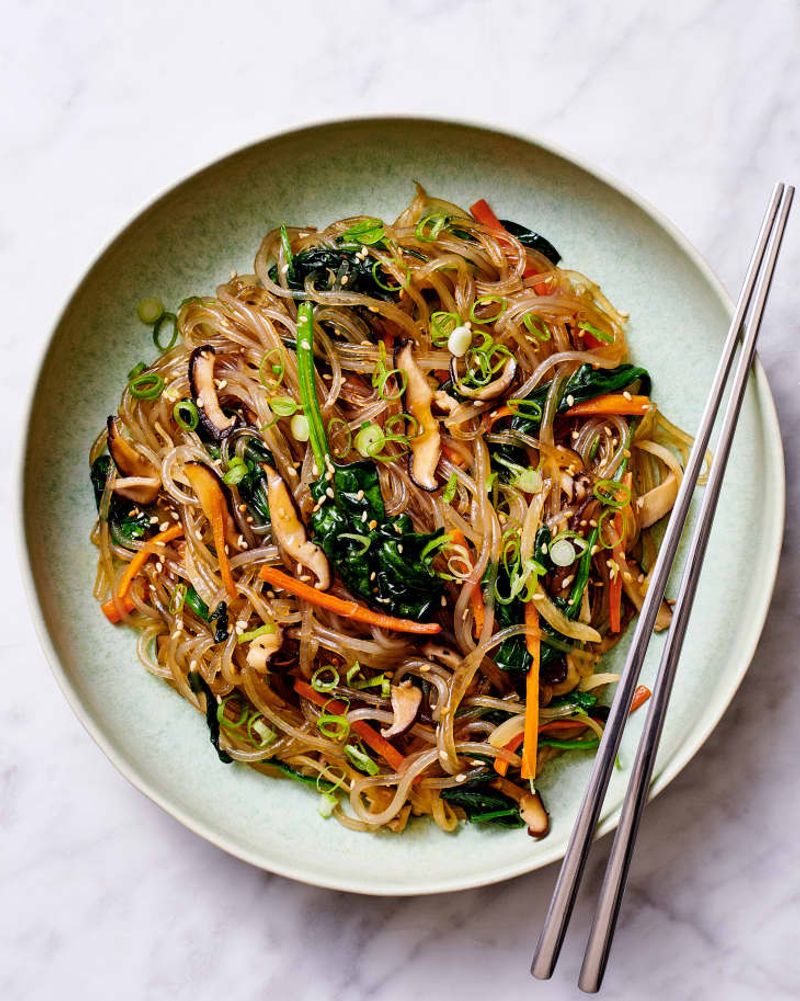
Japchae is the life of every Korean celebration — silky glass noodles made from sweet potato starch that soak up a savory-sweet soy sauce like a dream. The noodles are stir-fried with colorful vegetables and thin beef slices, making every bite a satisfying mix of textures.
Fun fact: japchae was originally made without noodles when it was first served to a Korean king in the 1600s. Today, it is a must-have at birthdays and holidays.
2. Ramyeon (Korean Instant Ramen)
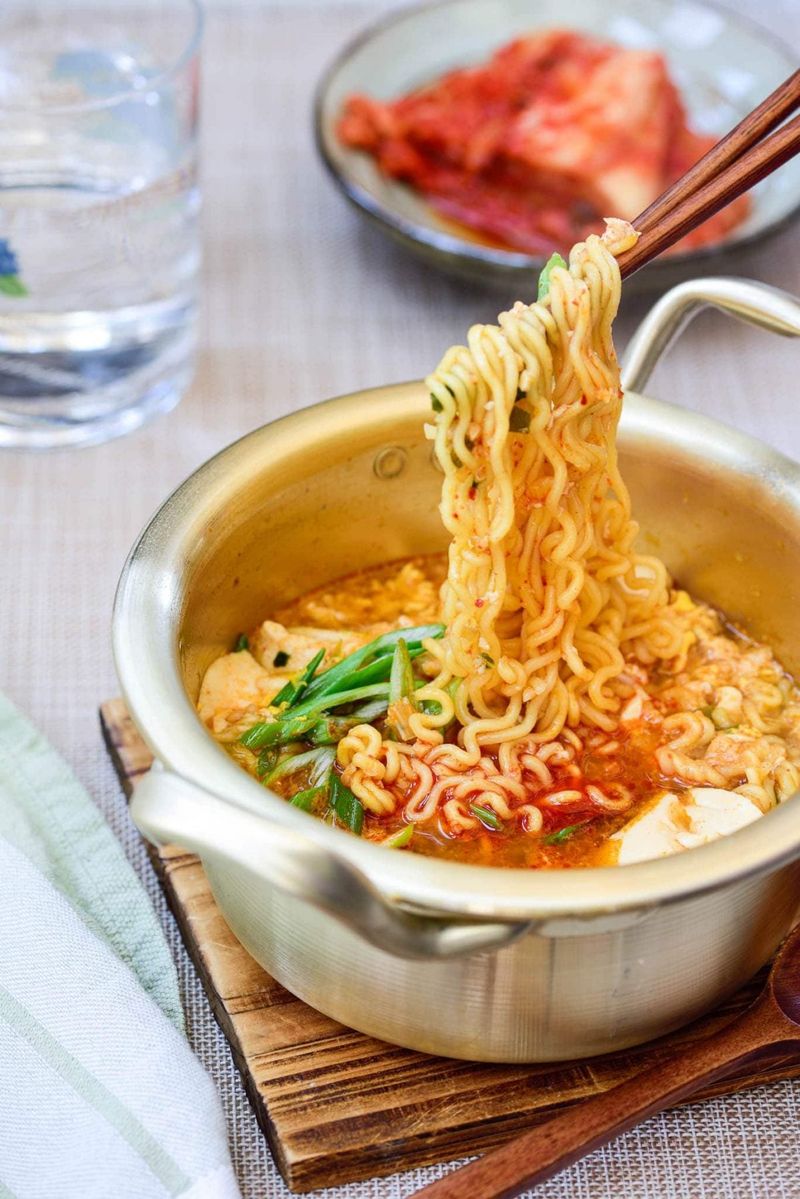
Forget everything you know about bland instant noodles — Korean ramyeon plays by its own fiery rules. The broth hits you with bold, spicy heat that builds with every slurp, and the noodles have a satisfying chewiness that regular ramen just cannot match.
Koreans often upgrade their ramyeon with eggs, kimchi, rice cakes, or cheese. It is one of those late-night comfort foods that somehow always tastes better at midnight than at noon.
3. Naengmyeon (Cold Buckwheat Noodles)
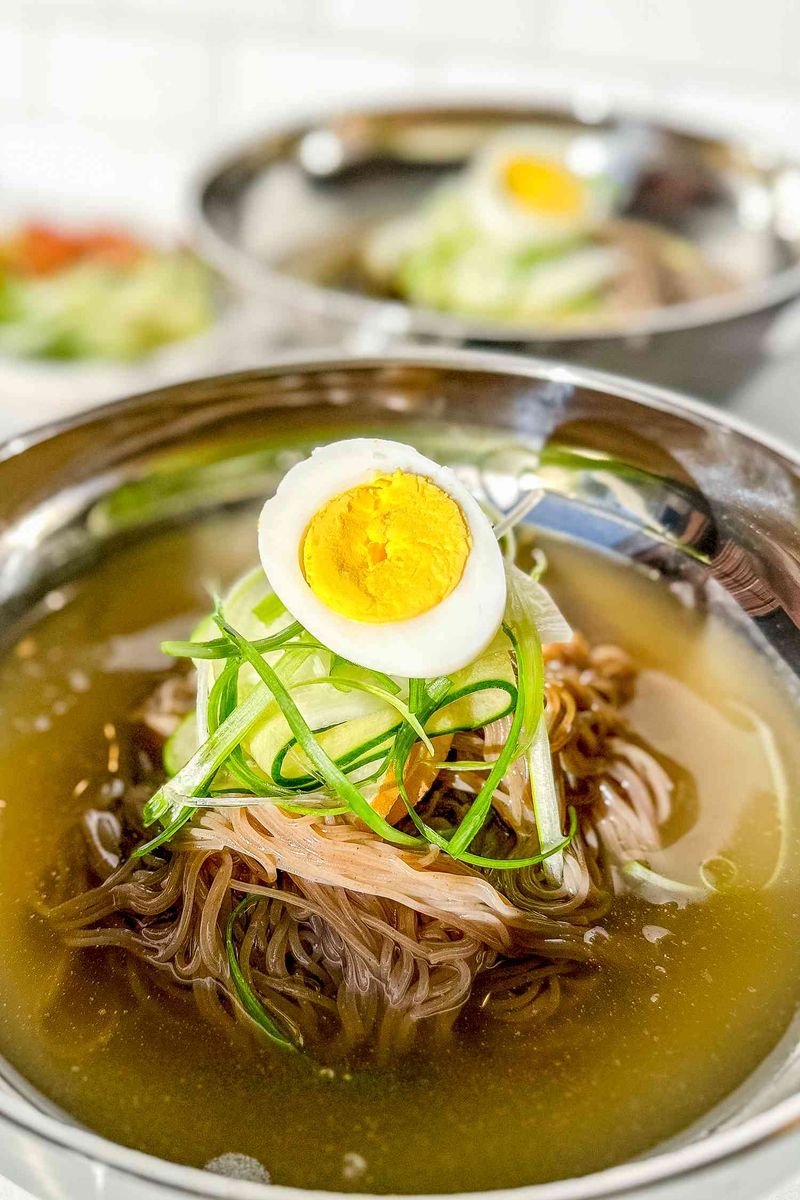
On a sweltering summer day in Korea, nothing beats a bowl of naengmyeon straight from the fridge. These thin, chewy buckwheat noodles served in ice-cold broth feel like a refreshing splash of cool water for your taste buds.
There are two main styles: mul naengmyeon in a light beef broth, and bibim naengmyeon tossed in spicy red sauce. Both are tangy, refreshing, and surprisingly easy to assemble at home with the right ingredients.
4. Jajangmyeon (Black Bean Sauce Noodles)
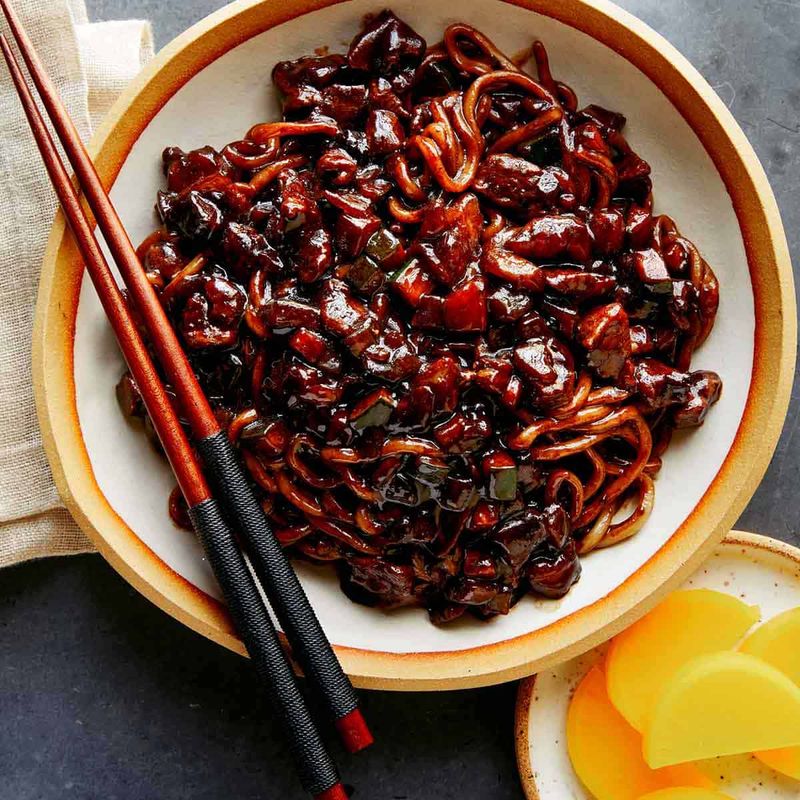
Jajangmyeon is the ultimate Korean comfort food — thick, chewy noodles draped in a rich, dark black bean paste sauce with tender pork and vegetables. The sauce has a deep, slightly sweet, savory flavor that is completely unlike anything else in Korean cuisine.
Every April 14th, single Koreans celebrate Black Day by eating jajangmyeon together in solidarity. Making it at home is surprisingly straightforward once you find chunjang, the fermented black bean paste, at a Korean grocery store.
5. Kalguksu (Knife-Cut Noodle Soup)
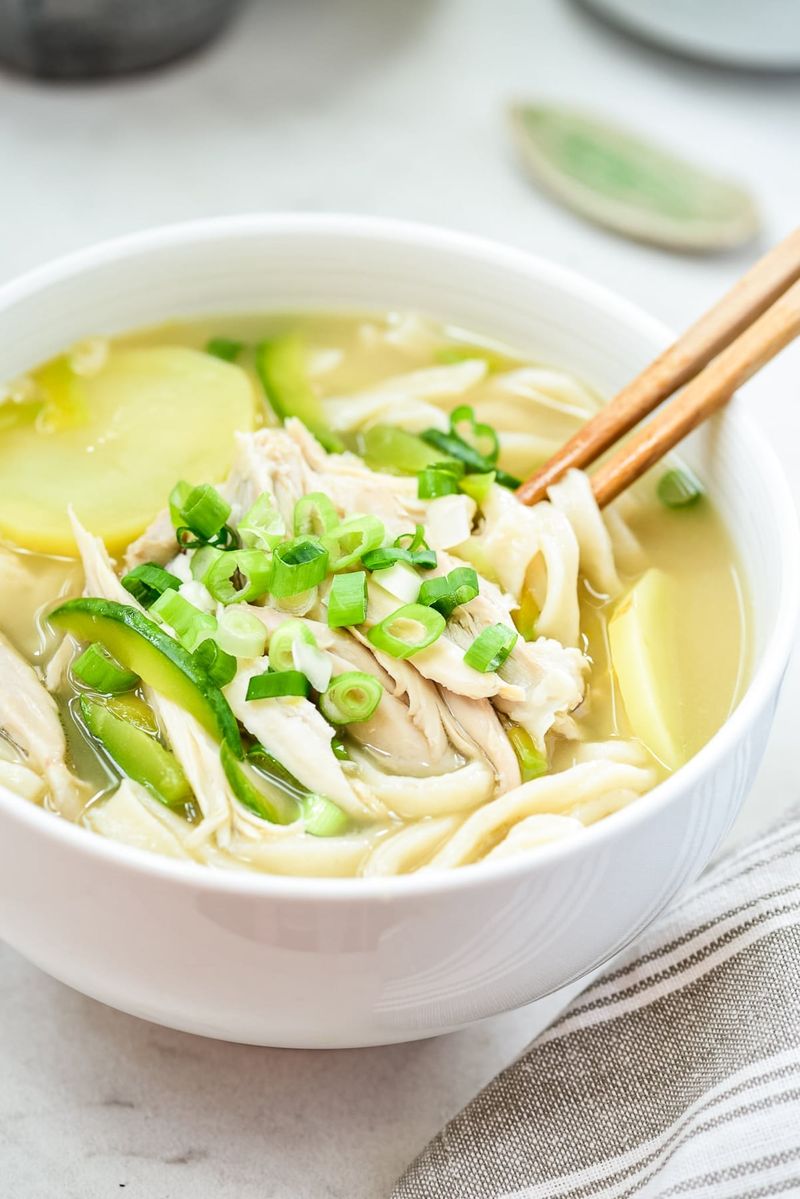
Kalguksu is the kind of soup your grandmother would make on a rainy afternoon — heartwarming, simple, and made with love. The name literally means knife-cut noodles, and these thick, flat wheat noodles are hand-rolled and sliced right before cooking.
The broth is usually made from anchovies, kelp, or chicken, giving it a clean, deeply savory flavor. Adding zucchini, clams, or mushrooms turns this humble soup into something genuinely special and soul-satisfying.
6. Bibim Guksu (Spicy Mixed Noodles)
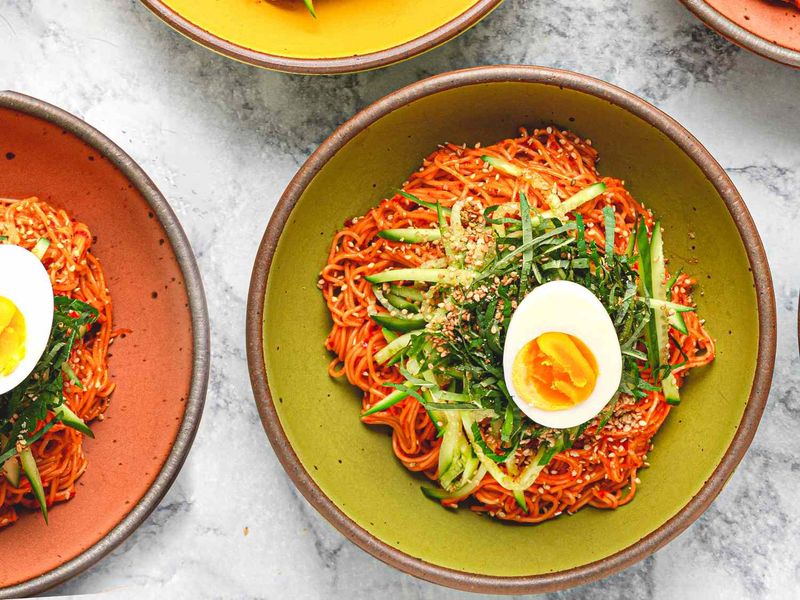
Bibim guksu is a bold, no-fuss noodle dish that comes together in under 15 minutes — perfect for when hunger strikes fast and patience runs short. Thin wheat or buckwheat noodles get tossed in a punchy gochujang-based sauce that balances spice, sweetness, and tang beautifully.
Toppings like cucumber, kimchi, and a jammy egg add crunch and creaminess to each bite. This dish is especially popular in spring and summer when people crave something light but packed with flavor.
7. Jjamppong (Spicy Seafood Noodle Soup)
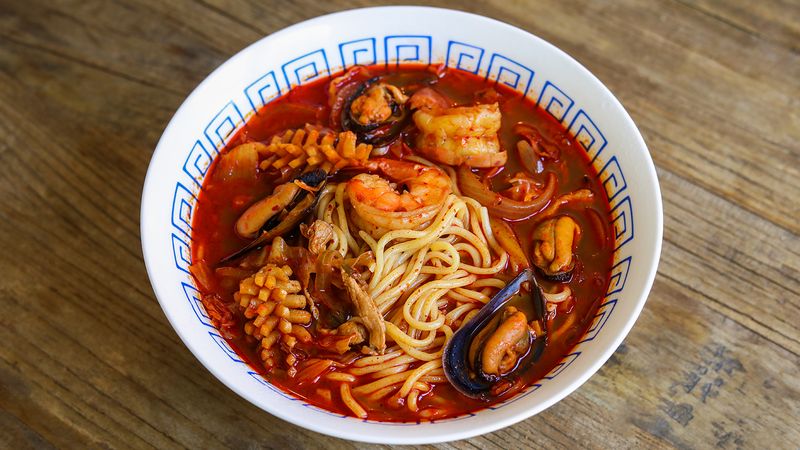
Jjamppong is a flavor explosion in a bowl — a Korean-Chinese noodle soup with a deep red, spicy broth packed with seafood and vegetables. The heat from gochugaru chili flakes gives the broth a smoky, slow-burning spice that keeps you coming back for more.
Shrimp, squid, mussels, and clams are classic additions, but you can customize it with whatever seafood you love. At home, the trick is building a rich base with garlic, ginger, and a generous splash of seafood stock.
8. Mul Naengmyeon (Icy Broth Noodles)
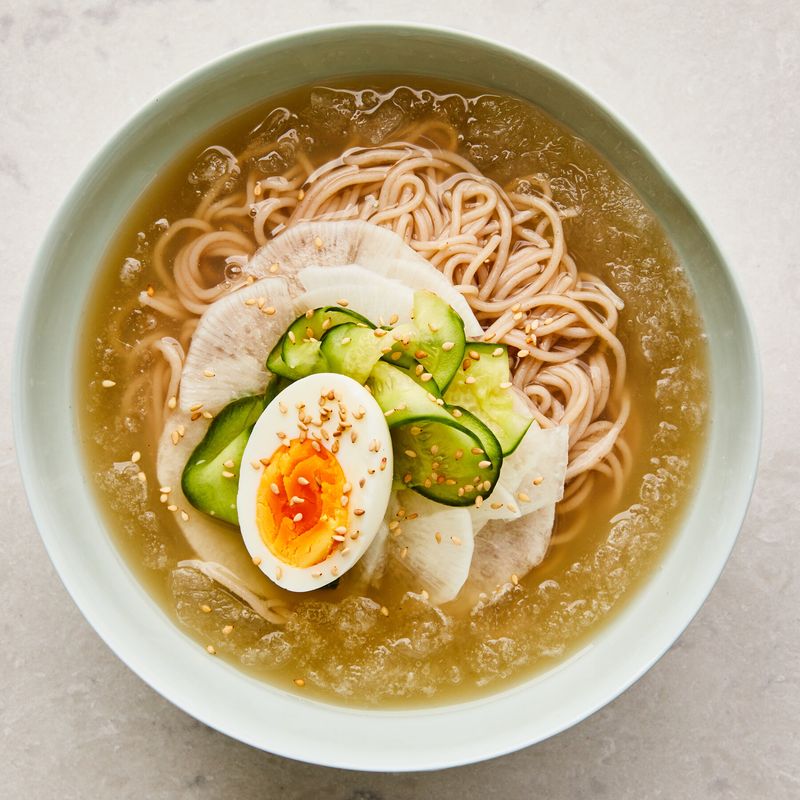
Mul naengmyeon is the cooler, calmer sibling in the naengmyeon family — its broth is subtle, clean, and deeply refreshing rather than spicy. The noodles sit in a chilled, slightly tangy beef or dongchimi radish broth that feels almost medicinal in the best possible way.
A drizzle of mustard and a splash of vinegar added tableside brighten everything up. Making the broth from scratch takes time, but using good quality beef stock as a shortcut still delivers excellent results at home.
9. Tteokbokki with Ramyeon (Spicy Rice Cake Noodles)
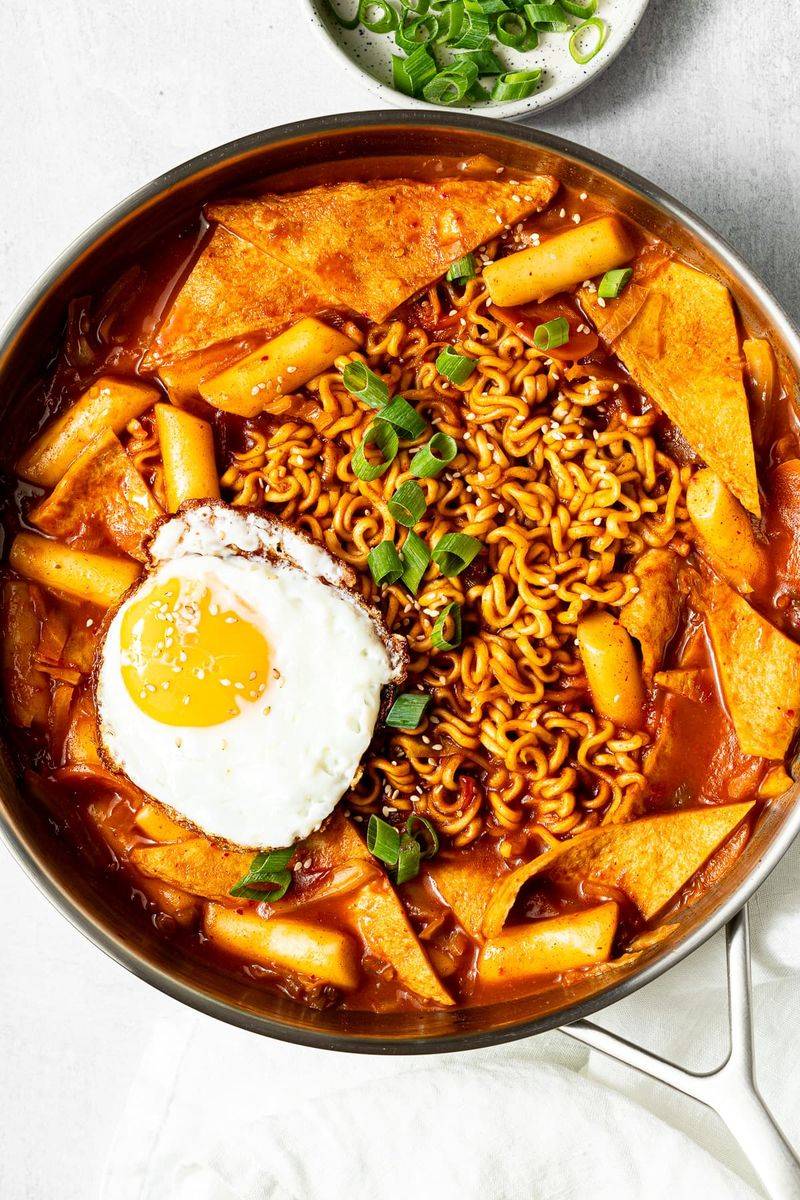
Mixing tteokbokki rice cakes with ramyeon noodles is one of those genius Korean street food combinations that makes you wonder why it took so long to discover. The chewy rice cakes and springy noodles soak up the thick, spicy-sweet gochujang sauce like sponges.
This dish is called rabokki, and it is wildly popular among Korean teenagers and college students. Making it at home means you control the spice level, so even those with a lower heat tolerance can enjoy every sticky, satisfying bite.
10. Kongguksu (Cold Soy Milk Noodles)
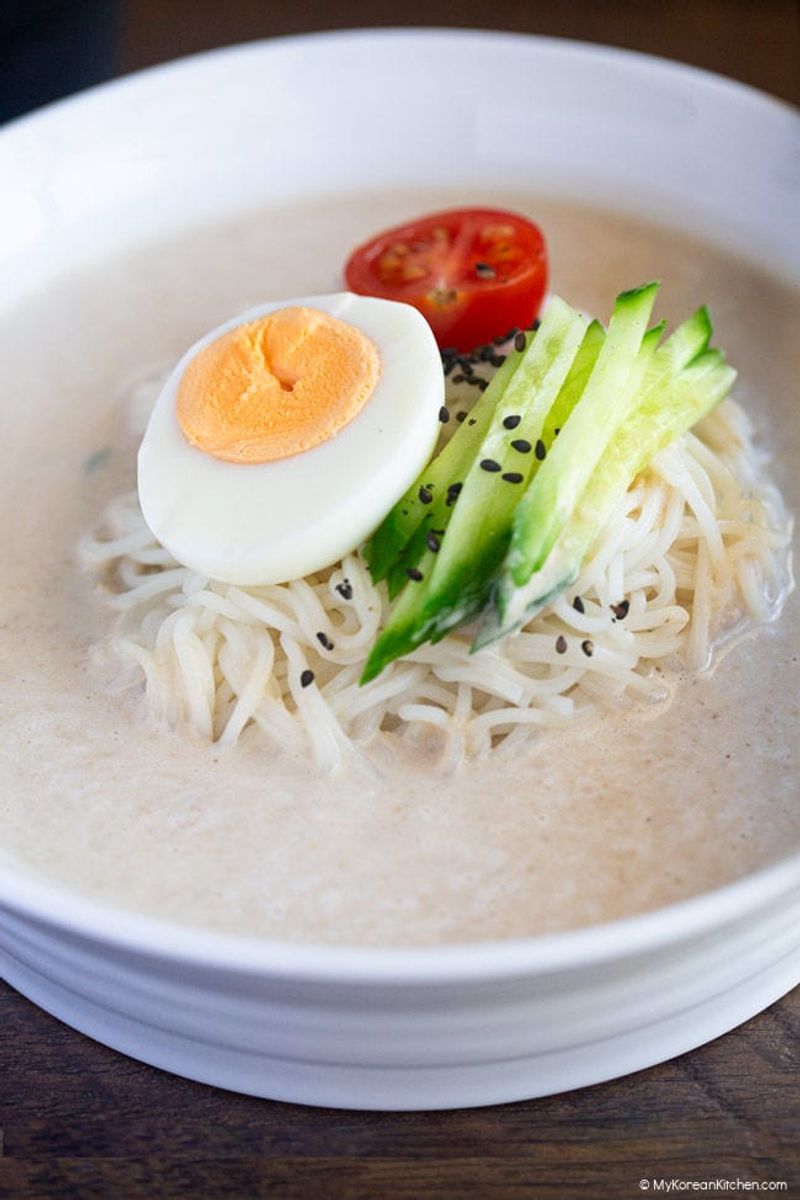
Kongguksu might sound unusual at first — noodles served in cold, blended soybean milk — but one taste and it completely wins you over. The broth is creamy, nutty, and subtly sweet, providing a gentle contrast to the mild wheat noodles underneath.
This dish is a beloved summer staple in Korea, valued for its cooling properties and plant-based protein. Making the soy milk from scratch by soaking and blending soybeans is a rewarding process that gives the broth an unbeatable fresh flavor.
11. Doenjang Guksu (Fermented Soybean Paste Noodle Soup)
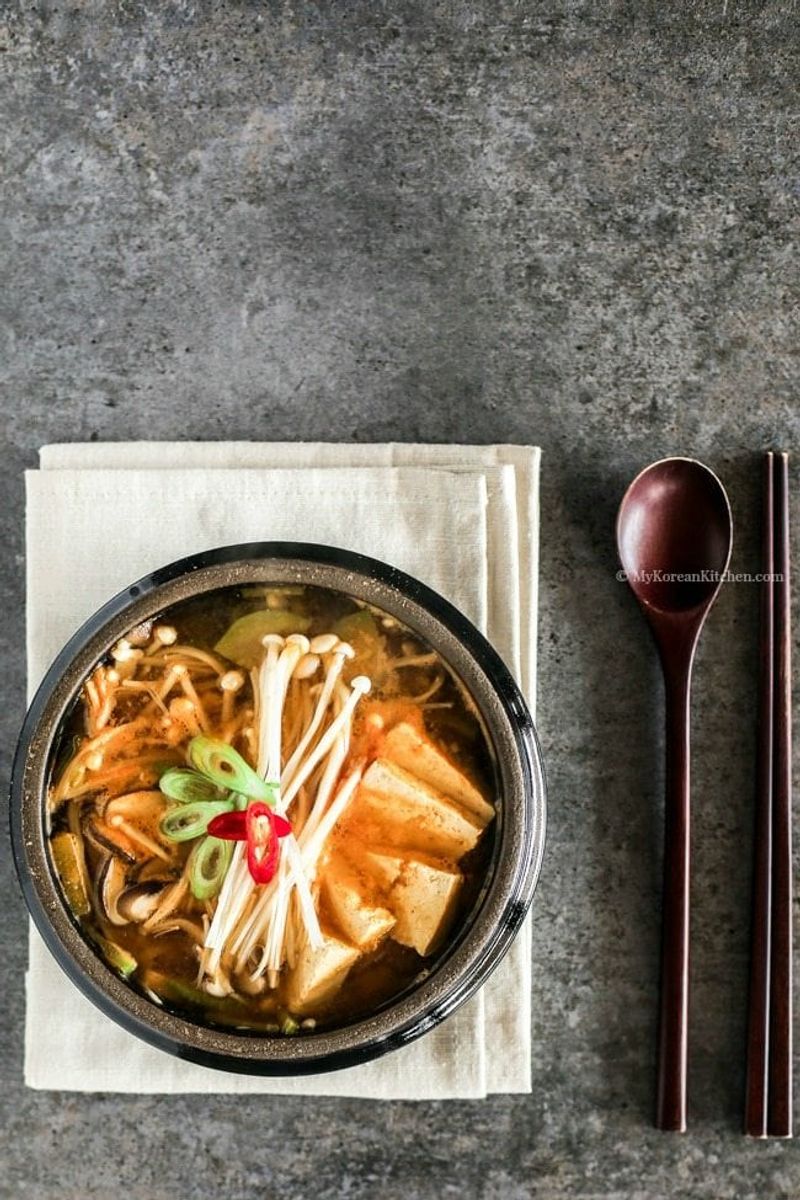
Doenjang guksu is the quiet, understated noodle dish that does not need flashy toppings to impress anyone. The broth, made from doenjang fermented soybean paste, delivers a deeply earthy, umami-rich flavor that tastes like it simmered all day even when made in 20 minutes.
This is everyday home cooking at its most honest and comforting. Zucchini, potatoes, and mushrooms are common additions that soak up the savory broth beautifully, making each spoonful feel nourishing and complete.
12. Sujebi (Hand-Torn Noodle Soup)
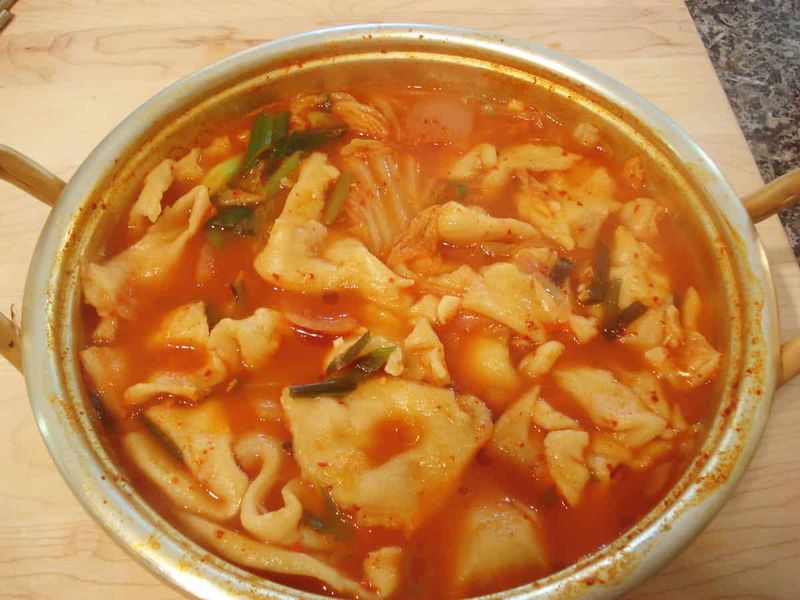
Sujebi has a wonderfully imperfect charm — instead of uniform noodles, you tear pieces of dough directly into the simmering broth, creating thick, uneven shapes that cook up chewy and satisfying. No special equipment needed, just your hands and a simple wheat dough.
Historically, sujebi was made during hard times when rice was scarce, turning humble ingredients into something deeply comforting. Today it is celebrated as a nostalgic dish that Koreans associate with rainy days, childhood memories, and home-cooked warmth.
13. Ojingeo Bokkeum Myeon (Spicy Squid Stir-Fried Noodles)
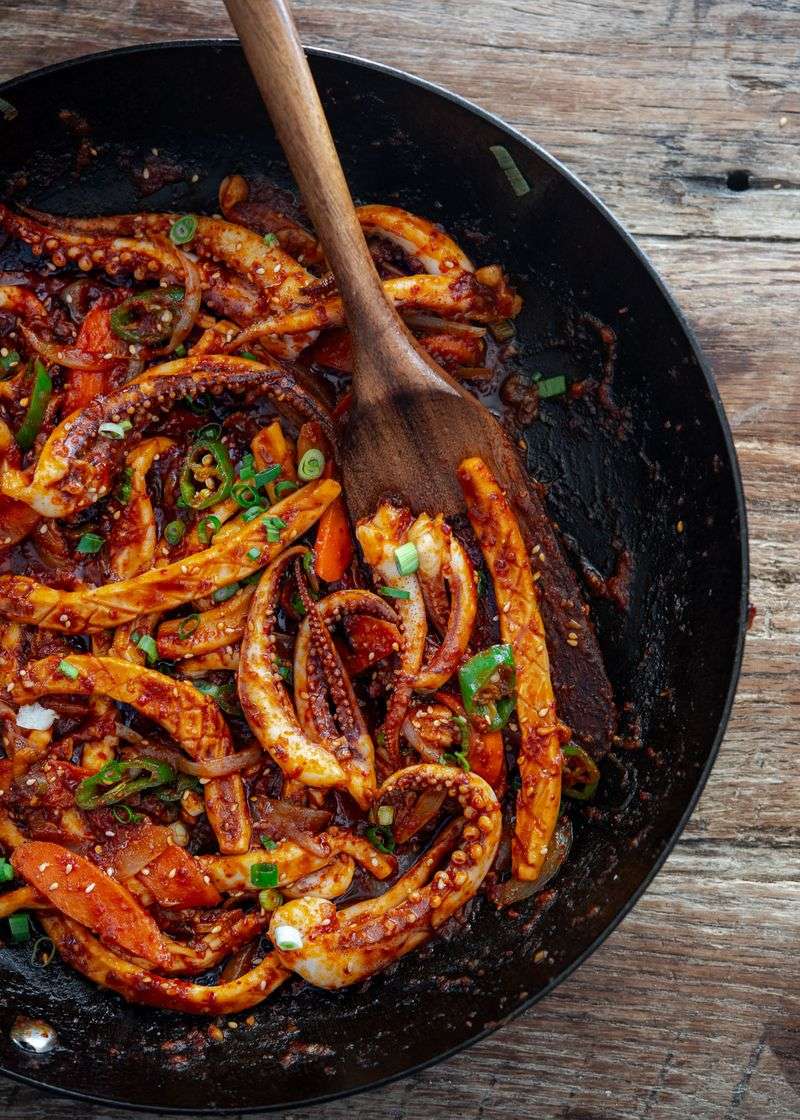
Squid lovers, this one is for you. Ojingeo bokkeum myeon combines tender, slightly chewy squid with thick stir-fried noodles in a bold gochujang-based sauce that clings to every strand and bite-sized piece of seafood.
The key to getting the squid right is cooking it quickly over high heat so it stays tender instead of rubbery. Colorful bell peppers, carrots, and onions add sweetness and crunch that balance the fiery sauce perfectly, making this dish as visually stunning as it is delicious.
14. Anchovy Broth Somyeon (Thin Wheat Noodle Soup)
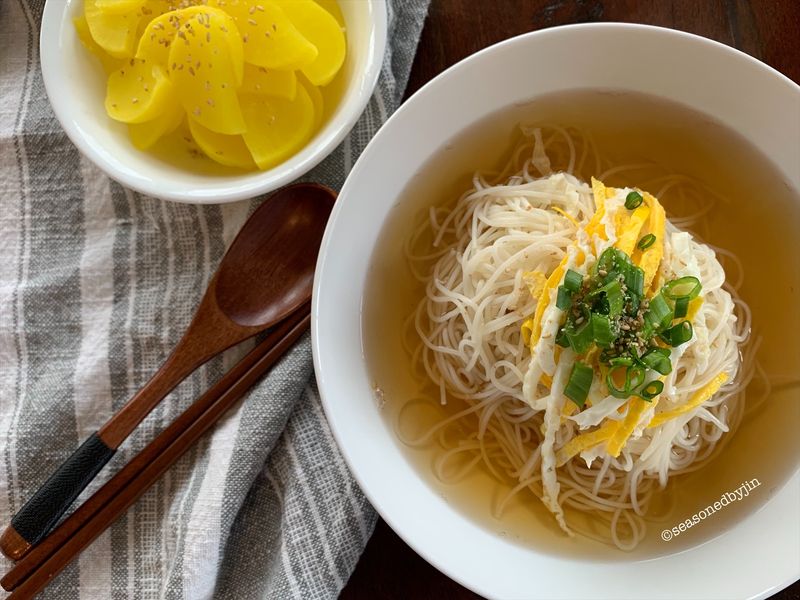
Sometimes the simplest dishes carry the most flavor, and somyeon proves that point beautifully. These ultra-thin wheat noodles are served in a delicate, golden anchovy broth that is clean, slightly salty, and deeply satisfying without being heavy.
Somyeon is a popular warm-weather noodle dish that Koreans enjoy both hot and cold. Toppings are minimal — thin egg strips, seaweed, and green onions — which lets the quality of the broth shine.
Getting the anchovy stock right is the real secret to nailing this dish at home.
15. Kimchi Noodle Stir-Fry (Kimchi Bokkeum Myeon)
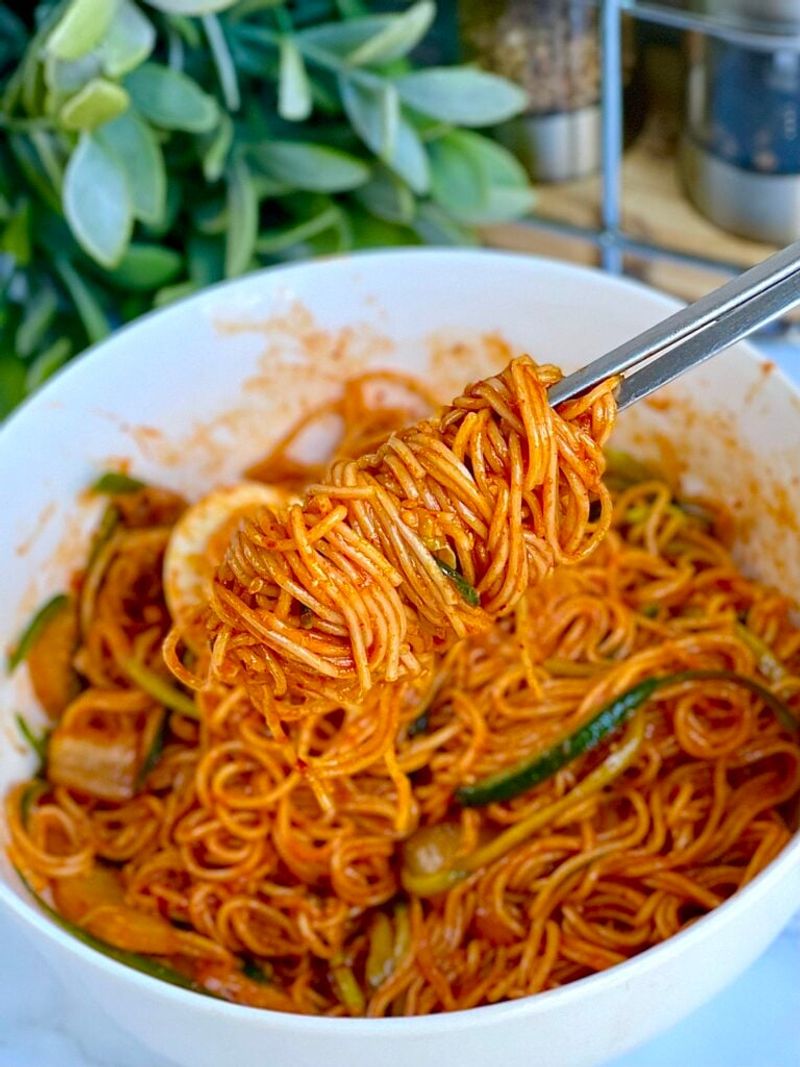
Tangy, spicy, and outrageously satisfying — kimchi bokkeum myeon is what happens when leftover kimchi meets a hot pan and a handful of noodles. Aged kimchi works best here because its sour, fermented flavor intensifies when cooked and caramelizes slightly in the pan.
Adding thin pork belly strips takes this dish to a whole new level of richness. A fried egg on top is non-negotiable for most fans of this dish — breaking the yolk and letting it coat the noodles is a moment worth savoring every single time.




Comments
No Comments