













Greek pastries have quietly won over British taste buds in a big way. From flaky phyllo dough dripping with honey to creamy custard-filled delights, these treats offer something truly special.
Whether you spot them at a local Greek restaurant or a bakery tucked away on the high street, they keep calling you back for more. Here are the Greek pastries that Britons simply cannot stop ordering.
1. Baklava
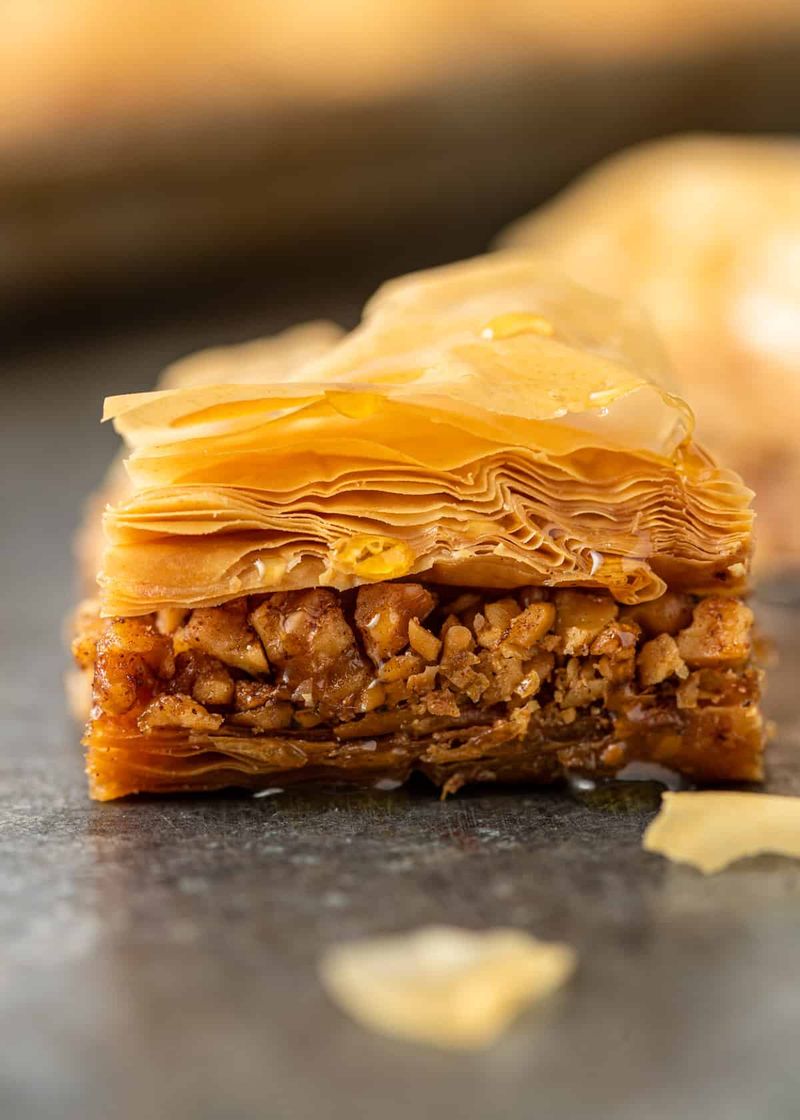
Few pastries in the world carry as much legend as baklava. This iconic treat layers paper-thin phyllo sheets with chopped nuts and soaks everything in fragrant honey syrup.
The result is a sticky, crunchy, utterly addictive bite that feels both indulgent and celebratory.
Britons often discover baklava at Greek restaurants and then spend years trying to recreate it at home. Every bakery puts its own spin on the nut filling, making each version a pleasant surprise.
2. Spanakopita
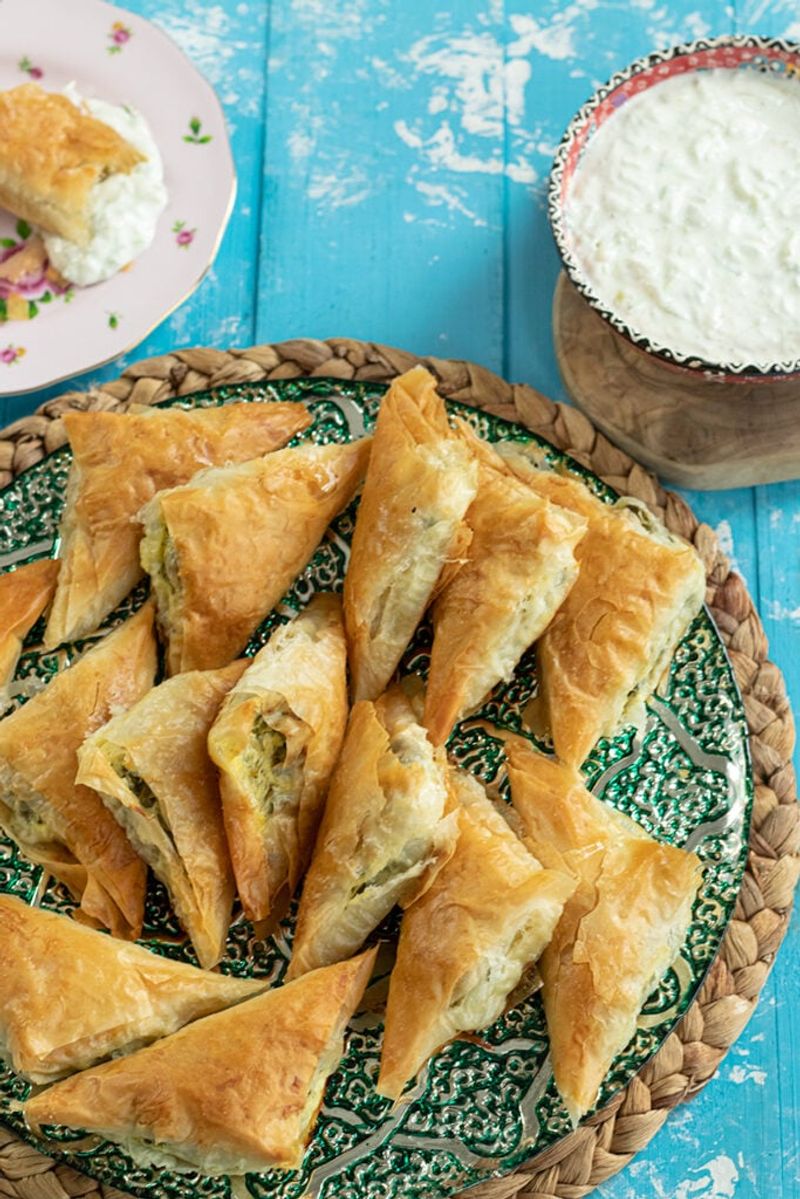
Spanakopita is the savory superstar of Greek pastry culture. Packed with spinach, crumbled feta, eggs, and fresh herbs, all wrapped in shatteringly crisp phyllo dough, it delivers bold flavor in every bite.
British food lovers often reach for it as a satisfying snack or light lunch option.
Its triangular shape makes it easy to eat on the go. Once you try a freshly baked spanakopita still warm from the oven, a cold sandwich at your desk just never feels the same again.
3. Tiropita
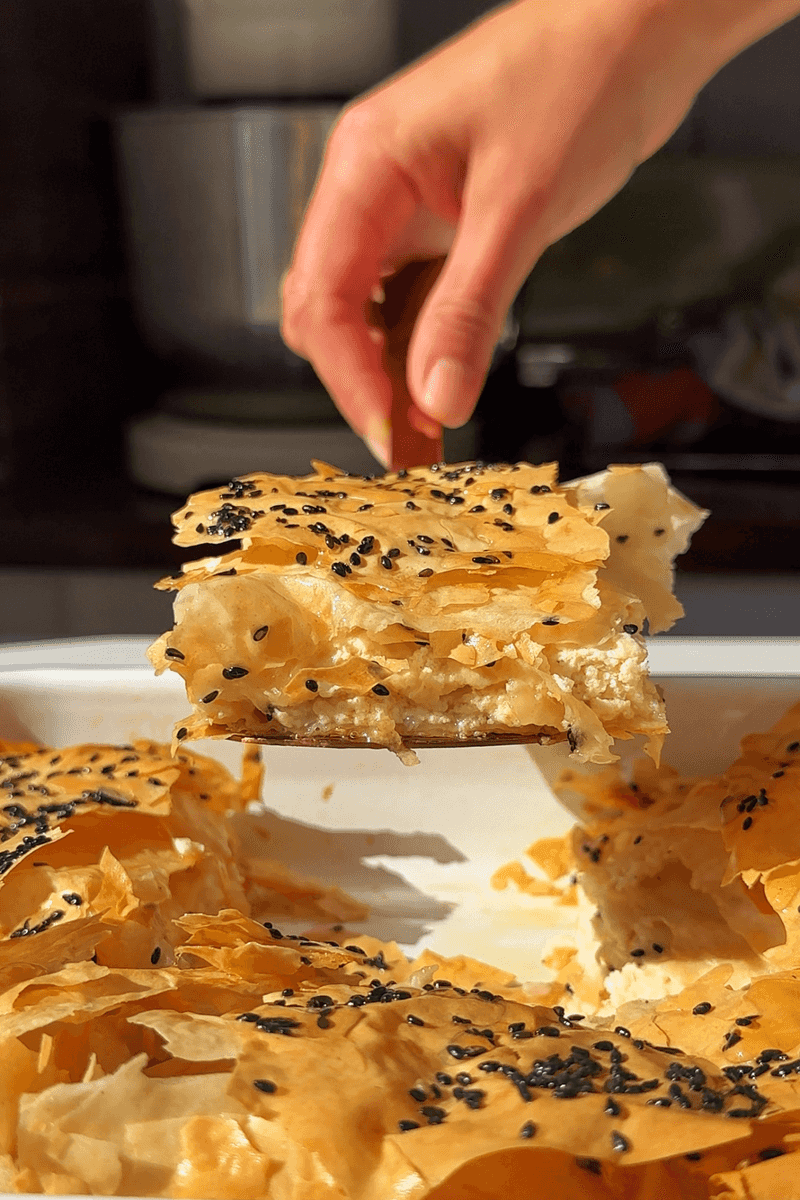
If cheese is your weakness, tiropita was made for you. This Greek cheese pie uses a generous mixture of feta and sometimes ricotta, all bundled inside buttery, crisp phyllo layers.
The salty, creamy filling contrasts beautifully with the crunch of the pastry shell.
Britons who stumble upon tiropita at Greek delis often buy a second slice before finishing the first. It pairs wonderfully with a simple salad or a cup of strong tea on a grey afternoon.
4. Galaktoboureko
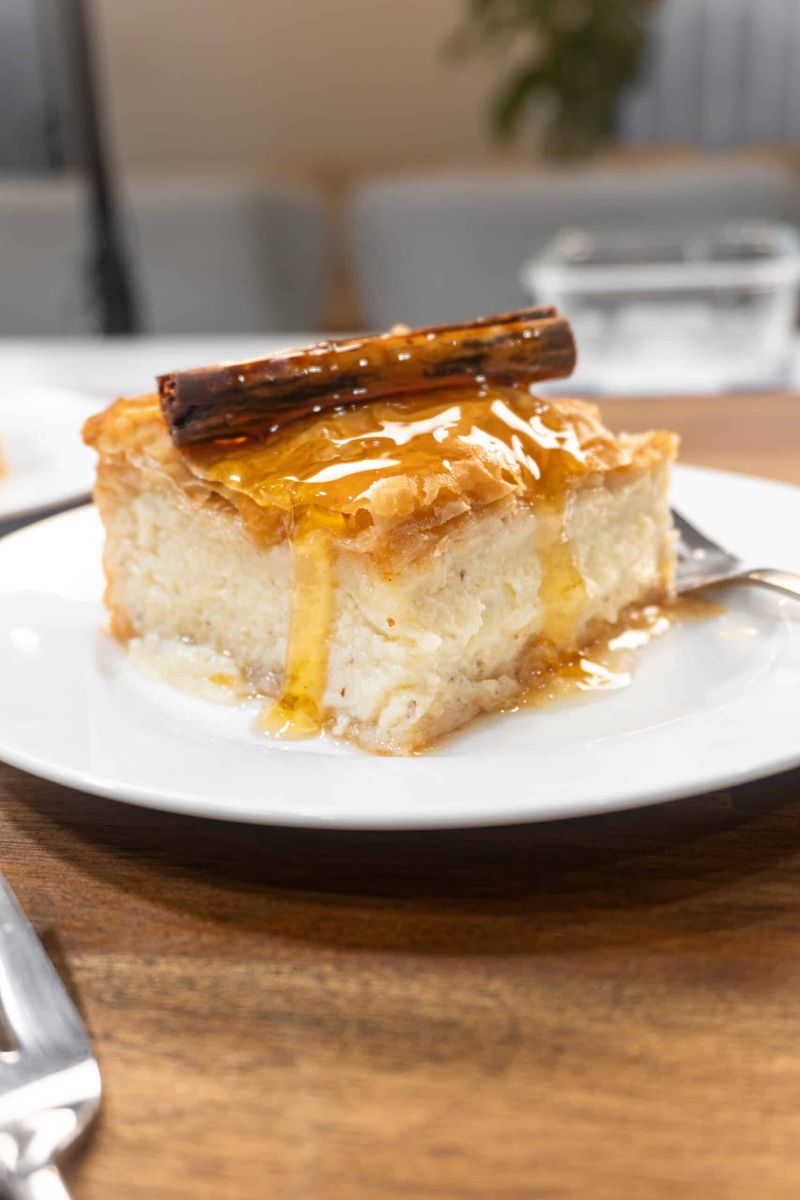
Galaktoboureko sounds complicated, but one bite and you completely forget about the name. This showstopper dessert wraps a thick, silky semolina custard inside golden phyllo pastry, then bathes the whole thing in a light lemon-scented syrup.
The contrast between the creamy filling and crispy exterior is pure magic.
Many Britons rank it among their all-time favorite Greek sweets after trying it just once. Greek bakeries in cities like London and Manchester sell out of it fast on weekends.
5. Bougatsa
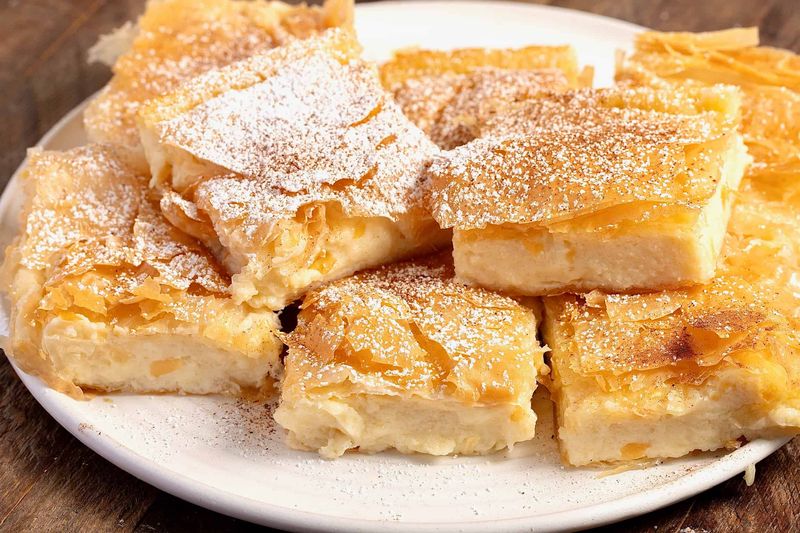
Bougatsa is the kind of breakfast pastry that makes you want to wake up early. Originating from northern Greece, it traditionally features a warm semolina custard tucked inside layers of crispy phyllo, dusted generously with powdered sugar and cinnamon.
The aroma alone is enough to stop you in your tracks.
British visitors who try bougatsa while on holiday in Greece often search for it back home immediately. Some Greek bakeries in the UK now serve it fresh each morning, and queues form quickly.
6. Melomakarona
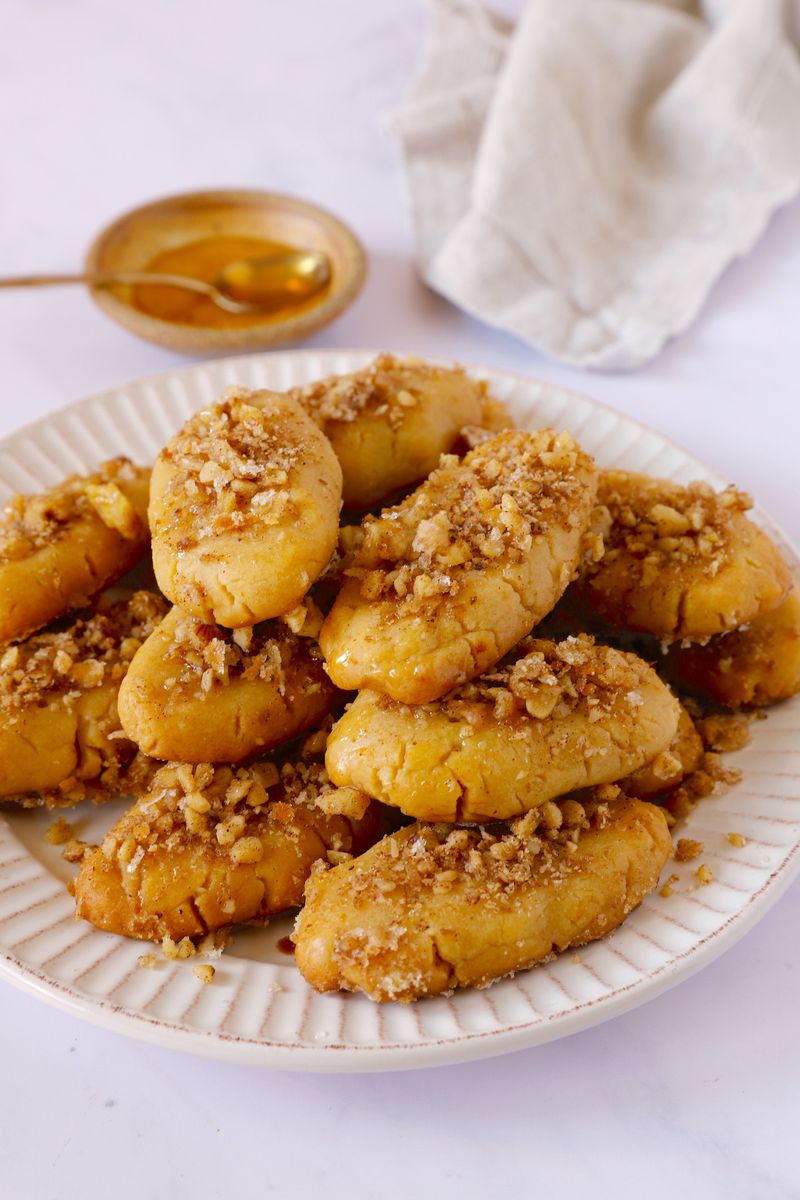
Melomakarona are the cookies that make Christmas in Greece feel complete. These oval-shaped treats are made with olive oil, orange zest, and warm spices, then soaked in honey and finished with crushed walnuts on top.
They are soft, fragrant, and deeply satisfying in a way that feels almost nostalgic.
Britons with Greek heritage often bake melomakarona every December, filling their kitchens with the scent of cinnamon and cloves. For everyone else, Greek delis offer a wonderful shortcut to this festive favorite.
7. Kourabiedes
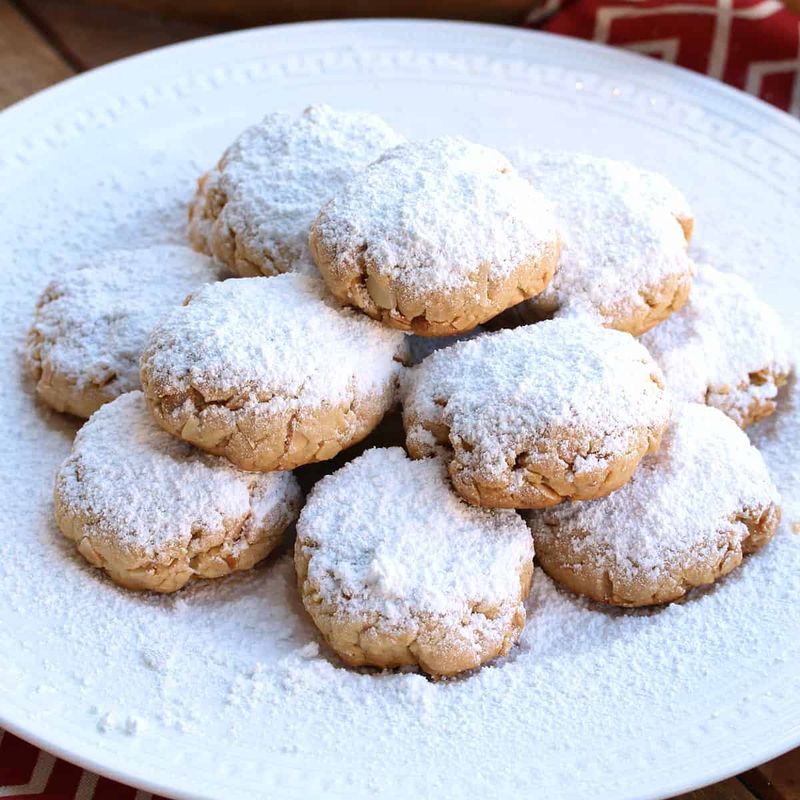
Kourabiedes look like little snowballs, and they taste just as magical as they appear. These buttery almond shortbread cookies are rolled generously in powdered sugar, creating a cloud-like coating that dissolves on your tongue before the rich, nutty base takes over.
They are a staple at Greek celebrations year-round.
Many Britons first encounter kourabiedes at Greek Easter gatherings or weddings. The combination of clarified butter, roasted almonds, and vanilla makes these cookies nearly impossible to eat just one of.
8. Loukoumades
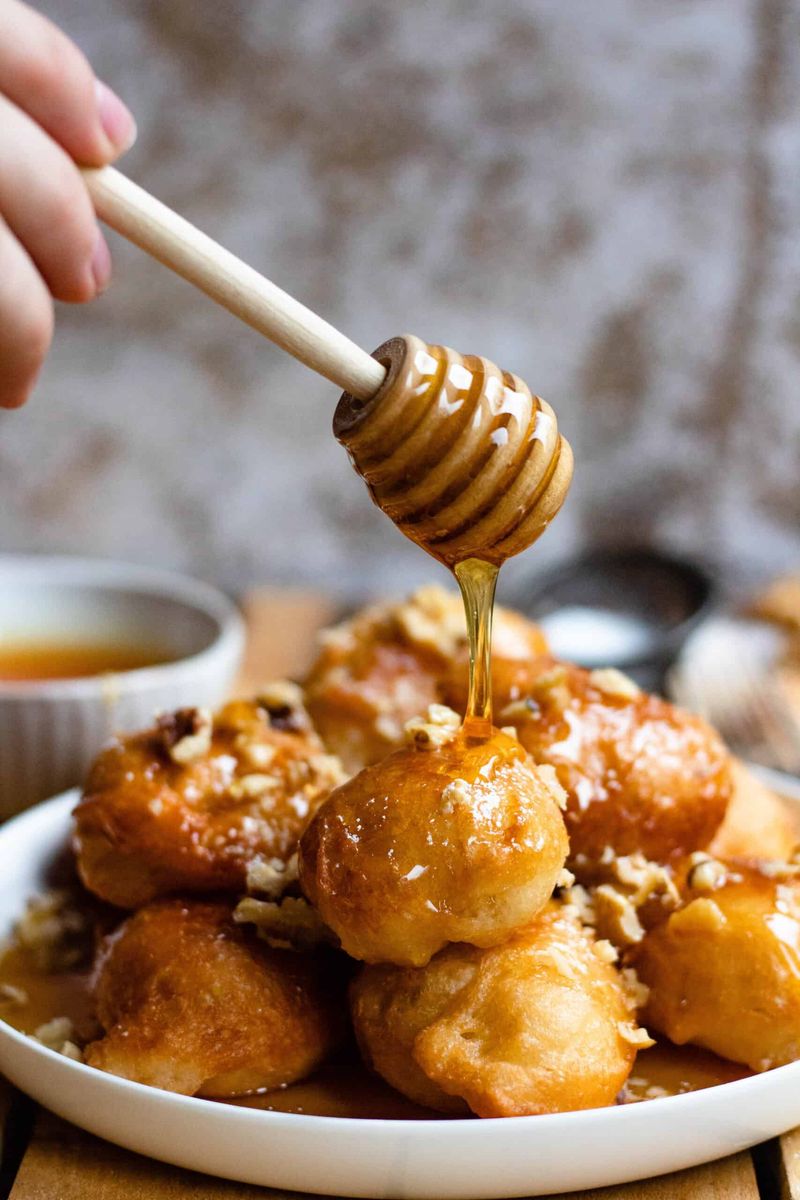
Hot, golden, and dripping with honey, loukoumades are Greece's answer to the doughnut hole. These small fried dough puffs are crispy on the outside and pillowy soft inside, topped with warm honey, a shake of cinnamon, and sometimes a scattering of crushed walnuts.
They are street food at its absolute finest.
Greek food festivals across Britain have made loukoumades a crowd favorite. Vendors often run out before the event ends, which tells you everything you need to know about how popular they truly are.
9. Kataifi
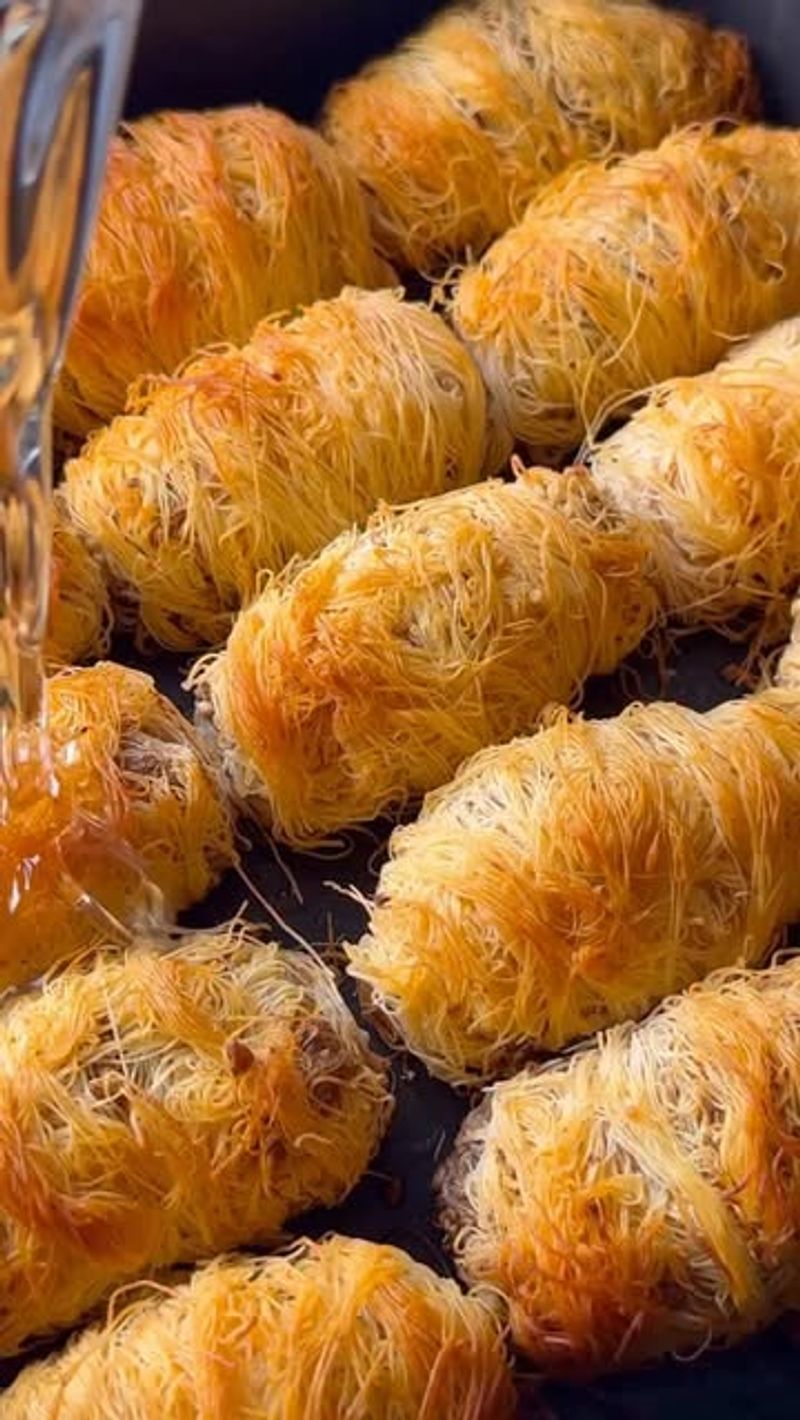
Kataifi looks like something from a fairy tale, with its nest of fine shredded pastry strands wrapped around a sweet nut filling and drenched in syrup. The texture is unlike anything else, crunchy and delicate all at once, with a satisfying sweetness that lingers pleasantly after each bite.
Britons who love baklava often discover kataifi as the more visually dramatic cousin. Greek restaurants frequently feature it on dessert menus, and it photographs so beautifully that it tends to go viral on social media too.
10. Revani
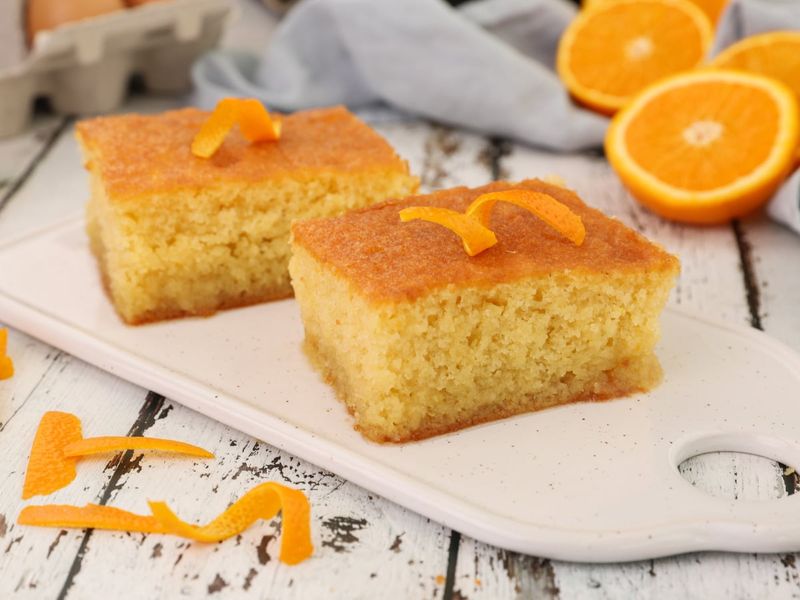
Revani proves that simple ingredients can produce extraordinary results. This moist semolina cake soaks up a fragrant citrus syrup, usually made with orange or lemon, creating a dessert that is tender, sweet, and wonderfully light.
A small piece feels satisfying without being overly heavy, which is part of its charm.
Greek coffee shops in Britain often serve revani alongside a strong espresso. Its gentle citrus perfume and spongy texture make it a go-to order for those who want something sweet but not overwhelming.
11. Diples
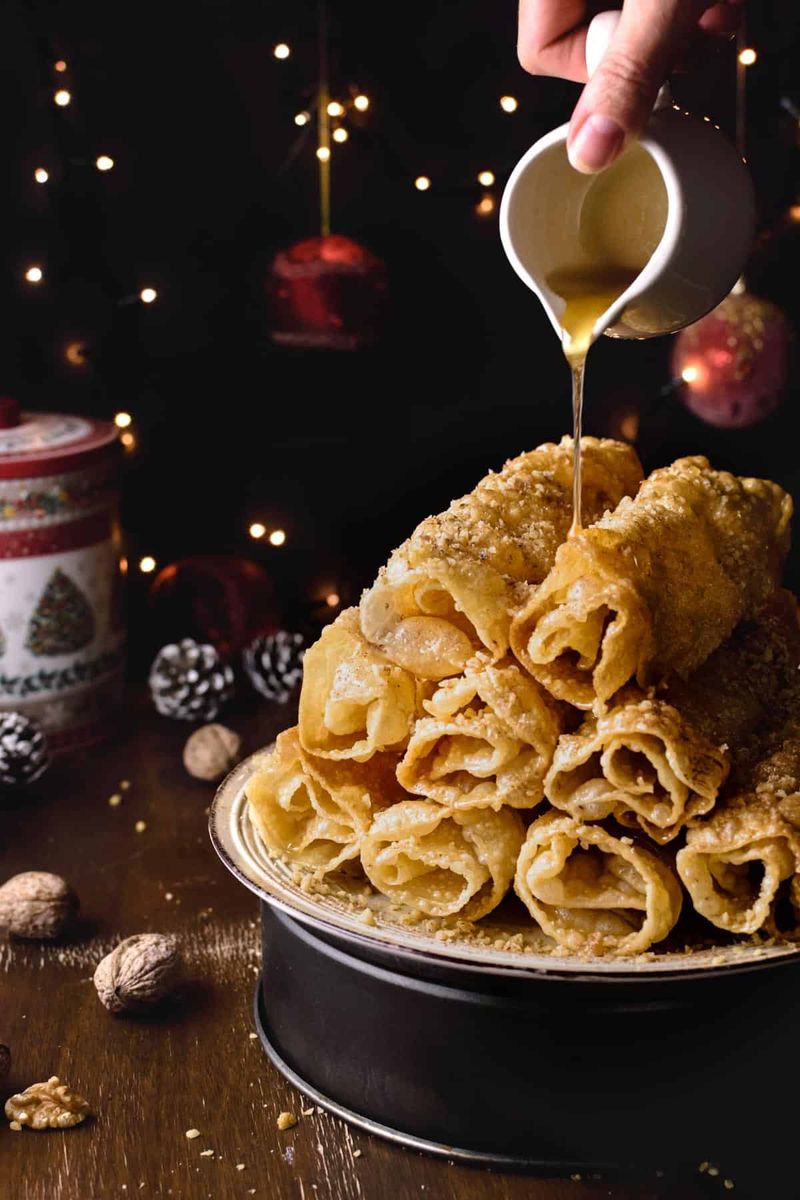
Diples are one of Greece's most theatrical pastries. Thin sheets of dough are fried until golden and airy, then folded or rolled into elegant ribbons and topped with honey, walnuts, and cinnamon.
They are traditionally made for weddings and celebrations, carrying a sense of joyful occasion with every crispy bite.
Not every British Greek restaurant serves diples, which makes finding them feel like a small treasure hunt. When you do find them, order a generous portion because sharing becomes very difficult very quickly.
12. Portokalopita
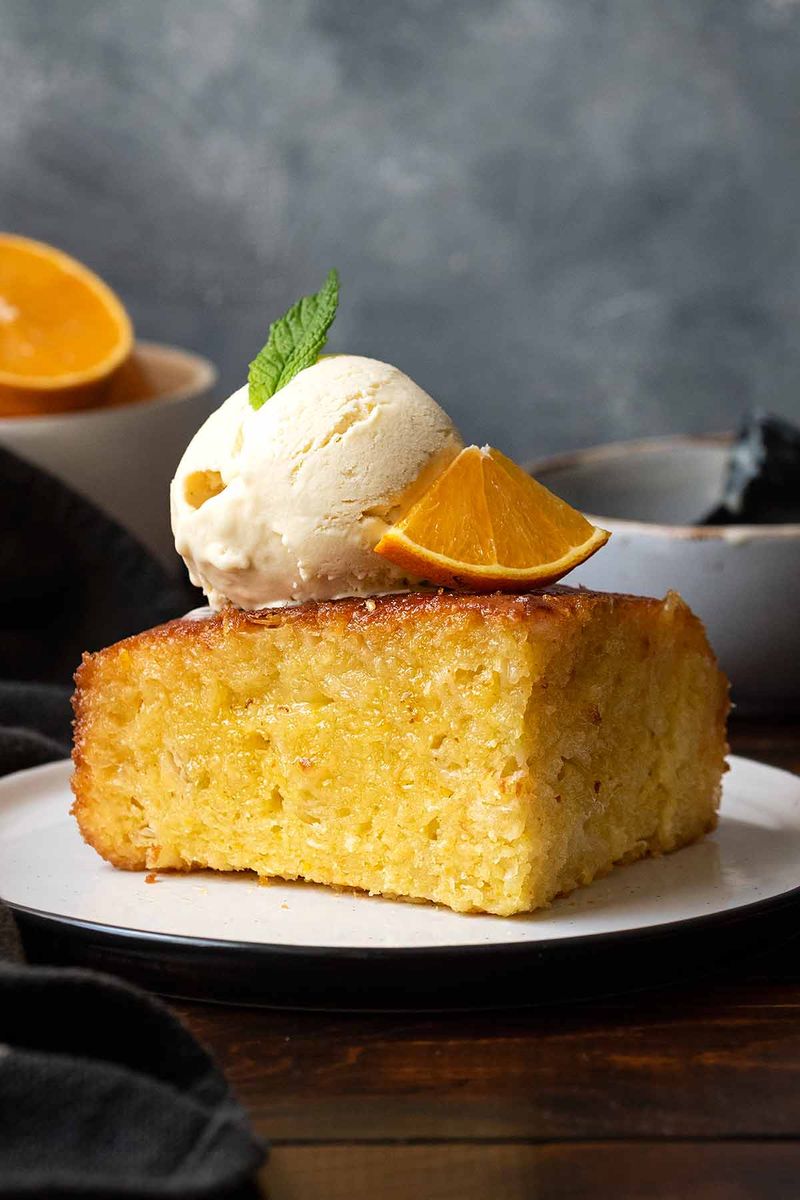
Portokalopita breaks all the rules in the most delicious way possible. Instead of keeping phyllo layers intact, this cake uses crumbled, dried phyllo mixed into a batter loaded with fresh orange juice and zest, then baked until golden and soaked in citrus syrup.
The result is wonderfully moist and intensely flavored.
Britons who try portokalopita often describe it as their new favorite cake. Its bold orange flavor and unusual texture make it a talking point at any Greek-themed dinner party or family gathering.
13. Trigona Panoramatos
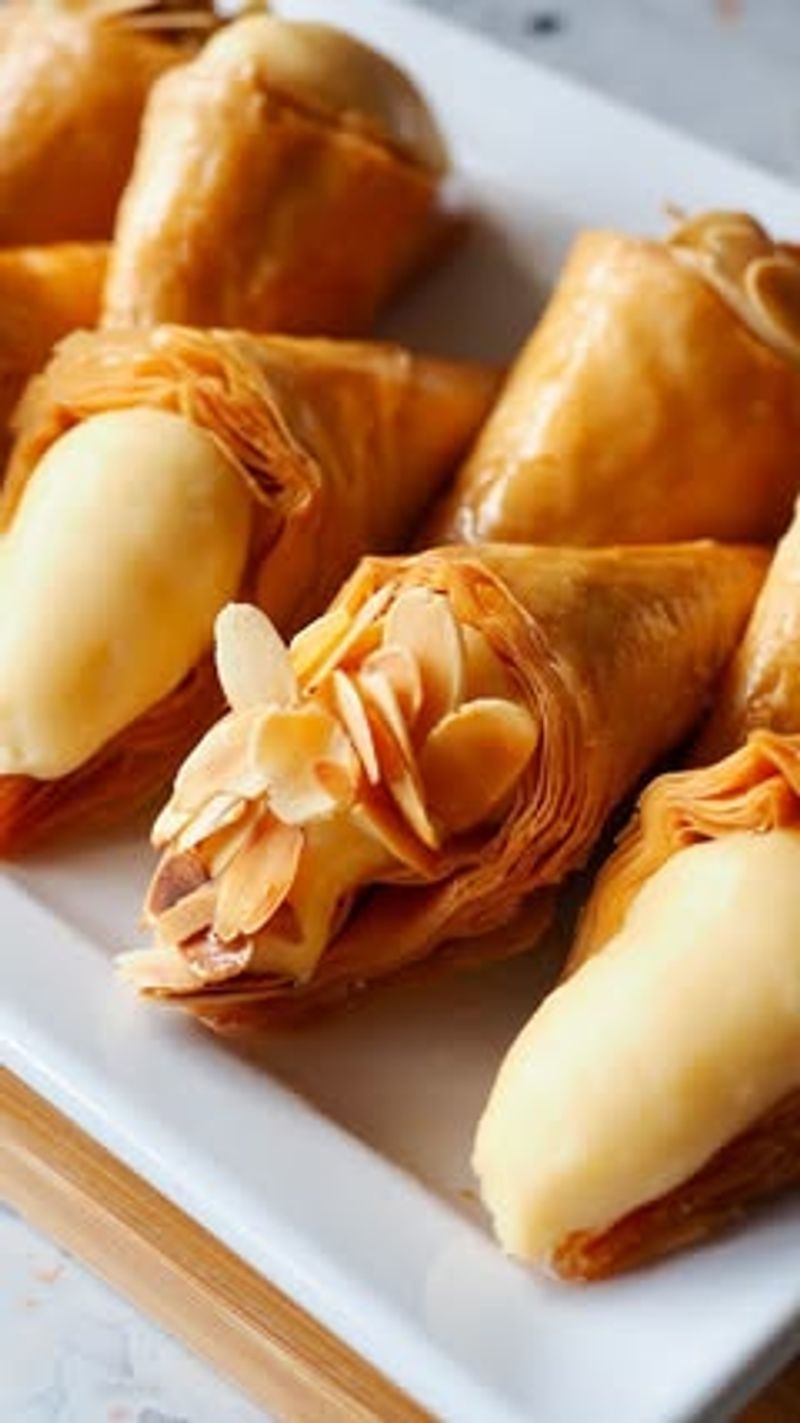
Trigona Panoramatos come from Thessaloniki and carry serious regional pride. These cone-shaped phyllo pastries are baked until deeply golden, then filled to bursting with a rich, lightly sweetened chantilly cream.
The contrast between the brittle pastry shell and the cool, airy cream inside is genuinely unforgettable.
Greek patisseries in the UK that stock these tend to sell them fast. Anyone who has visited northern Greece and tried the original version spends years searching for something that comes close back home in Britain.
14. Amygdalota
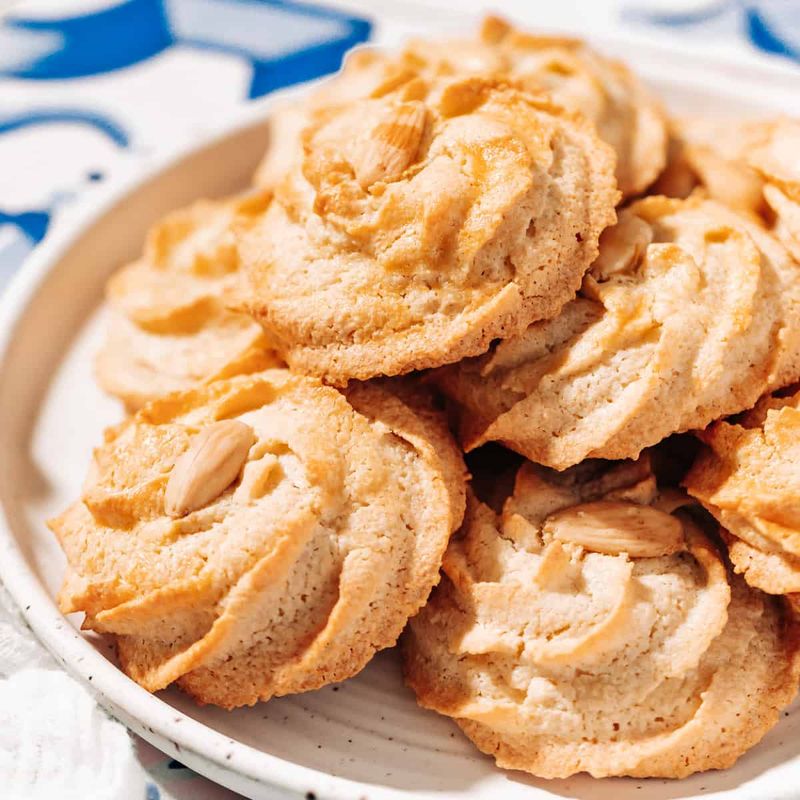
Amygdalota are the elegant, understated cousins of the more famous kourabiedes. Made primarily from ground almonds, sugar, and rose water, these soft, chewy little cookies carry a floral sweetness that feels refined and special.
They are gluten-free by nature, which has made them increasingly popular among British food lovers with dietary needs.
Greek island bakeries are famous for their amygdalota, with each island claiming its own best recipe. Finding a good version in a British Greek deli is always worth celebrating with a second purchase.
15. Halva
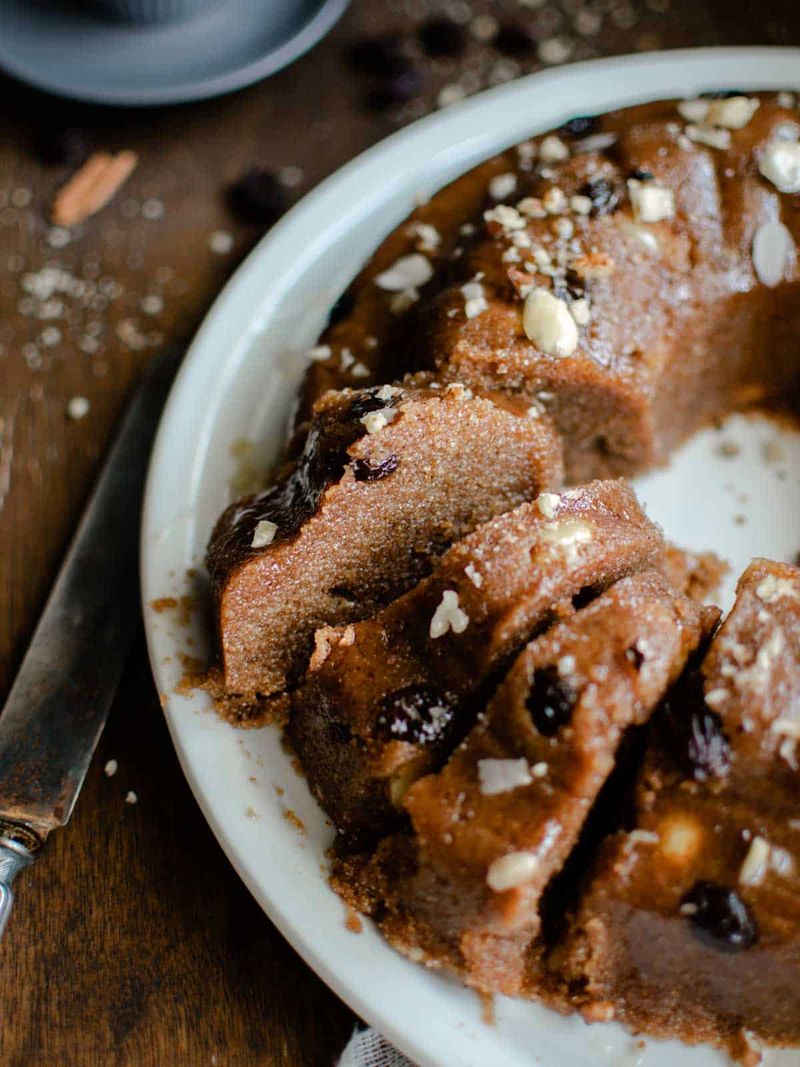
Halva holds a special place in Greek culinary tradition, often eaten during fasting periods and religious observances. The semolina-based version, known as halva politiko, is fragrant with cinnamon, cloves, and citrus, giving it a warmly spiced character that feels both comforting and distinctive.
It slices cleanly and keeps well, making it practical too.
British fans of Middle Eastern and Mediterranean food have embraced Greek halva enthusiastically. Its dense, slightly grainy texture and rich flavor profile make it a satisfying treat that feels genuinely different from Western desserts.
16. Tsoureki
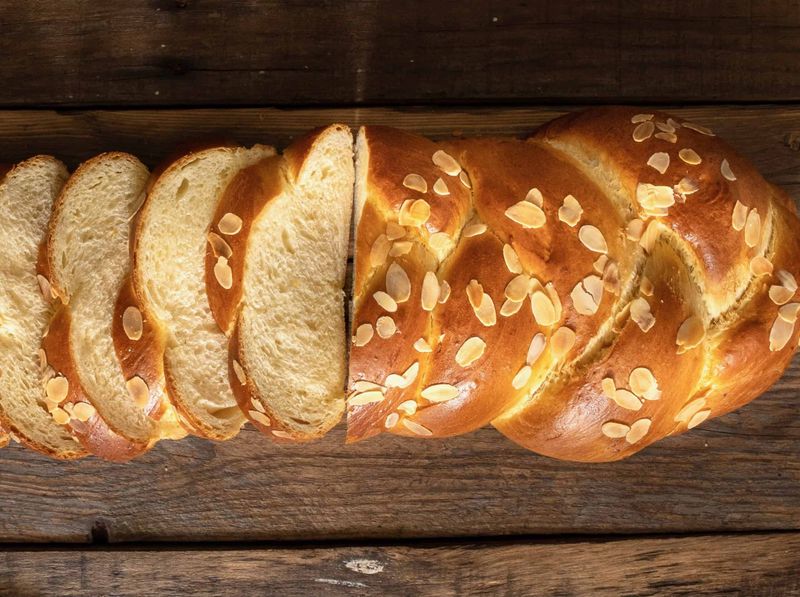
Tsoureki is the bread that smells like Easter morning. This beautifully braided sweet bread is made with a special spice called mahlab, derived from cherry pits, which gives it a distinctive floral and slightly bitter aroma unlike anything else in baking.
The crumb is pillowy soft and pulls apart in satisfying, buttery strands.
Greek families in Britain bake tsoureki every spring, and the tradition has spread beyond the community. Many British bakers now attempt their own versions after tasting it at Greek Easter celebrations hosted by neighbors or colleagues.
17. Pasteli
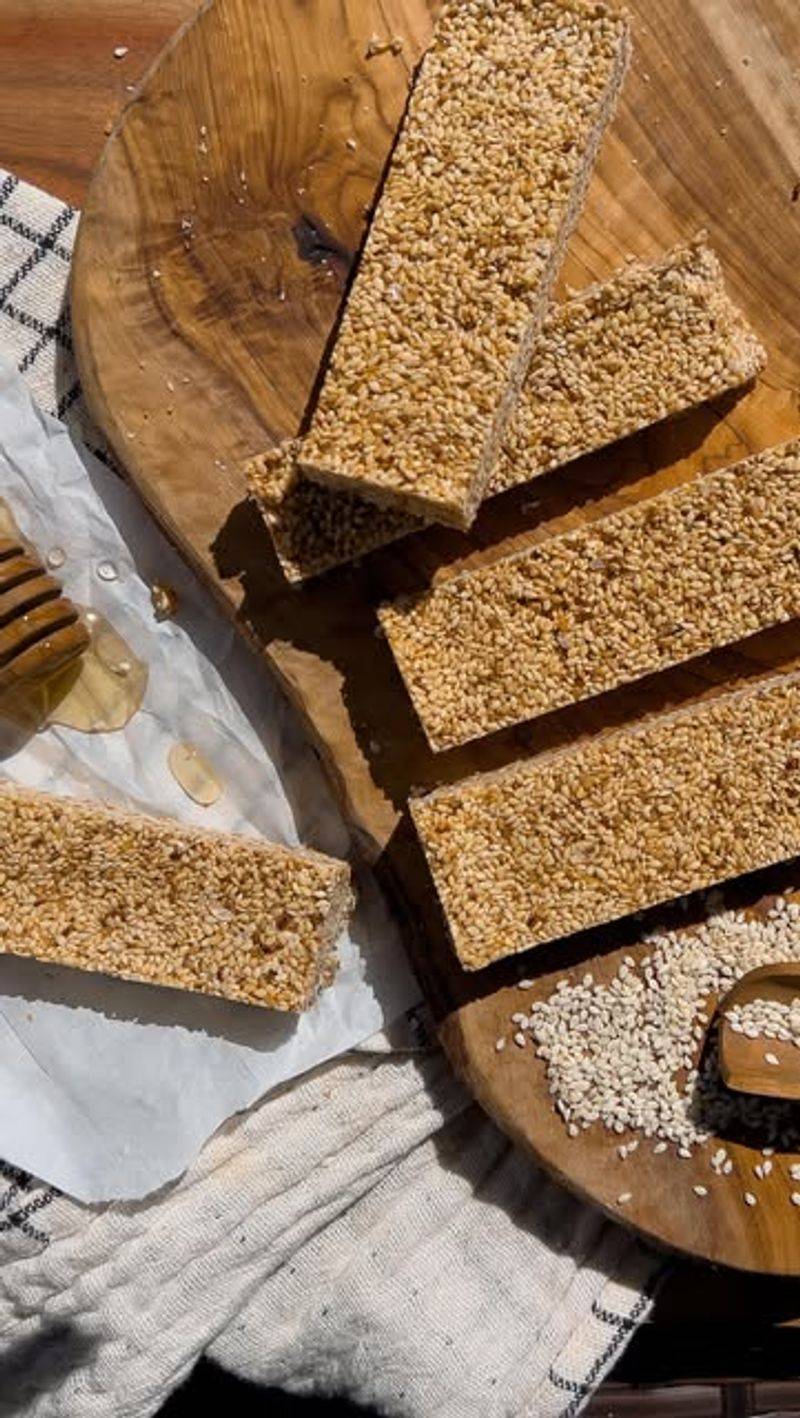
Pasteli is one of the oldest confections in the world, with roots stretching back to ancient Greece. Made from just sesame seeds and honey pressed together into a thin, brittle bar, it is crunchy, nutty, naturally sweet, and surprisingly energizing.
Ancient Greek athletes reportedly ate pasteli before competitions for a quick energy boost.
British health food enthusiasts have taken a real shine to pasteli in recent years. It shows up in Greek delis and specialty food shops, offering a genuinely ancient snack that fits perfectly into a modern, active lifestyle.
18. Finikia
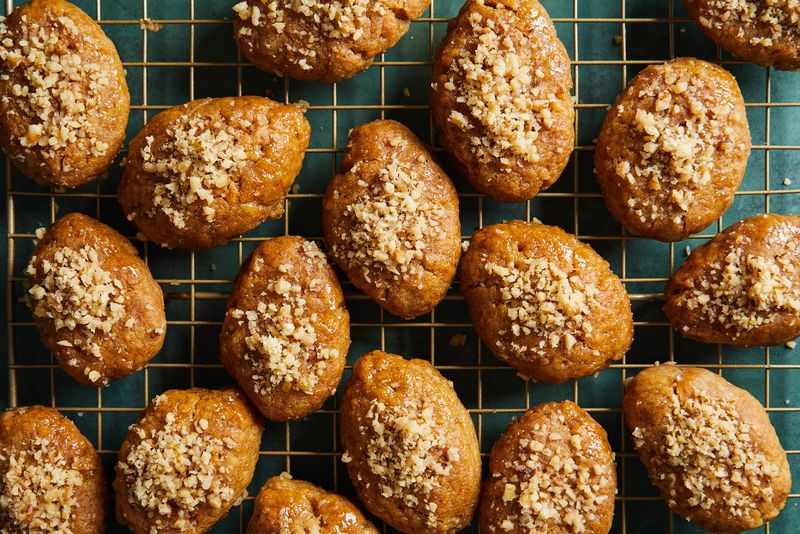
Finikia are close relatives of melomakarona but carry their own distinct personality. These spiced cookies are dipped in warm honey syrup and finished with crushed walnuts, creating a sticky, aromatic treat that pairs perfectly with Greek mountain tea or a small cup of thick Greek coffee.
They are common at Greek Orthodox Christmas celebrations.
Britons who prefer a less sweet cookie tend to gravitate toward finikia for their balanced flavor. The olive oil base keeps them moist for days, making them an excellent gift to bring home from a Greek deli.
19. Saragli
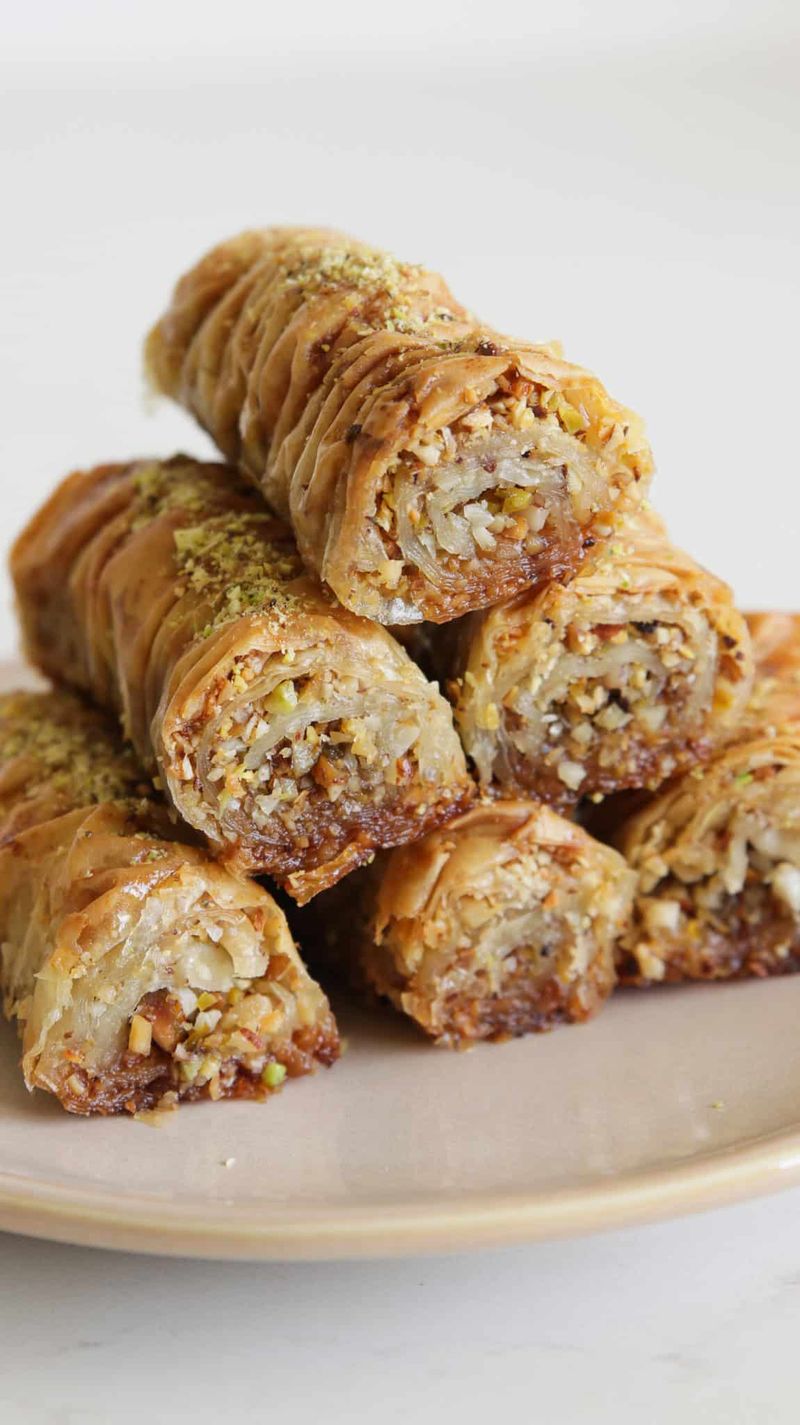
Saragli is baklava in roll form, and somehow that simple change makes everything feel more exciting. Phyllo sheets are rolled tightly around a spiced nut filling, sliced into neat cylinders, baked until golden, and then generously soaked in honey syrup.
Each piece looks polished and professional, like something from a high-end patisserie window.
Greek restaurants in Britain often serve saragli as a dessert option alongside coffee. Regulars tend to order it by name rather than pointing at the menu, which is always a sign that a dish has truly earned its loyal following.




Comments
No Comments