








Aldi has confirmed a further increase to its hourly pay rate for store staff, setting a new £13.35 minimum from March 2026. The update follows a series of recent wage rises and reflects how supermarket employers are responding to rising living costs, workforce competition, and changing expectations around pay and benefits.
While the announcement centres on hourly rates, it also highlights wider shifts in how retailers invest in staffing, recruitment, and long-term retention across the UK. For shoppers and employees alike, the change offers a useful snapshot of how the supermarket sector continues to evolve.
All information is provided for general interest only and reflects publicly available statements at the time of writing. Pay rates, eligibility criteria, and employment terms may vary by location and role.
Readers should refer to official retailer announcements or employment contracts for the most up-to-date and personalised information.
1. How Aldi Reached The £13.35 Threshold

Aldi’s new £13.35 hourly rate builds on a sequence of recent increases rather than appearing as a single jump. The supermarket raised its minimum hourly pay to £13.02 in September 2025 and has now confirmed a further rise from Sunday, 1 March 2026.
According to the company, the move forms part of a wider £36 million investment in pay and benefits, reinforcing its stated aim of maintaining competitive wages across the sector. The headline rate applies nationally, while staff working within the M25 will see higher starting pay of £14.71 per hour.
Length-of-service bonuses also apply, with experienced staff able to earn up to £14.30 nationally and £15.03 within the M25. Aldi has also confirmed increases for store apprentices, setting their rates above the minimum wage for first-year apprentices.
2. What Higher Pay Means For Store Teams And Recruitment
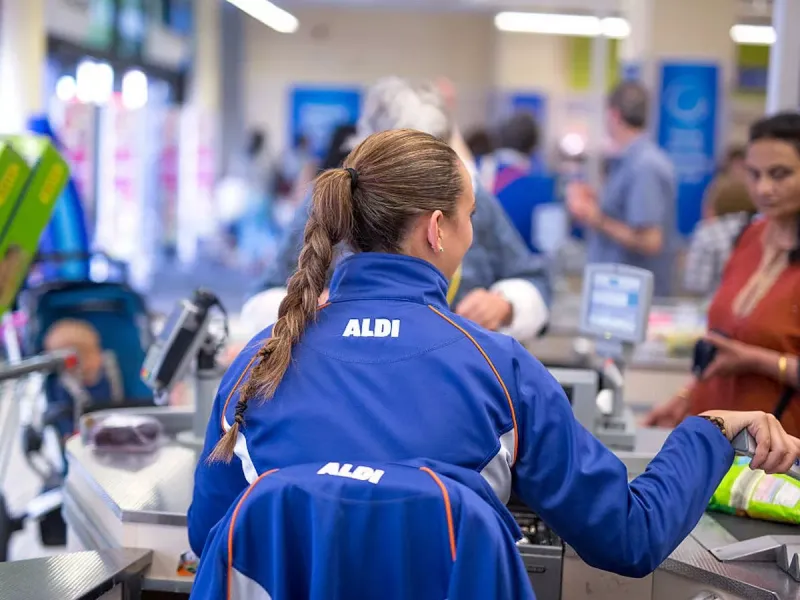
For store teams, the pay increase represents more than a simple rise in hourly earnings. Aldi highlights that all staff receive paid breaks, a benefit it estimates is worth around £1,470 per year for the average store employee.
Combined with the higher base rate, this can make supermarket roles more financially attractive in a competitive retail job market. Improved pay and benefits may also support recruitment and retention at a time when many retailers face staffing pressures and high turnover.
Aldi’s leadership has linked the investment directly to recognising staff contribution, noting that consistent service and operational performance depend on motivated and supported colleagues across stores.
3. How Supermarket Pay Reflects Changing Costs And Expectations
The latest adjustment also reflects broader economic pressures affecting both employers and households. Rising living costs, transport expenses, and energy bills continue to shape expectations around fair pay in frontline roles.
Supermarkets operate in a highly competitive environment, not only on pricing for customers but also on attracting reliable staff. Public wage announcements have increasingly become part of how retailers signal stability and long-term commitment to their workforce.
As minimum pay rates rise, shoppers may also notice indirect effects through staffing levels, store availability, and customer service consistency, reinforcing the link between employment investment and everyday retail experience.